Address
304 North Cardinal
St. Dorchester Center, MA 02124
Work Hours
Monday to Friday: 7AM - 7PM
Weekend: 10AM - 5PM
Address
304 North Cardinal
St. Dorchester Center, MA 02124
Work Hours
Monday to Friday: 7AM - 7PM
Weekend: 10AM - 5PM
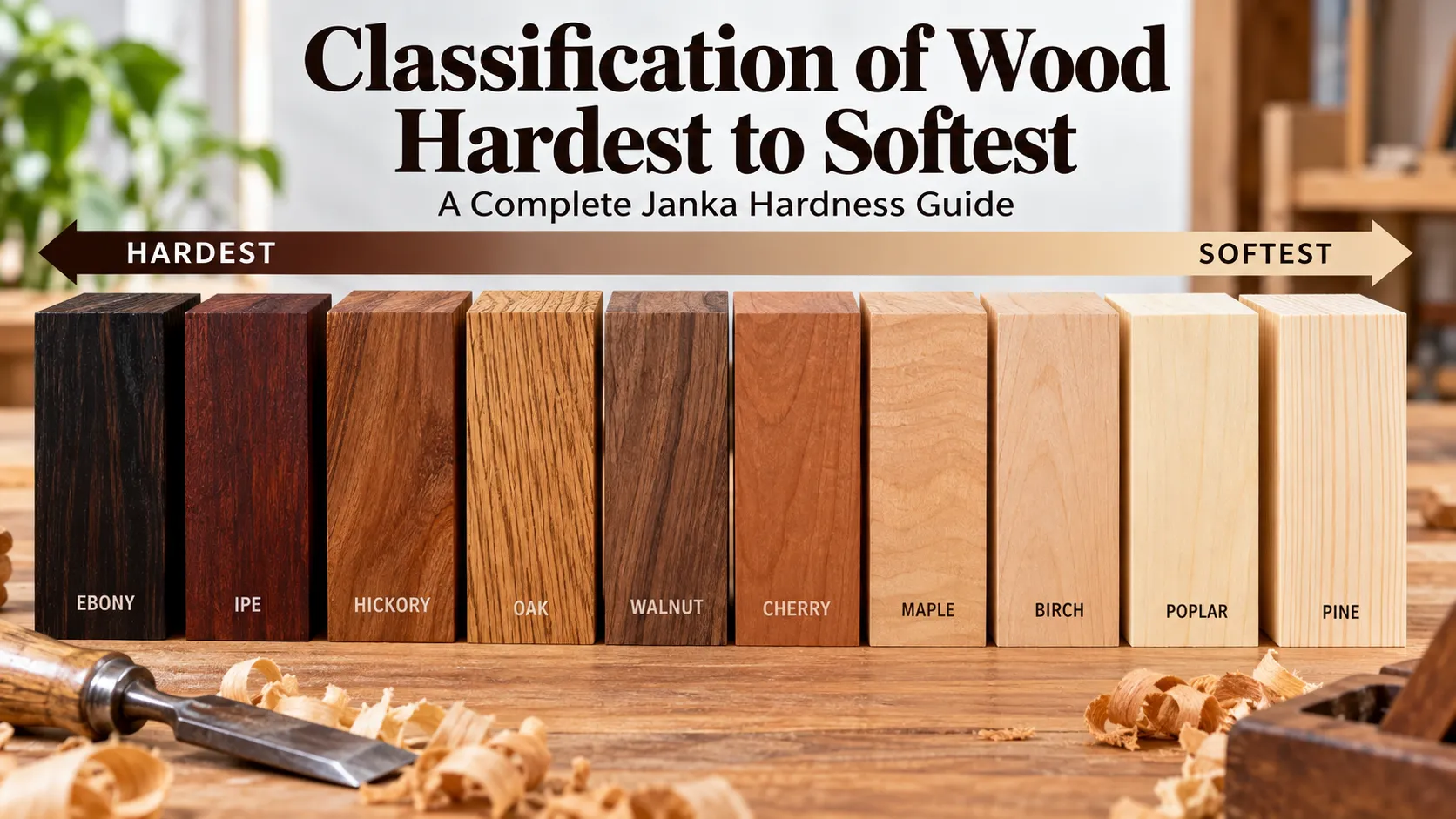
When you’re choosing wood for a project—whether it’s a deck, a cutting board, a guitar, or a piece of furniture—one of the most practical questions you can ask is: how hard is this wood? Hardness affects how well a surface resists dents, scratches, and everyday wear. It also influences how easy the wood is to cut, sand, and shape.
This guide walks through the classification of wood from hardest to softest using the Janka hardness scale. You’ll find ranked lists of the hardest and softest woods, a broad comparison table of common species, and practical advice on matching hardness to your project.
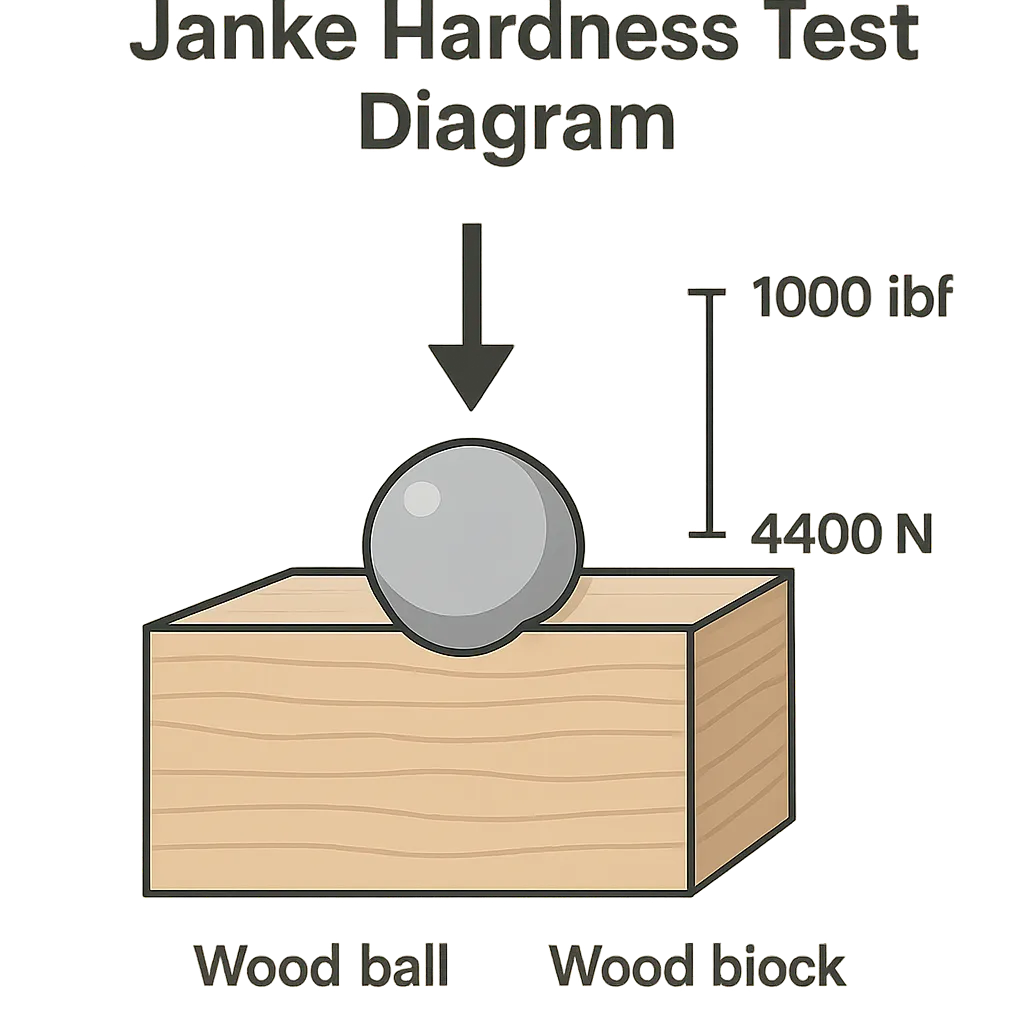
The Janka hardness test measures how resistant a sample of wood is to denting and wear. In the test, a steel ball of a standard size is pushed into the wood surface until it embeds halfway. The force required to do this is recorded, either in pounds-force (lbf) or newtons (N).
The higher the number, the harder the wood. A wood rated at 2,000 lbf takes roughly twice the force to dent as one rated at 1,000 lbf.
Why does this matter?
One important clarification: Janka hardness is not the same thing as the botanical hardwood/softwood classification. A tree can be a botanical hardwood and still have a low Janka rating, and vice versa. The two systems measure completely different things.
Botanically speaking, hardwoods come from angiosperms—flowering trees that typically have broad leaves and produce seeds enclosed in fruit or nuts. Examples include oak, maple, walnut, and cherry. Softwoods come from gymnosperms, mostly conifers with needles or scale-like leaves, such as pine, spruce, fir, and cedar.
The confusing part is that these labels describe reproduction and tree type, not physical hardness. Some hardwoods are genuinely soft—balsa is the classic example. Some softwoods are surprisingly hard—yew is a well-known case.
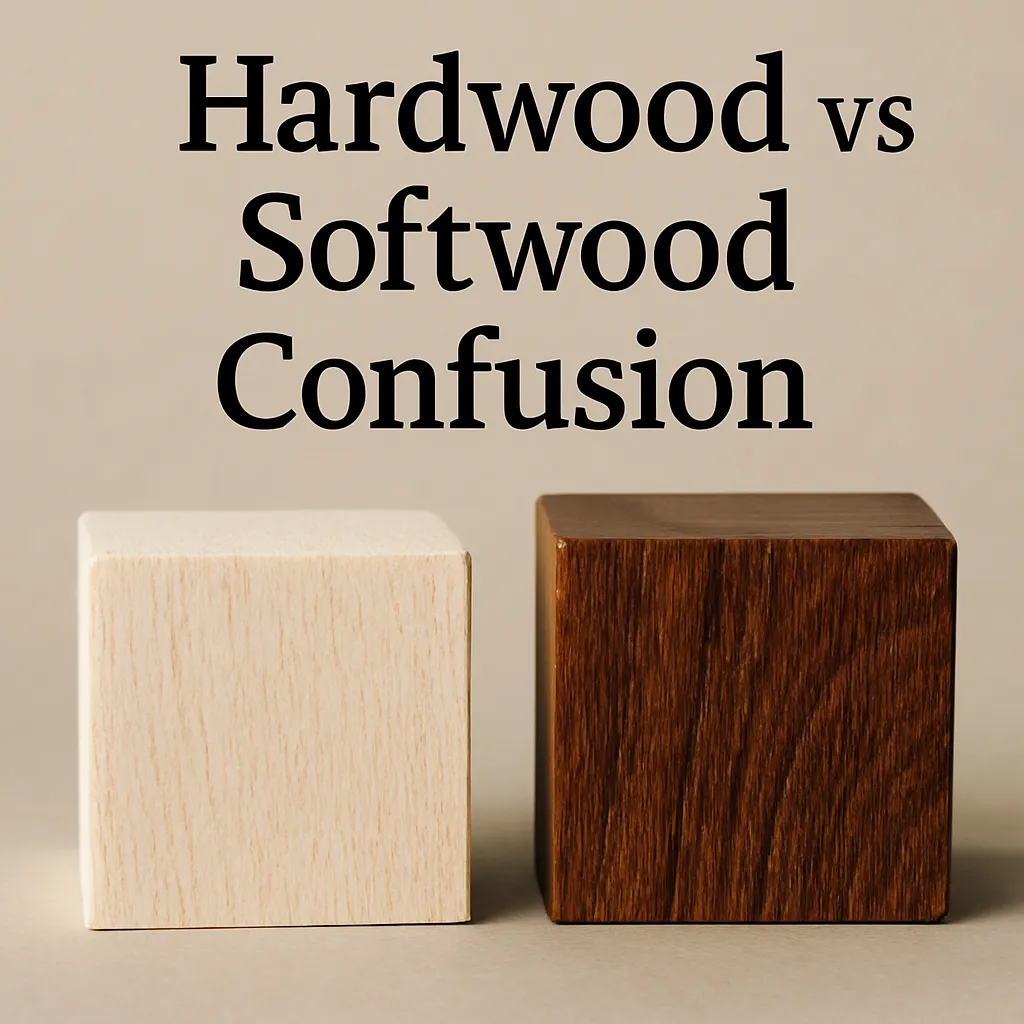
So when this article talks about “classification of wood hardest to softest,” it means ranking by measured hardness, not grouping by botanical class. A balsa tree and an oak tree are both hardwoods botanically, yet their Janka ratings sit at opposite ends of the scale.
These species sit at the top of the Janka scale. Most are dense, heavy, and difficult to work with, but they offer exceptional durability.
| Rank | Wood Species | Janka (lbf) | Janka (N) |
|---|---|---|---|
| 1 | Australian Buloke | 5,060 | 22,500 |
| 2 | Barauna | 4,760 | 21,200 |
| 3 | Quebracho | 4,570 | 20,340 |
| 4 | Schinopsis (Quebracho Colorado) | 4,570 | 20,340 |
| 5 | Womera | 4,500 | 20,000 |
| 6 | Ebony (some species) | 3,700–4,300 | 16,460–19,130 |
| 7 | Black Ironwood | 3,660 | 16,280 |
| 8 | Katalox | 3,650 | 16,240 |
| 9 | African Blackwood | 3,670 | 16,320 |
| 10 | Brazilian Ebony | 3,500 | 15,570 |
| 11 | Ipe (Brazilian Walnut) | 3,510 | 15,620 |
| 12 | Cumaru | 3,540 | 15,750 |
| 13 | Greenheart | 3,390 | 15,080 |
| 14 | Snakewood | 3,300 | 14,680 |
| 15 | Pink Ivory | 3,230 | 14,370 |
A few notes on these picks:
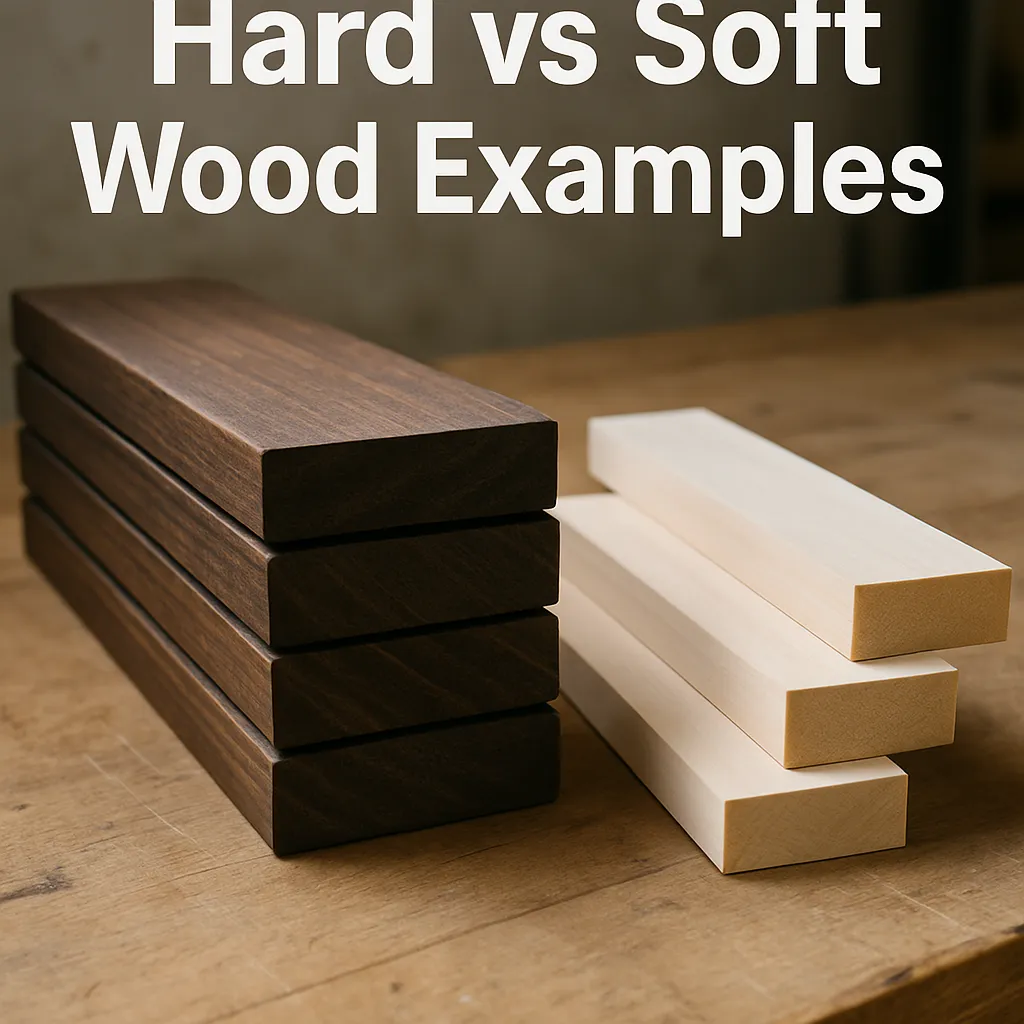
Practical uses for extremely hard woods include:
The trade-off is workability. These woods dull cutting tools quickly, require pre-drilling for fasteners, and can be heavy and expensive.
At the other end of the scale, soft woods dent easily but offer advantages in weight, workability, and specialized applications.
| Rank | Wood Species | Janka (lbf) | Janka (N) |
|---|---|---|---|
| 1 | Balsa | 90 | 400 |
| 2 | Paulownia | 130 | 580 |
| 3 | Sola | 140 | 620 |
| 4 | Cucumber Tree | 160 | 710 |
| 5 | Basswood (American Linden) | 410 | 1,820 |
| 6 | Butternut | 490 | 2,180 |
| 7 | White Pine | 420 | 1,870 |
| 8 | Sugar Pine | 380 | 1,690 |
| 9 | Western Red Cedar | 350 | 1,560 |
| 10 | Balsam Fir | 350 | 1,560 |
Balsa is the softest commercial wood available. It’s technically a hardwood botanically, which surprises many people, but its Janka rating of around 90 lbf makes it the clear lightweight champion.
So why would anyone use a soft wood?
Softness is a trade-off, not a defect. It’s about matching the material to the job.
Below is a broader ranking of common domestic and exotic woods, from hardest to softest. Values are approximate and can vary by species, growing conditions, and sample.
| Wood Species | Janka (lbf) | Janka (N) | Typical Availability |
|---|---|---|---|
| Australian Buloke | 5,060 | 22,500 | Rare, exotic |
| Barauna | 4,760 | 21,200 | Rare, exotic |
| Quebracho | 4,570 | 20,340 | Exotic, limited |
| Ebony | 3,700–4,300 | 16,460–19,130 | Exotic, specialty |
| Black Ironwood | 3,660 | 16,280 | Rare |
| Katalox | 3,650 | 16,240 | Exotic |
| African Blackwood | 3,670 | 16,320 | Exotic, instrument-grade |
| Brazilian Ebony | 3,500 | 15,570 | Exotic |
| Cumaru | 3,540 | 15,750 | Common decking |
| Ipe | 3,510 | 15,620 | Common decking |
| Greenheart | 3,390 | 15,080 | Exotic, marine use |
| Snakewood | 3,300 | 14,680 | Specialty |
| Pink Ivory | 3,230 | 14,370 | Rare, specialty |
| Bloodwood | 2,900 | 12,900 | Exotic |
| Jatoba (Brazilian Cherry) | 2,820 | 12,540 | Common flooring |
| Santos Mahogany | 2,200 | 9,790 | Exotic flooring |
| Hickory | 1,820 | 8,090 | Domestic, common |
| Pecan | 1,820 | 8,090 | Domestic |
| Hard Maple | 1,450 | 6,450 | Domestic, common |
| White Oak | 1,360 | 6,050 | Domestic, common |
| Red Oak | 1,290 | 5,740 | Domestic, common |
| Ash | 1,320 | 5,870 | Domestic, common |
| Yellow Birch | 1,260 | 5,600 | Domestic |
| Wenge | 1,630 | 7,250 | Exotic |
| Merbau | 1,840 | 8,180 | Decking |
| Teak | 1,070 | 4,760 | Exotic, marine |
| Black Walnut | 1,010 | 4,490 | Domestic, common |
| Cherry | 950 | 4,230 | Domestic, common |
| Mahogany (Honduras) | 800 | 3,560 | Exotic, common |
| Douglas Fir | 660 | 2,940 | Domestic, framing |
| Alder | 590 | 2,620 | Domestic |
| Butternut | 490 | 2,180 | Domestic |
| Basswood | 410 | 1,820 | Domestic, carving |
| White Pine | 420 | 1,870 | Domestic, common |
| Sugar Pine | 380 | 1,690 | Domestic |
| Western Red Cedar | 350 | 1,560 | Domestic, exterior |
| Balsam Fir | 350 | 1,560 | Domestic |
| Paulownia | 130 | 580 | Exotic, lightweight |
| Balsa | 90 | 400 | Common, hobby |
Availability notes:
Hardness is one factor among several. Workability, cost, availability, and appearance all matter. Here’s how to think about it by application.
Flooring: Go hard. Ipe, Cumaru, Hickory, and Jatoba all hold up well against foot traffic and furniture. Softer woods like pine will dent and show wear faster, though they can develop a rustic character some people like.
Decking: Ipe and Cumaru are standouts for exterior use because they combine high hardness with natural rot resistance. Cedar is softer but resists decay and is easier to work with.
Furniture: Moderate hardness is usually the sweet spot. Oak, maple, walnut, and cherry offer a good balance of durability and workability. Extremely hard woods can be difficult to machine and join.
Carving and model making: Soft woods like basswood and balsa are ideal because they cut easily and hold detail without excessive effort.
Tool handles: Hickory and ash are traditional choices—hard enough to take impact, yet with enough flexibility to absorb shock.
Musical instruments: Density and stiffness affect tone. Ebony and African Blackwood are used for fingerboards, while spruce and cedar are common for soundboards.
Beyond hardness, weigh these factors:
Q: What is the hardest wood in the world?
A: Australian Buloke is considered the hardest wood, with a Janka hardness of 5,060 lbf (22,500 N).
Q: What is the softest wood in the world?
A: Balsa is the softest commercial wood, with a Janka hardness of 90 lbf (400 N).
Q: Is hardwood always harder than softwood?
A: No. Hardwood and softwood are botanical classifications, not indicators of hardness. For example, Balsa is a hardwood but is very soft, while Yew is a softwood but relatively hard.
Q: How is wood hardness measured?
A: Wood hardness is measured using the Janka test, which determines the force required to embed a steel ball into the wood. Results are reported in pounds-force (lbf) or newtons (N).
Q: What is the hardest wood in North America?
A: Black Ironwood (Krugiodendron ferreum) is often cited as the hardest wood in North America, with a Janka rating around 3,660 lbf (16,280 N).
Q: Which wood is best for flooring?
A: For flooring, harder woods like Ipe, Cumaru, or Hickory are ideal due to their high Janka ratings, which resist dents and wear.