Address
304 North Cardinal
St. Dorchester Center, MA 02124
Work Hours
Monday to Friday: 7AM - 7PM
Weekend: 10AM - 5PM
Address
304 North Cardinal
St. Dorchester Center, MA 02124
Work Hours
Monday to Friday: 7AM - 7PM
Weekend: 10AM - 5PM
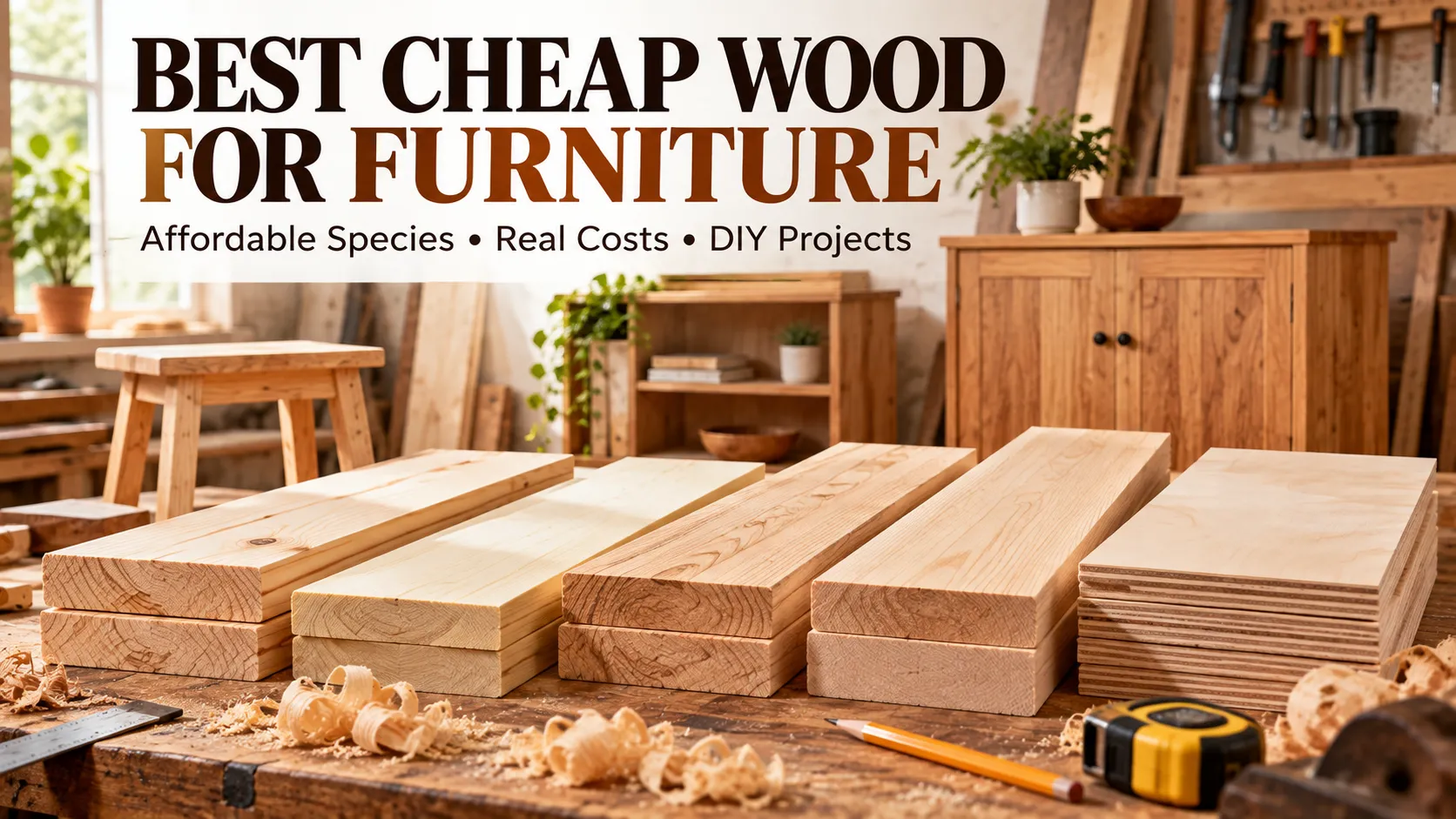
If you’ve ever walked out of a big-box store with a cart full of “budget” lumber and a receipt that made you wince, you already know the truth: cheap wood is rarely as cheap as it looks. The species that costs the least per board at the register isn’t always the species that costs the least per finished table, per painted cabinet, or per chair that survives a decade of dinner parties.
This guide cuts through the marketing and gets to what actually matters when you’re choosing affordable furniture wood: the real cost per finished project, the species that genuinely deliver value, and how grading, region, and project type change the math. Whether you’re building a farmhouse dining table, a set of painted built-ins, or a bed frame on a tight budget, you’ll find a wood here that fits.
Sticker price is the worst way to compare furniture woods. A $2.50/bf poplar board and a $3.75/bf soft maple board look wildly different on the price tag — until you factor in the waste, milling, drying, and finishing that turn rough lumber into furniture.
Cost per finished project includes:
Board-foot pricing beats per-piece pricing when comparing species. Big-box stores sell dimensional pine by the linear foot, which makes it hard to compare against a lumberyard’s $/bf hardwood. Once you convert everything to board feet — and account for the actual usable yield — the picture often flips. A “cheap” 1×6 pine board that’s 20% wane is more expensive per usable foot than a #1 Common poplar board from a yard.
Prices below are rough 2026 ranges for kiln-dried stock at independent yards and reflect typical national averages. Regional swings can be dramatic — more on that later.
| Species | Typical Price ($/bf) | Janka (lbf) | Best Use |
|---|---|---|---|
| Pine (Eastern White) | $1.50–$3.00 | 380–420 | Painted furniture, rustic pieces |
| SPF (construction softwood) | $1.00–$2.00 | 350–450 | Framing, hidden structure, shop jigs |
| Poplar | $2.00–$3.25 | 540 | Painted cabinets, drawers, built-ins |
| Alder | $2.50–$4.00 | 590 | Clear-finished furniture (cherry substitute) |
| Soft Maple | $3.00–$5.00 | 700–950 | Stained tabletops, chairs, casework |
| Rubberwood | $2.50–$4.50 | 960 | Tabletops, chairs, children’s furniture |
| Ash (lower grades) | $2.50–$4.50 | 1,320 | Chairs, tool handles, bent parts |
| Red Oak (lower grades) | $3.00–$5.00 | 1,290 | Stained tabletops, traditional furniture |
Janka ratings tell you how hard a wood is — how much force it takes to embed a steel ball to half its diameter. Higher is harder and generally more dent-resistant, but it’s not a complete picture of furniture suitability. We’ll come back to that.
There are plenty of woods cheaper than these five, but most of them aren’t worth building furniture from. These are the species where low cost doesn’t come at the expense of a finished piece you’ll actually be proud of.
Poplar is the default answer to “what’s the cheapest hardwood for furniture?” for good reason. It’s grown across the eastern U.S., mills and dries predictably, and shows up in nearly every lumberyard in the country. At $2–3.25 per board foot, it undercuts almost every other domestic hardwood.
What poplar does well: It’s stable, machines cleanly, holds paint beautifully, and takes screws and glue without drama. Its tight, uniform texture and straight grain make it ideal for painted cabinet doors, drawer boxes, and built-ins where you want a smooth surface without the cost of maple.
Where it falls short: Poplar’s color is all over the place — green, purple, brown, cream, sometimes all in one board. The grain is often bland or muddy. It takes stain unevenly and rarely delivers an attractive clear finish. Use poplar for painted pieces, or accept that any stain you apply will look mottled and uneven unless you’re using a heavy gel stain or dye.
Best for: Painted cabinets, drawer boxes, built-in shelving, painted bed frames, shop furniture.
Pine is what most people picture when they think of cheap furniture wood, and for good reason: white pine runs $1.50–3.00 per board foot and construction-grade SPF (spruce-pine-fir) can drop below $1.50. It’s soft — around 380–420 on the Janka scale — which makes it easy to work but also easy to dent.
The blotching problem: Pine’s earlywood and latewood absorb stain at wildly different rates. Hit it with a pigment stain and you’ll get stripes. Wood conditioner helps, but it’s a necessary step, not a rescue. For a clean look, paint pine instead of staining it, or use a gel stain that sits on top of the surface rather than soaking in.
Common vs white pine: “Common” pine is a grade (knots and defects allowed) rather than a species, and it’s the cheapest solid wood on most big-box shelves. Eastern White Pine is the premium version, clearer and more uniform but often 2–3x the price of construction-grade stock.
Best for: Rustic tables and benches, painted trim and furniture, farmhouse-style pieces, hidden structural components.
Alder is the sleeper pick. Out west, where it’s milled, alder often sells for under $3 per board foot — competitive with poplar — while offering a tight, uniform grain and a warm, cherry-like tone that takes clear finish beautifully. In eastern markets, alder can climb toward $5/bf, which changes the calculus.
Why it beats poplar for clear finishes: Alder’s grain is subtle and consistent, with far less color variation than poplar. It stains and dyes evenly, and a simple oil or wipe-on varnish gives it a warmth that poplar simply can’t match. It’s a legitimate cherry substitute for people who want the look without the $7+/bf price tag.
Its weakness: Alder is soft — around 590 Janka — and dents more easily than soft maple. It’s fine for vertical surfaces and low-wear furniture, but not for a heavily used dining table top unless you accept the dents.
Best for: Bedroom furniture, clear-finished casework, drawer fronts, decorative pieces.
Soft maple costs a bit more than poplar — typically $3–5 per board foot — but delivers dramatically better results for stained furniture. At 700–950 Janka, it’s meaningfully harder and far more uniform in color than poplar.
Why it’s worth the premium: Soft maple takes stain evenly, machines to a glass-smooth surface, and holds up to daily abuse in ways poplar and pine don’t. A stained soft maple dining table looks intentional; a stained poplar table looks like a compromise. If your project involves visible wood grain and stain, soft maple is the cheapest wood that doesn’t fight you.
Soft maple vs hard maple: Hard maple ($5–8/bf) is denser and used for butcher blocks and flooring. For furniture, soft maple is nearly always the better value — same appearance class, cheaper, easier to work.
Best for: Stained tabletops, chairs, casework, anything where the wood itself is the show.
Rubberwood — the plantation hardwood behind most “solid wood” budget furniture — punches far above its price class. At roughly 960 Janka, it’s harder than soft maple and costs $2.50–4.50/bf when you can find it. Most of it goes into factory furniture, but some yards and specialty suppliers stock it for DIYers.
Rubberwood’s quirks: It’s often sold as glued-up panels rather than rough boards, which is actually a benefit — the panels are stable and pre-milled. It stains reasonably well with a conditioner, though its grain is plain.
Birch plywood and boards: Birch — particularly Baltic birch plywood — offers excellent strength and a clean, uniform face at a fraction of hardwood solid stock pricing. For painted or lightly finished casework, birch plywood is often the smartest cheap-wood choice in the shop.
Best for: Tabletops, chairs, children’s furniture, painted casework, drawer sides.
Here’s the thing nobody tells you at the big-box store: the single biggest lever on your wood cost isn’t which species you buy — it’s which grade. Two poplar boards from the same rack can differ 40% in price depending on grading rules you’ve never been taught.
The grades, in plain terms:
Why grade matters more than species: A #1 Common red oak board at $3.50/bf often undercuts FAS poplar at $3.25/bf once you compare usable yield — red oak is nearly 2.4x harder, takes stain beautifully, and gives you a far nicer finished piece. The same logic applies to ash: lower-grade ash in Appalachia frequently sells below FAS poplar while delivering better hardness and appearance.
When character grades work: Knots, mineral streaks, and color variation are features in rustic furniture — farmhouse tables, live-edge pieces, reclaimed-look shelving. If that’s your style, buy #2 Common or character grade and save 30% or more. When they don’t: Painted cabinetry, formal furniture, and anywhere you need long clear spans. There, the waste factor eats your savings.
The cheapest wood for one project is rarely the cheapest for another. Match the species to how the furniture will be used, and you’ll spend less and build better.
Table tops and chairs: Prioritize hardness. Soft maple, ash, rubberwood, or lower-grade red oak. A cheap pine table top will look destroyed within a year of normal use — dents from forks, spills, hot mugs. A soft maple top at $4/bf will look good for decades.
Painted cabinets and built-ins: Poplar and pine are ideal here. You’re painting them anyway, so grain beauty doesn’t matter. Poplar offers greater stability and a smoother paint surface; pine is cheaper if you’re willing to deal with pitch pockets and dents.
Bed frames and shelving: Pine and plywood hybrids cut cost dramatically. Use solid pine or poplar for visible rails and posts, and plywood for headboards, platform bases, and shelf spans. A plywood-core shelf with a solid-wood edge is stronger, cheaper, and more stable than a solid-wood shelf of the same span.
Outdoor or porch furniture: Here’s where cheap wood fails hardest. Pine and poplar rot within a few seasons outdoors. White oak and cedar cost more upfront — often 2–4x — but outperform and outlast cheap softwoods so thoroughly that they’re cheaper per year of service. If you’re building for the long haul outdoors, start with white oak, cedar, or a rot-resistant softwood like cypress.
Location matters more than almost any other variable. A species that’s a bargain in one region is expensive in another, and no price table captures that.
Regional swings to know:
Where to buy:
Reclaimed and short-board discounts: Salvaged barn wood and Craigslist listings can be dramatically cheaper per board foot — sometimes free — but transport, denailing, and milling often erase the savings for small projects. Short-board bins at lumberyards are a better bet: 20–40% off for stock under 4 feet, ideal for small furniture parts.
The gap between a “$200” and a “$2,000” looking piece is usually finish, not species. These techniques close it.
Fight blotching on pine and alder: Sand to 150–180 grit (not higher — over-sanding polishes the surface and worsens blotching). Apply a wood conditioner or a 1-lb cut of dewaxed shellac. Then use a gel stain, which sits on the surface rather than soaking in, for even color.
Dye vs pigment on poplar and soft maple: Pigment stains sit in the grain and highlight the differences; dyes penetrate and color uniformly. For poplar’s muddy, variable grain, a dye is often the only way to get consistent color. For soft maple, either works well — start with a dye for tone, then a pigment stain for depth.
Grain filling and topcoats: Poplar, alder, and maple have tight grain and don’t need filling. Oak and ash do. A proper sanding schedule — 120, 150, 180, then 220 between coats — and a quality topcoat (wipe-on poly, oil-varnish blend, or lacquer) elevate cheap wood more than any species upgrade.
When to paint instead of stain: If the wood has unattractive grain, uneven color, or visible defects, paint it. Poplar and pine are both excellent paint-grade woods. Choosing paint isn’t settling — a well-painted poplar cabinet looks better than a poorly stained oak one every time.
Even experienced woodworkers make these errors. Avoid them and your cheap wood will perform like expensive stock.
Buying wet construction lumber for indoor furniture. Construction lumber is typically sold green or surface-dried. It will move, twist, and cup as it acclimates to your home. Kiln-dried (KD) stock is the only sensible choice for interior furniture.
Assuming pine is always cheapest. Pine prices swing wildly by grade. Clear pine can cost more than poplar, and #1 Common red oak frequently undercuts both.
Ignoring moisture content. Buy a moisture meter. Furniture lumber should be 6–8% MC for most indoor climates. Let it acclimate in your shop for at least a week before milling.
Confusing Janka hardness with suitability. A high Janka score doesn’t make a wood good for furniture (some hard woods are brittle or unstable), and a low score doesn’t make it useless (pine paneling has survived centuries). Match hardness to the use, not the spec sheet.
What is the cheapest wood for making furniture?
Pine and SPF lumber are typically the cheapest solid woods at North American retailers, while poplar is usually the cheapest widely stocked hardwood. Regional supply can make alder, ash, or rubberwood cheaper in specific markets, so check local lumberyards before assuming national averages apply.
Is poplar or pine better for furniture?
Poplar is better for painted or clear-finished furniture because it is harder (Janka 540 lbf), more stable, and less prone to blotching than pine. Pine is cheaper and easier to source but dents easily and requires a wood conditioner before staining.
Is it okay to use cheap wood for furniture?
Yes, provided you match the wood to the project. Poplar, pine, alder, and soft maple all make durable furniture when used appropriately — painted pieces, painted cabinets, bed frames, and rustic designs. Avoid soft cheap woods for high-wear surfaces like dining table tops unless you accept denting and refinishing.
What is the cheapest hardwood for furniture?
Poplar is usually the cheapest hardwood available nationwide, often selling for $2–3 per board foot. Alder, soft maple, and lower-grade red oak can beat poplar on price in regions where they are locally milled, so price the species available near you before committing to a plan.
Can cheap wood furniture last a long time?
Yes, if you build it correctly. Using kiln-dried lumber, proper joinery, adequate sealing, and matching wood hardness to furniture function, a poplar or alder piece can last decades. Cheap wood fails most often because of poor construction or moisture exposure, not because of the species itself.
Where can I buy cheap furniture wood?
Independent lumberyards and local sawmills usually beat Home Depot and Lowe’s on hardwood prices, especially for rough-sawn or lower grades. Reclaimed wood, Craigslist listings, and short-board discounts offer additional savings if you have the tools to mill and dry the stock yourself.