Address
304 North Cardinal
St. Dorchester Center, MA 02124
Work Hours
Monday to Friday: 7AM - 7PM
Weekend: 10AM - 5PM
Address
304 North Cardinal
St. Dorchester Center, MA 02124
Work Hours
Monday to Friday: 7AM - 7PM
Weekend: 10AM - 5PM
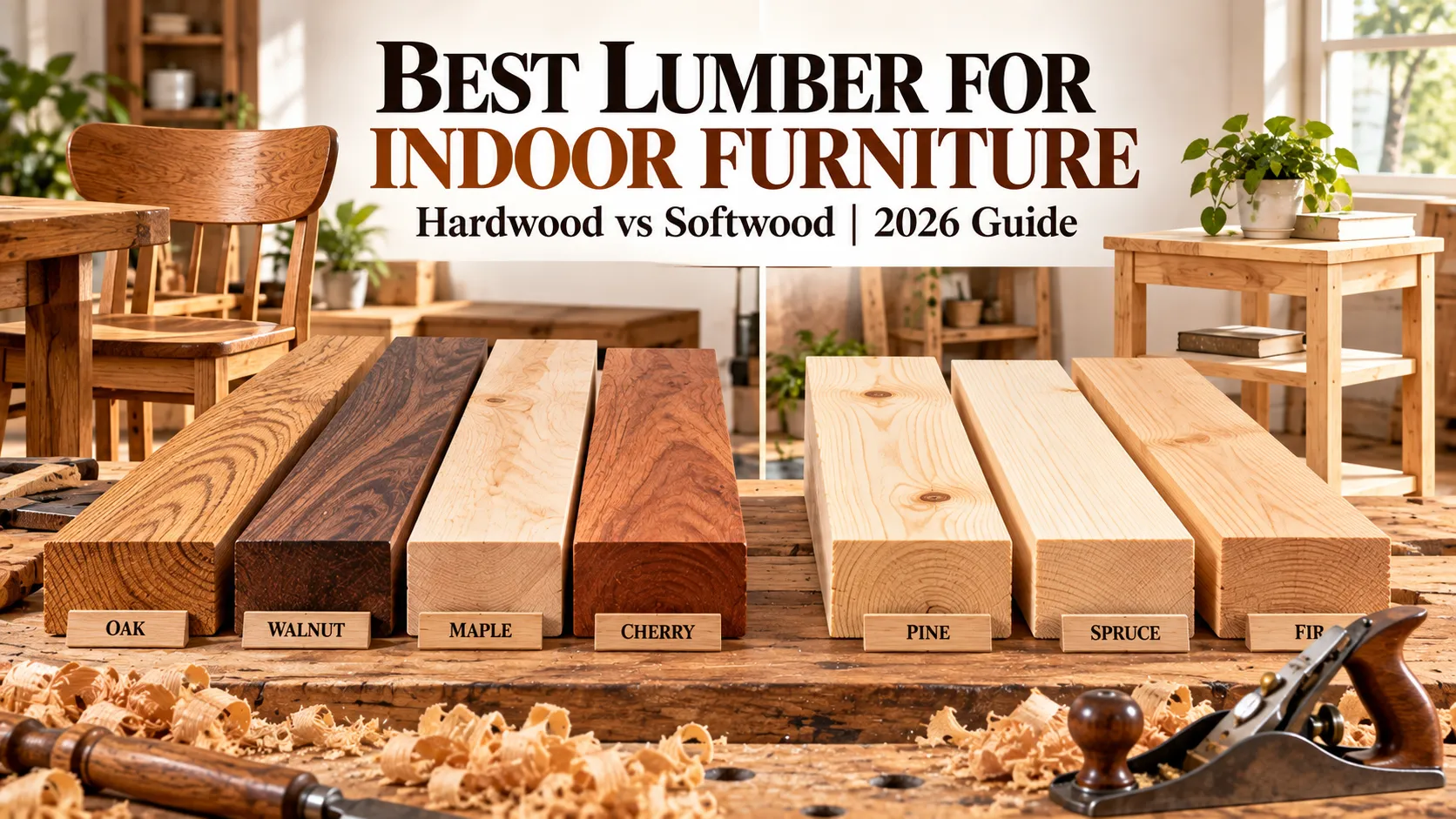
Walk into any lumber yard or scroll through a hardwood dealer’s inventory, and the options can feel overwhelming. White oak, black walnut, hard maple, cherry, teak, ash, poplar — each species behaves differently under a saw blade, a sander, and a stain rag. Choosing the best lumber for indoor furniture isn’t about finding a single “winner.” It’s about matching a species’ hardness, stability, workability, and appearance to the specific piece you’re building and the room it will live in.
This guide compares the top hardwood and softwood species for indoor furniture, breaks down Janka hardness values, explains when engineered wood makes sense, and gives you a practical decision framework for tables, chairs, shelving, beds, and cabinetry.
Six criteria drive almost every wood-selection decision for indoor furniture. Understanding them upfront makes the rest of this article easier to apply to your own project.
1. Durability (Janka hardness). The Janka scale measures the force required to embed a steel ball into a wood sample, expressed in pounds-force (lbf). Higher numbers mean denser, more dent-resistant wood. A dining table that sees daily plates, laptops, and kids doing homework needs a higher Janka rating than a decorative shelf.
2. Stability (movement and humidity response). All wood moves as it gains or loses moisture. Some species — white oak, mahogany, teak — move less than others — beech, red oak, and many softwoods. Stable species hold joinery tighter and develop fewer cracks in fluctuating indoor humidity.
3. Workability. How does the wood behave under hand tools, routers, and saws? Some species machine cleanly, some tear out on end grain, and some burn easily. Maple is notoriously hard on edge tools; poplar and walnut are forgiving.
4. Finishing behavior. Some woods blotch when stained (maple, cherry, birch), some have open grain that needs filling (oak, ash), and some accept oil and wax beautifully with minimal effort (walnut, teak).
5. Aesthetic. Grain pattern, color, and figure vary dramatically. Oak has bold rays and cathedral grain; walnut is chocolate-brown and often straight-grained; maple is pale and subtle. Aesthetics often drive the final choice once performance criteria are met.
6. Cost. Cost varies widely by species, region, and grade. Poplar and pine are budget-friendly, red oak is a mid-tier workhorse, and walnut, teak, and mahogany sit at the premium end.
Indoor furniture faces a fundamentally different environment than outdoor furniture. Indoors, the threats are:
Outdoor furniture contends with UV radiation, rain, freeze-thaw cycles, and rot. That’s why rot-resistant species like teak and cedar dominate outdoor use but are less critical indoors (though teak is still prized indoors for its stability and appearance). Indoors, hardness, stability, and finishing behavior matter more than decay resistance.
Room type also matters. A bathroom vanity faces humidity spikes; a bedroom nightstand sees almost none. A kitchen table endures daily abrasion; a display shelf in a hallway barely gets touched.
The comparison framework used throughout this article weighs all six criteria against each species so you can prioritize what matters for your project.
| Species | Type | Janka (lbf) | Cost Tier | Grain | Best Indoor Furniture Use | Stain/Finish Notes |
|---|---|---|---|---|---|---|
| White Oak | Hardwood | ~1,360 | Mid–Premium | Straight, prominent rays | Dining tables, structural pieces | Accepts stain well; open grain may need filler |
| Red Oak | Hardwood | ~1,290 | Mid | Bold, open cathedral grain | Tables, chairs, trim | Stains well; open pores need filling |
| Black Walnut | Hardwood | ~1,010 | Premium | Straight to wavy, subtle | Statement tables, mid-century pieces | Oils beautifully; no filler needed |
| Hard Maple | Hardwood | ~1,450 | Mid–Premium | Fine, subtle | Modern furniture, kids’ furniture, butcher block | Blotch-prone; use gel stain or dye |
| Cherry | Hardwood | ~950 | Mid–Premium | Fine, smooth | Chairs, carved work, case goods | Blotch-prone; darkens with age and light |
| Mahogany | Hardwood | ~800–900 | Premium | Straight, fine | Period furniture, cabinetry | Finishes easily; excellent polish |
| Teak | Hardwood | ~1,155 | Premium | Straight, slightly oily | Tables, chairs, humid rooms | Oily surface; may need wiping before finish |
| Ash | Hardwood | ~1,320 | Budget–Mid | Bold, open, similar to oak | Chairs, bent work, tables | Open grain; stains evenly with filler |
| Poplar | Hardwood | ~540 | Budget | Straight, subtle | Painted pieces, drawers, secondary parts | Paints excellently; stains blotchy |
| Pine | Softwood | ~380–420 | Budget | Knotty, straight | Beginner projects, painted furniture, shelving | Dents easily; seal knots before finishing |
| Beech | Hardwood | ~1,300 | Budget–Mid | Fine, straight | Chairs, workbenches, painted pieces | Moves more than oak; finishes evenly |
| Birch | Hardwood | ~1,260 | Budget–Mid | Fine, subtle | Cabinets, plywood cores, painted pieces | Blotch-prone like maple |
Oak is the workhorse of indoor furniture. It’s abundant, moderately priced, and takes stain and finish predictably.
White oak (Janka ~1,360 lbf) is denser and more water-resistant than red oak thanks to tyloses — natural growths that plug its pores. That makes it ideal for dining tables, kitchen islands, and any piece likely to see spills. Its grain is straight with prominent rays, and it finishes beautifully with oil, wax, or film finishes.
Red oak (Janka ~1,290 lbf) has a more open, cathedral-style grain and absorbs stain more dramatically. It’s slightly cheaper and widely available, making it a strong choice for chairs, trim, and painted or stained tables.
Verdict: White oak for durability and moisture resistance; red oak for value and bold grain.
Black walnut (Janka ~1,010 lbf) is the premium aesthetic choice. Its chocolate-brown color, often with subtle waves or curls, needs no stain — a clear oil finish is usually enough. It machines and carves cleanly, though its price puts it firmly in the premium tier.
Best for: Statement dining tables, mid-century modern pieces, and anywhere the wood itself is the design feature.
Verdict: The most beautiful and workable premium hardwood; budget accordingly.
Hard maple (Janka ~1,450 lbf) is one of the hardest common furniture woods. It’s pale, fine-grained, and incredibly durable — the standard for butcher block and gym floors. However, it’s blotch-prone when stained and hard on cutting tools.
Best for: Modern furniture, children’s furniture, and any piece where durability outweighs color.
Verdict: Extremely hard and clean-looking; use dye or gel stain to avoid blotching.
Cherry (Janka ~950 lbf) is a furniture classic. It works beautifully by hand and machine, carves cleanly, and — critically — darkens over time with exposure to light, developing a rich reddish-brown patina. It’s also somewhat blotch-prone, so a washcoat or gel stain helps.
Best for: Chairs, carved details, and traditional case goods.
Verdict: Beautiful aging and easy workability; protect it from uneven light exposure.
Softwoods come from conifers and are generally lighter, softer, and cheaper than hardwoods. They’re not automatically wrong for indoor furniture — they’re just suited to different roles.
Pine (Janka ~380–420 lbf) is lightweight, affordable, and easy to work. It’s an excellent choice for beginner projects, painted furniture, and shelving where loads are light. Its knots can bleed through paint unless sealed with a shellac-based primer.
Best for: Painted pieces, budget builds, kids’ starter projects.
Verdict: Great value and workability; too soft for high-wear surfaces.
Cedar and redwood are naturally rot- and insect-resistant, which matters more outdoors than indoors. Indoors, they make sense for cedar chests (where the aroma is a feature) and humidity-resistant spaces like basements or bathrooms.
Verdict: Niche indoor use; excellent for chests and humid rooms.
Fir and spruce are structural softwoods. They’re common in framing but also appear in secondary furniture uses — internal frames, drawer sides, and painted structural elements. They dent easily and don’t finish to a fine furniture standard.
Verdict: Structural and secondary roles only.
Softwoods dent, scratch, and compress more easily than hardwoods. They also tend to move more with humidity changes. For load-bearing or high-wear indoor furniture — dining tables, chairs, bed frames — softwoods rarely hold up as well as hardwoods.
Engineered wood gets a bad reputation, but it has legitimate uses.
Where engineered wood performs well:
Failure points:
Veneer and edge-banding quality signals:
When solid hardwood is worth the premium: Any piece you intend to keep for decades, any load-bearing furniture, and anything you may want to refinish later. Solid wood can be sanded, repaired, and refinished repeatedly; engineered wood usually can’t.
Poplar, pine, red oak, and ash. These machine cleanly, cost less, and forgive mistakes.
Black walnut, white oak, teak, and mahogany. These deliver premium appearance and long-term durability.
| Tier | Species | USD/bf | GBP/bf | EUR/bf |
|---|---|---|---|---|
| Budget | Poplar, pine | $2–5 | £2–4 | €2–5 |
| Mid | Red oak, ash, beech, birch | $4–9 | £3–7 | €4–8 |
| Premium | White oak, maple, cherry | $7–14 | £6–12 | €7–13 |
| Ultra-premium | Walnut, teak, mahogany | $10–25+ | £8–20+ | €10–22+ |
Prices vary by region, grade, and thickness. Always confirm current pricing with local suppliers.
Big-box stores sell dimensional pine that’s already surfaced, kiln-dried, and cut to standard sizes. But you pay for width you may not use, and the boards often contain more knots and defects. A hardwood dealer’s red oak, sold rough or skip-planed by the board foot, frequently costs less per usable board once you account for waste.
Before building indoor furniture, let wood acclimate to your shop or home environment for 1–2 weeks. Target 6–8% moisture content for indoor furniture in most climates. Building with wet wood guarantees movement, gaps, and cracked joints later.
For dining tables, cutting surfaces, and bedroom furniture, choose food-safe and low-VOC options: pure tung oil, boiled linseed oil, walnut oil, shellac, and water-based polyurethane. Allow proper cure time before use.
Some species — rosewood, teak, and certain exotics — can cause skin or respiratory reactions. Always wear a respirator and dust collection when milling and sanding, especially with unfamiliar species.
Indoor HVAC systems dry air in winter and cool it in summer, causing wood to shrink and swell. Design joints to allow slight movement, and avoid gluing wide panels in ways that restrict it.
Q: What is the best lumber for indoor furniture overall?
There is no single best species, but white oak and black walnut are the most versatile premium choices. White oak offers density, water resistance, and excellent staining across finishes, while black walnut provides a distinctive chocolate tone and easy workability. For budget builds, red oak and poplar deliver strong value. The right pick depends on your furniture type, budget, and aesthetic.
Q: Is hardwood or softwood better for indoor furniture?
Hardwood is generally better for indoor furniture because it is denser, more durable, and resists wear and moisture better than softwood. Species like oak, maple, and walnut hold up to daily use. Softwoods such as pine and cedar can work for painted pieces, budget projects, or low-wear furniture, but they dent more easily and may not last as long under heavy use.
Q: What is the best wood for beginners building indoor furniture?
Poplar, pine, and red oak are the most beginner-friendly. Poplar is affordable, easy to work, and paints well. Pine is lightweight and widely available. Red oak is affordable at hardwood dealers, machines cleanly, and accepts stain reliably. Avoid blotch-prone maple and expensive walnut until you are comfortable with milling and finishing.
Q: Is pine good for indoor furniture?
Yes, for the right applications. Pine is lightweight, affordable, and easy to work, making it a good choice for painted pieces, shelving, and beginner projects. However, pine is soft and dents easily, so it is not ideal for high-wear surfaces like dining tables or children’s furniture that sees heavy use. Use a hard finish or consider a harder species for those pieces.
Q: How do I choose the best wood for a dining table?
For a dining table, prioritize hardness, grain, and finishing behavior. White oak, black walnut, hard maple, and cherry are excellent choices. White oak resists moisture and stains well; walnut offers a premium look; maple is very hard and modern; cherry ages beautifully. Avoid softwoods like pine for dining tables unless the table is decorative and lightly used.
Q: Is solid wood better than plywood or MDF for indoor furniture?
Solid wood is generally better for load-bearing and long-lasting indoor furniture because it can be sanded, repaired, and refinished. Plywood is acceptable for shelving, cabinets, and painted surfaces when high-grade and well-constructed. MDF and particle board are the weakest options, especially in humid rooms, because they swell, crumble at joints, and cannot be repaired.
Q: Which wood species are most affordable for indoor furniture?
Poplar, pine, and red oak are the most affordable. Poplar is often the cheapest hardwood and paints well. Pine is widely available at big-box stores but may cost more per usable board than hardwood dealer red oak. Ash and beech are also budget-friendly hardwoods with good durability and appearance.