Address
304 North Cardinal
St. Dorchester Center, MA 02124
Work Hours
Monday to Friday: 7AM - 7PM
Weekend: 10AM - 5PM
Address
304 North Cardinal
St. Dorchester Center, MA 02124
Work Hours
Monday to Friday: 7AM - 7PM
Weekend: 10AM - 5PM
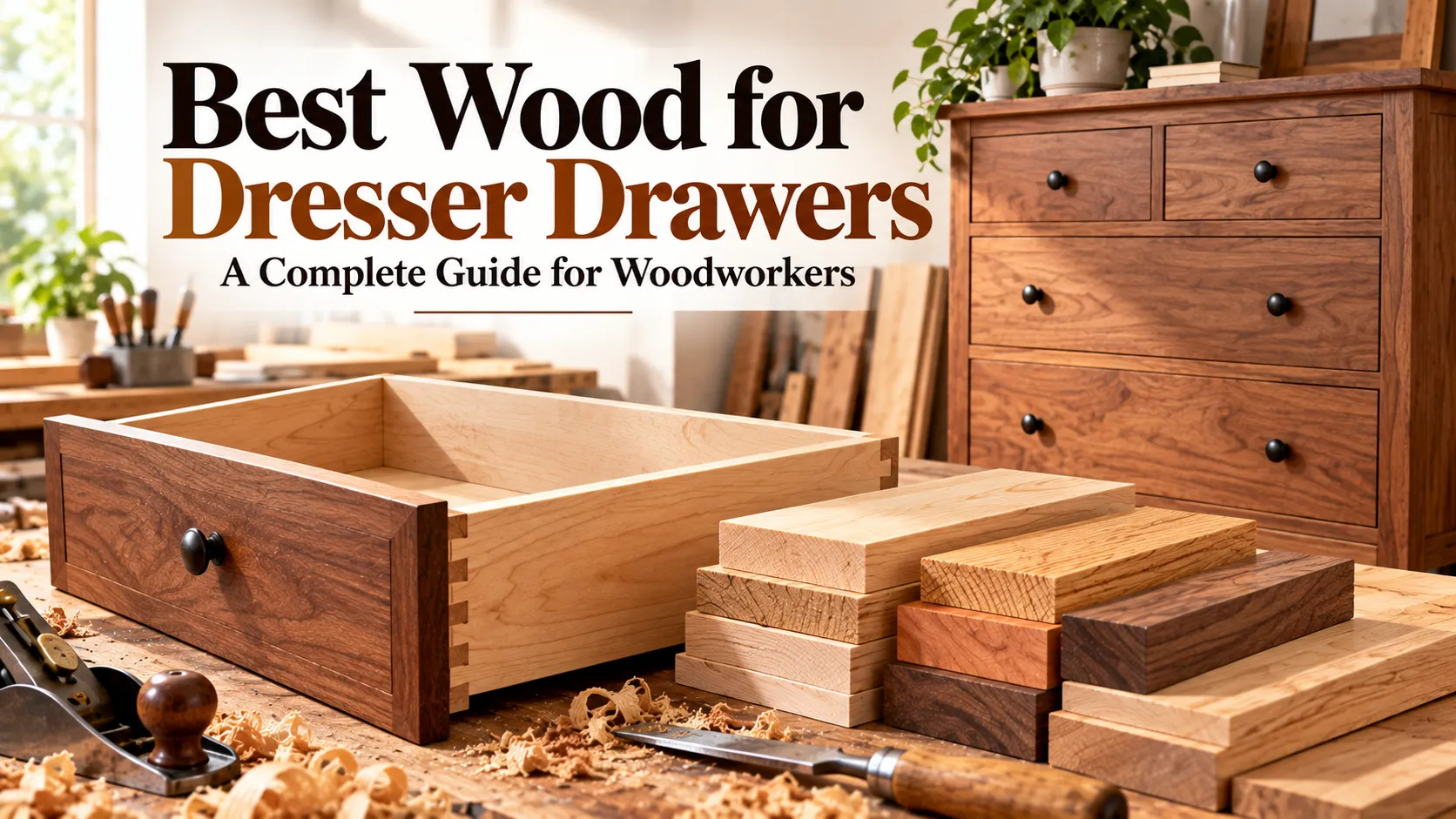
Choosing the right wood for dresser drawers is one of those decisions that follows you through the entire life of a piece. A dresser isn’t just a box that holds clothes—it’s a machine made of wood, with parts that slide, bear weight, and get opened and closed thousands of times over the years. The wood you choose affects how smoothly those drawers glide, how well they hold up to daily use, how they take a finish, and how the finished piece looks sitting in a bedroom.
For woodworkers, the challenge is that the “best” wood depends entirely on context. A drawer box—the hidden structure that holds your socks and shirts—has different requirements than a drawer front, which is the visible face everyone sees. A beginner working on a first dresser has different priorities than a professional building a heirloom piece. And a budget-conscious builder has to weigh cost against longevity in ways that a high-end furniture maker may not.
This guide covers the key factors that should drive your wood choice, walks through nine common species with their pros, cons, and best uses, compares them side by side, and digs into practical questions like whether plywood is acceptable, how to mix woods intelligently, and how to finish drawers so they stay smooth and stable. By the end, you should have a clear sense of which wood fits your project, your skill level, and your budget.
Before jumping into species, it helps to understand what actually matters in a drawer application. Not every property that makes a wood “good” for a tabletop makes it good for a drawer, and vice versa.
Drawers take a specific kind of abuse. They get pulled open and shoved closed, loaded with heavy clothing, and subjected to the grit and friction of sliding against runners or slides. A soft wood will dent, compress, and wear at the points where it contacts the cabinet or the slides. That’s why hardness matters.
The standard reference for hardness is the Janka scale, which measures the force required to embed a steel ball into a wood sample. Higher numbers mean harder wood. For context, balsa sits around 70, while something like hard maple is in the 1,400s. For drawer boxes that see frequent use, a Janka rating in the 1,000+ range is a reasonable target. For drawer fronts, hardness matters less because they don’t bear the same mechanical stress—but they still need to resist dents from daily bumps and knocks.
Stability is about how much a wood moves with changes in humidity. All wood expands and contracts across its width as moisture content changes, but some species move far more than others. A drawer box that swells in summer and shrinks in winter can bind in its opening, crack at the joints, or develop gaps.
Woods with low movement coefficients—like mahogany, walnut, and many maples—are prized for drawer construction because they hold their dimensions well. Flat-sawn boards move more than quarter-sawn ones, so how you mill and orient the wood matters too. For drawer sides especially, stability is often more important than raw hardness, because a stable drawer slides consistently year-round.
Workability covers how easily a wood cuts, planes, routes, sands, and takes joinery. Some species are a pleasure to work—clean edges, predictable grain, minimal tearout. Others are prone to chipping, burning, or blunting tools quickly.
For drawer construction, you’ll typically be cutting dovetails, box joints, or rabbets, and you’ll want clean, precise results. Woods that machine well and hold crisp edges make the joinery process much more enjoyable. Very hard woods can be demanding on tools, while very soft woods can crush or tear during cutting.
Cost varies dramatically between species and regions. Poplar is affordable and widely available; walnut and cherry sit at the premium end. Availability also depends on where you live—some species that are common in one region are special-order in another, which affects both price and convenience.
Aesthetics round out the picture. Do you want a wood that paints cleanly, one that takes a rich stain, or one with dramatic grain that becomes the focal point of the piece? Do you want drawer fronts that match the rest of the dresser, or a contrasting look? These are design decisions as much as material ones, and they’ll narrow your options quickly.
Here’s a rundown of nine species commonly used for dresser drawers, with an honest look at what each one brings to the table.
Poplar is the workhorse of painted furniture. It’s inexpensive, widely available, and remarkably stable for a domestic hardwood. It machines easily, sands smooth, and takes paint beautifully. Its main drawback is aesthetic: the heartwood can have green, purple, and gray streaks that look muddy under a clear finish. That’s fine if you’re painting, less ideal if you want a natural look.
Soft maple (which is still fairly hard—around 950 on the Janka scale) is often described as the best all-around choice for drawer boxes. It’s durable enough to resist wear, stable enough to hold its shape, and it machines and finishes cleanly. It takes both stain and clear finish well, though it can sometimes blotch without a conditioner.
Hard maple is the heavyweight. With a Janka rating around 1,450, it resists dents and wear exceptionally well, making it ideal for drawers that see heavy, frequent use. It’s also stable and takes a fine finish. The trade-offs are cost and workability: it’s harder on tools, can burn during routing, and is more expensive than soft maple.
Oak is strong, abundant, and instantly recognizable thanks to its prominent grain. Red and white oak are both durable, with white oak being the harder and more rot-resistant of the two. Oak’s open grain and bold figure make it a natural fit for traditional and mission-style furniture, though that same grain can look busy in modern designs.
Cherry is a premium choice that rewards patience. It works easily, machines cleanly, and finishes to a deep, warm luster. Its most famous trait is that it darkens and richens with age and light exposure, developing a patina that many woodworkers consider unmatched. It’s moderately hard (around 950 Janka) and stable.
Walnut is the luxury option. It’s stable, works wonderfully, and has a rich, chocolate-brown color with elegant grain. It’s softer than hard maple but still durable enough for most drawer applications, and its stability makes it excellent for drawer boxes as well as fronts. The main barrier is cost—walnut is among the more expensive domestic hardwoods.
Ash is tough and strong, with a Janka rating around 1,320, and it shares some of oak’s visual character but in a lighter, more open tone. It’s a good alternative when you want the durability of oak without the heaviness of color, and it works reasonably well, though its open grain can be pronounced.
Pine is inexpensive, easy to work, and widely available—the classic beginner’s wood. But it’s soft (Janka ratings often in the 400–600 range), which means it dents and compresses easily. That’s a real limitation for drawer boxes that slide and bear weight, though it’s workable for drawer fronts in rustic or low-use pieces.
| Wood Species | Janka Hardness | Cost Level | Workability | Stability | Common Uses |
|---|---|---|---|---|---|
| Poplar | ~540 | Low | Excellent | Very good | Painted drawers, budget boxes |
| Soft Maple | ~950 | Moderate | Very good | Very good | Mid-range drawers, boxes |
| Hard Maple | ~1,450 | High | Moderate | Excellent | High-use drawers, premium boxes |
| Oak | ~1,290–1,360 | Moderate–High | Good | Good | Traditional fronts, sturdy boxes |
| Cherry | ~950 | High | Excellent | Very good | Premium fronts, fine furniture |
| Walnut | ~1,010 | High | Excellent | Excellent | Luxury fronts and boxes |
| Ash | ~1,320 | Moderate | Good | Good | Durable drawers, modern work |
| Pine | ~400–600 | Low | Excellent | Fair | Rustic fronts, painted projects |
Best overall: Soft maple—it balances durability, workability, and cost better than almost anything else.
Best budget: Poplar—cheap, stable, and easy to work, especially for painted drawers.
Best premium: Walnut and cherry—both offer beauty and workability at the top end, with hard maple as the durability champion.
One of the most practical strategies in furniture building is to use different woods for the parts people see and the parts they don’t. Drawer fronts are visible, so aesthetics and durability drive the choice. Drawer boxes are hidden inside the case, so stability, workability, and cost matter more.
A common approach is to build drawer boxes from poplar or soft maple and then attach fronts made from cherry, walnut, or another premium species. This lets you put your money where it shows while keeping the hidden structure economical and reliable. Plywood bottoms are also standard practice, since they’re stable and strong for their thickness.
Mixing species works best when the woods have similar movement characteristics. If one wood moves dramatically more than another under humidity changes, you can run into problems at the joints or where fronts attach to boxes. Fortunately, many of the common drawer woods—poplar, maple, cherry—behave similarly enough to pair well.
The pros of mixing are clear: lower cost, better use of materials, and design flexibility. The cons are mostly about planning—you need to account for how different species take finish if you want a uniform look, or embrace the contrast deliberately if you want a two-tone effect.
Plywood has a legitimate place in drawer construction, particularly for drawer bottoms and, in some cases, the entire drawer box. Baltic birch plywood is a favorite for drawer boxes because it’s stable, strong, and resists the seasonal movement that solid wood experiences. Prefinished maple plywood is another common choice—it comes with a durable finish already applied, which saves time.
The trade-offs are real, though. Plywood edges don’t hold dovetail joinery the same way solid wood does, and the exposed laminations can look industrial unless you band them. It also can’t be sanded and refinished the way solid wood can, and it doesn’t have the same premium feel.
For utility drawers, shop cabinets, and budget projects, plywood is a sensible choice. For fine furniture, solid wood is generally preferred for drawer boxes because it holds up better over decades, takes joinery cleanly, and can be repaired or refinished. Many woodworkers use a hybrid approach: solid wood sides and fronts with a plywood bottom, which captures the best of both.
Wood prices vary by region, species, and grade, but some general patterns hold. Poplar and pine sit at the low end. Soft maple, ash, and oak occupy the middle. Cherry, hard maple, and walnut are premium, with walnut often the most expensive of the common domestic hardwoods.
If budget is a concern, there are several ways to save without sacrificing quality. Using sapwood—the lighter-colored outer portion of a board—can reduce cost, especially in species like walnut and cherry where sapwood is often discarded. Scraps from other projects can be repurposed for drawer sides and small parts. And choosing an alternative species, like ash in place of oak or soft maple in place of hard maple, can deliver most of the performance at a lower price.
The key is to balance cost against longevity. Saving money on a drawer box that will wear out in five years isn’t really saving money. Spending a bit more on a stable, durable species often pays off over the life of the piece.
How a wood takes finish depends on its density, pore structure, and natural oils. Cherry and maple can blotch under stain and benefit from a sanding sealer or conditioner. Oak and ash have open pores that need grain filling for a smooth surface. Walnut and cherry often look best with a simple oil or clear finish that lets their natural color shine.
For drawer interiors, the goal is different: you want a finish that seals the wood against moisture changes without adding odors or tackiness. Hardwax oil is a popular choice for drawer interiors because it’s easy to apply, feels smooth, and doesn’t off-gas the way some film finishes can. Polyurethane is more durable but can feel plasticky inside a drawer and may take days to fully cure.
Maintenance is mostly about controlling humidity. Keeping drawers in a stable environment reduces movement, which prevents binding and cracking. Occasionally waxing the runners or slides keeps drawers operating smoothly. And if you live in a very dry or very humid climate, a dehumidifier or humidifier can go a long way toward protecting both the drawers and the case.
So what’s the bottom line? For most woodworkers, soft maple is the best all-around choice for drawer boxes—durable, stable, workable, and reasonably priced. Poplar is the budget champion, especially for painted drawers. Hard maple, walnut, and cherry are the premium picks, each with its own strengths: hard maple for wear resistance, walnut for luxury and stability, cherry for beauty and workability.
Beginners should lean toward poplar or pine, which are forgiving, inexpensive, and easy to work. High-end builders can reach for walnut, cherry, or hard maple without hesitation. Budget-conscious projects benefit from mixing woods—poplar boxes with cherry fronts, for example—or from using plywood where it makes sense.
The most important step is to assess your project honestly: how much use will these drawers see, what’s your budget, what look are you after, and what’s your skill level with the tools you have? When you match the wood to those answers, you’ll end up with drawers that not only look good but work well for decades.
If you’ve built dresser drawers before, we’d love to hear which species worked best for you—and if you’re planning your first build, feel free to ask questions in the comments.
What is the best wood for dresser drawers overall?
Soft maple is often considered the best all-around choice for dresser drawers due to its durability, smooth finish, and reasonable cost. Poplar is a close second for budget-conscious projects, while hard maple and walnut are top choices for premium furniture.
Is plywood good for dresser drawers?
Plywood can be suitable for drawer bottoms and utility drawers, but solid wood is preferred for high-quality furniture because it holds up better to wear, can be sanded and refinished, and provides a more premium feel. Baltic birch plywood is a common choice for drawer boxes when cost and stability are priorities.
What wood is best for a beginner building a dresser?
Poplar is an excellent choice for beginners because it is inexpensive, easy to work with, and readily available. It paints well and is stable, making it forgiving for first-time projects.
Can I mix different types of wood for dresser drawers?
Yes, mixing woods is common and can be a stylistic advantage. For example, using poplar for drawer boxes and cherry for drawer fronts can save money while creating a beautiful contrast. However, ensure the woods have similar movement characteristics to avoid issues.
How do I choose the right wood for drawer fronts vs. drawer boxes?
For drawer fronts (visible parts), prioritize aesthetics and durability—species like cherry, walnut, or maple are popular. For drawer boxes (hidden), focus on stability, workability, and cost—poplar, soft maple, or plywood are common. Consider contrasting or matching based on your design goals.
What is the most durable wood for dresser drawers?
Hard maple and oak are among the most durable woods for dresser drawers due to their high Janka hardness ratings. They resist dents and wear well, making them ideal for heavy-use drawers.