Address
304 North Cardinal
St. Dorchester Center, MA 02124
Work Hours
Monday to Friday: 7AM - 7PM
Weekend: 10AM - 5PM
Address
304 North Cardinal
St. Dorchester Center, MA 02124
Work Hours
Monday to Friday: 7AM - 7PM
Weekend: 10AM - 5PM
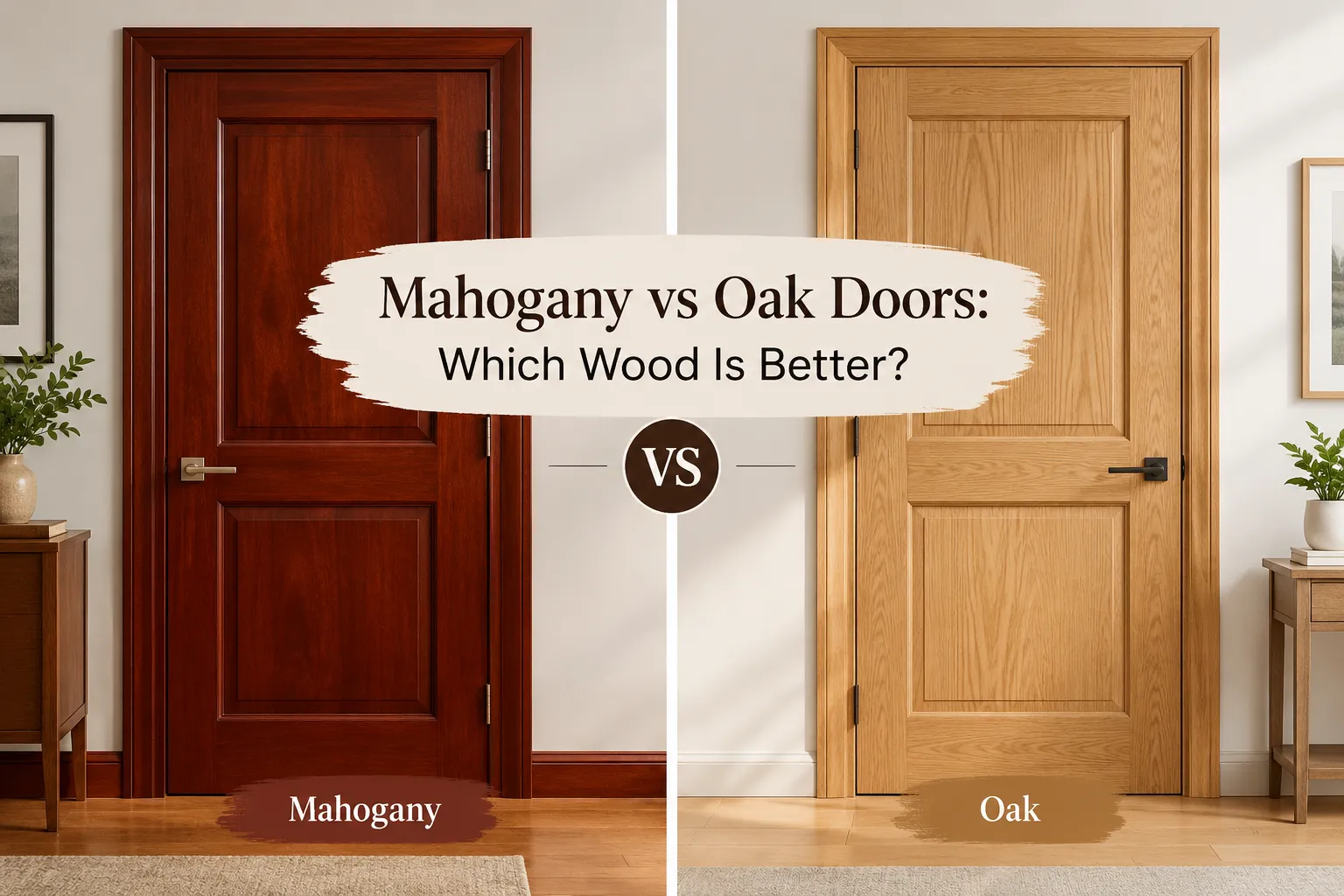
Choosing between mahogany and oak doors comes down to four main factors. Mahogany offers superior rot resistance and a refined, straight grain but costs significantly more. Oak delivers exceptional hardness at a friendlier price, though its pronounced grain and moisture sensitivity require more care outdoors. For exterior doors in harsh climates, mahogany usually wins. For interior doors on a budget, oak is hard to beat.
You might think all wood doors are basically the same. That assumption could cost you hundreds of dollars in repairs or replacement down the line. The species you pick affects how your door handles rain, sun, daily slams, and even attempted break-ins.
A door is not a static piece of furniture. It moves, expands, contracts, and fights the elements every single day. Understanding the difference between mahogany and oak doors helps you avoid buying something that warps within two years or looks worn out before you finish paying for it.
Walk up to any house and the front door is the first thing your eyes land on. A beautiful wood door signals quality, warmth, and attention to detail. A faded, cracked, or warped door does the opposite.
Real wood has a presence that fiberglass and steel simply cannot replicate. The grain catches light differently. The weight feels substantial when you open it. If you are investing in curb appeal, the mahogany vs oak door decision shapes how visitors perceive your entire home before they even step inside.
Not all wood handles moisture the same way. Some species naturally repel water and resist fungal decay. Others absorb moisture quickly and swell, leading to sticking doors and cracked paint.
Mahogany contains natural oils that make it highly resistant to rot and insect damage. Oak, especially white oak, has decent decay resistance but red oak is notably porous. If you live somewhere with heavy rain, snow, or humidity, this difference matters more than appearance.
Price is where these two woods diverge sharply. A solid mahogany exterior door often runs between $1,500 and $4,000 depending on size and custom features. A comparable oak door typically costs $800 to $2,500.
That gap exists because genuine mahogany comes from slower-growing tropical trees, many of which are harvested under strict regulations. Oak grows abundantly across North America, keeping supply high and prices moderate. Your budget may make the choice for you before you even compare grain patterns.
Let’s put these two woods head to head across the factors that actually matter for real-world performance. Hardness, appearance, cost, and workability all play a role in whether you will be happy with your door five or ten years from now.
The Janka hardness scale measures how much force it takes to embed a steel ball into a piece of wood. Higher numbers mean harder, more dent-resistant wood.
White oak scores around 1,360 on the Janka scale. Red oak comes in lower at roughly 1,290. Genuine mahogany varies by species, but most types fall between 800 and 1,100. That means oak is actually harder than mahogany in most cases.
Hardness matters for interior doors that get bumped by furniture, kicked open by kids, or scratched by pets. Oak resists dents and dings slightly better. However, hardness is not everything. Mahogany’s stability means it resists warping and twisting even though it is softer on paper.
Mahogany has a fine, straight, even grain with a reddish-brown color that deepens over time. It looks smooth and elegant, almost silky. The grain pattern is subtle, which makes mahogany ideal for formal or contemporary designs.
Oak has a bold, prominent grain with distinctive rays and flecks, especially when quartersawn. Its color ranges from pale tan to medium brown. If you love visible wood character and rustic texture, oak delivers that in spades. If you prefer understated luxury, mahogany fits better.
Here is what you can expect to pay for a standard solid wood door in the United States:
These ranges reflect standard sizes. Custom sizing, glass inserts, sidelights, or specialty hardware push prices higher regardless of species. Labor costs for installation are similar for both woods, so the material price difference is what hits your wallet hardest.
| Factor | Mahogany | Oak |
|---|---|---|
| Janka Hardness | 800–1,100 | 1,290–1,360 |
| Grain Pattern | Fine, straight, subtle | Bold, pronounced, visible rays |
| Color Range | Reddish-brown, darkens with age | Pale tan to medium brown |
| Rot Resistance | Excellent | White oak: good; Red oak: poor |
| Cost per Exterior Door | $1,500–$4,000 | $800–$2,500 |
| Stability (Warp Resistance) | Very high | Moderate |
| Best Use | Exterior doors, high-end interiors | Interior doors, Craftsman exteriors |
Mahogany has earned its reputation as a premium door wood for good reason. It combines beauty, stability, and natural weather resistance in a way few other species can match. But that performance comes at a price.
The biggest advantage of a mahogany vs oak exterior door is dimensional stability. Mahogany barely moves when temperature and humidity change. Your door will open and close smoothly all year, without sticking in summer or leaving gaps in winter.
Mahogany also contains natural oils that repel water and resist rot. In coastal areas or rainy climates, a properly sealed mahogany door can last decades without significant deterioration. That longevity offsets some of the higher upfront cost.
Genuine mahogany is expensive. Some species, like Cuban mahogany, are so scarce that they are essentially unavailable for commercial use. What you find at lumber yards is usually African mahogany or plantation-grown alternatives, which are good but still pricey.
Maintenance is another consideration. Mahogany’s rich color fades to gray if exposed to direct sunlight without protection. You will need to refinish an exterior mahogany door every two to three years with a quality marine-grade varnish or UV-blocking finish. That is a recurring cost and time commitment many homeowners underestimate.
If you are building a custom front entry with sidelights and a transom, mahogany is the classic choice. Architects and high-end builders specify it for good reason. The wood machines cleanly, holds crisp details, and accepts stain beautifully.
Inside the home, mahogany works well for statement pieces like a home office door, a library entrance, or a formal dining room door. It pairs beautifully with darker trim, brass hardware, and traditional or transitional design styles.
Oak has been a workhorse wood in American homes for centuries. It is strong, widely available, and carries a timeless appeal that fits everything from farmhouses to city apartments.
For oak vs mahogany interior doors, oak wins on price almost every time. You get excellent hardness and a beautiful, recognizable grain at a fraction of mahogany’s cost. That makes oak the practical choice when you need to replace multiple interior doors throughout a home.
Oak also takes stain exceptionally well. You can go light and natural, deep espresso, or anything in between. The pronounced grain pattern shows through beautifully, giving each door a unique look. If you want character and texture, oak delivers.
That bold grain is not for everyone. If you prefer a smooth, modern look, oak’s heavy texture may feel too busy. Paint does not hide the grain either unless you use a grain filler, which adds labor and cost.
Oak is also heavy. A solid oak door can weigh 60 to 80 pounds or more, which puts stress on hinges and frames over time. Proper installation with three or four hinges is essential.
Moisture is the biggest concern for exterior use. Red oak is especially porous and absorbs water readily. Even white oak, which is better, requires diligent sealing to prevent warping and rot outdoors.
Oak shines inside the home. Bedroom doors, closet doors, bathroom doors, and hallway doors all benefit from oak’s durability and reasonable price. If you are renovating a whole house, choosing oak for interiors keeps costs manageable without sacrificing quality.
For exterior doors, oak works best in Craftsman, Mission, or Arts and Crafts style homes where the bold grain complements the architecture. Just budget for regular sealing and choose white oak over red oak whenever possible for better weather resistance.
General comparisons are helpful, but your decision should reflect your home, your climate, and your priorities. Here is how to apply everything you have learned to your specific situation.
Do you live somewhere with heavy rain, coastal humidity, or extreme temperature swings? A mahogany or oak front door decision should lean toward mahogany in those conditions. Its natural rot resistance and stability give it a clear edge for exterior use in harsh climates.
If you live in a dry, moderate climate, oak becomes much more viable for exterior doors. A well-sealed white oak door can perform admirably in places like Arizona, Colorado, or inland California where moisture is less of a constant threat.
Your home’s design language should guide your choice. Mahogany suits formal, traditional, Colonial, and high-end contemporary homes. Its refined grain and rich color complement elegant surroundings.
Oak fits Craftsman bungalows, farmhouses, rustic cabins, and casual interiors. The visible grain and substantial feel match those styles perfectly. Trying to force a bold-grained oak door into a sleek modern home often looks mismatched.
If budget is your primary constraint, oak is the sensible choice. You get a real wood door with excellent durability for significantly less money. The savings can fund better hardware, professional installation, or other home improvements.
If you are thinking long-term, consider total cost of ownership. Mahogany costs more upfront but may need replacement less often in demanding exterior applications. For interior doors, both woods last indefinitely with basic care, so oak’s lower price makes it the better value there.
There is no single right answer in the mahogany vs oak doors debate. The best wood is the one that matches your climate, your home’s style, and your budget while meeting your expectations for maintenance.
For most homeowners, the practical path looks like this: choose mahogany for a statement front door that must withstand the elements, and choose oak for interior doors where value and hardness matter most. This combination gives you premium curb appeal where it counts and sensible spending everywhere else.
Visit a lumber yard or door showroom and look at both woods in person. Touch the grain, see the color in natural light, and lift a sample to feel the weight. Your hands and eyes will tell you more than any spec sheet can. Once you have made your choice, invest in quality sealing and professional installation. A great wood door, properly installed and maintained, will serve your home for decades.
Yes, mahogany is generally more expensive than oak. Mahogany is a tropical hardwood that is slower-growing and often imported, which drives up its cost compared to domestically sourced oak. However, exact prices vary by grade, thickness, and whether you choose solid wood or veneer.
Both woods are highly durable, but mahogany has a slight edge for exterior use. Its natural oils and tight grain make it exceptionally resistant to moisture, rot, and insect damage. Oak is also strong and long-lasting, but it benefits from regular sealing to maintain its weather resistance.
Yes, they have distinctly different appearances. Mahogany has a rich, reddish-brown tone with a fine, straight grain that darkens beautifully over time. Oak is lighter in color with a prominent, open grain pattern that gives it a more rustic or traditional look.
Both woods accept paint and stain well, but they respond differently. Oak’s open grain holds stain deeply and can create a dramatic contrast, while mahogany’s tighter grain produces a smoother, more even finish. Mahogany is often left with a clear coat to showcase its natural color, whereas oak is frequently painted or stained to match interior trim.
Mahogany is the better choice for high-humidity areas like bathrooms or laundry rooms. Its dimensional stability means it resists warping, swelling, and shrinking when exposed to moisture changes. Oak is more prone to movement in fluctuating humidity, though engineered oak doors can reduce this issue.
Oak is generally easier to work with for custom designs because it is less dense and more readily available in a wide range of cuts and sizes. Mahogany is harder and can dull cutting tools more quickly, but it machines cleanly and holds crisp edges well. For intricate carvings, both woods perform admirably, though mahogany’s fine grain allows for sharper detail.