Address
304 North Cardinal
St. Dorchester Center, MA 02124
Work Hours
Monday to Friday: 7AM - 7PM
Weekend: 10AM - 5PM
Address
304 North Cardinal
St. Dorchester Center, MA 02124
Work Hours
Monday to Friday: 7AM - 7PM
Weekend: 10AM - 5PM
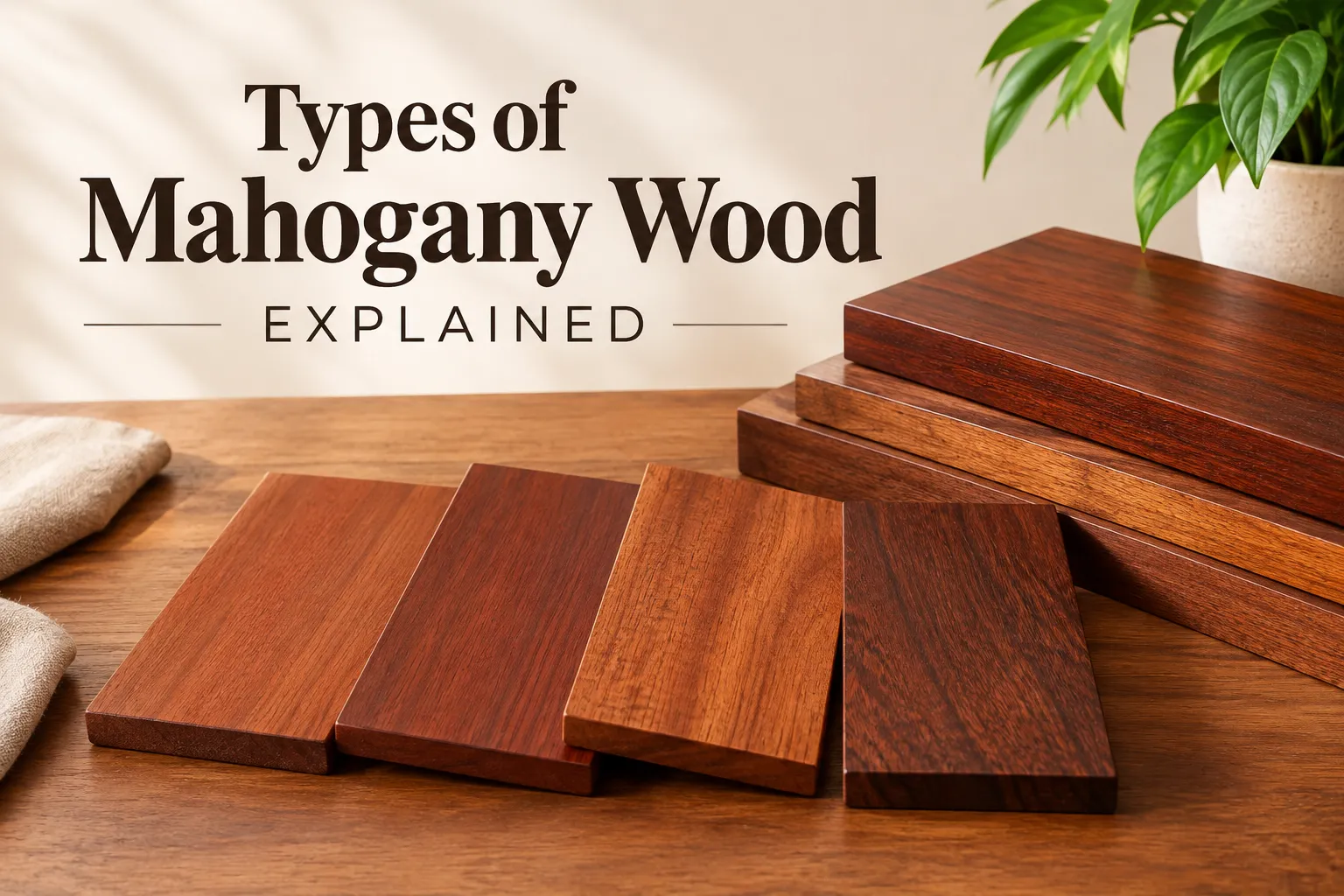
Have you ever walked through a lumber yard or browsed furniture listings online and noticed how many different woods carry the mahogany name? The word gets thrown around a lot, and it often means something completely different depending on who is selling it. Understanding the different types of mahogany wood can save you from overpaying for a cheap substitute or using the wrong material for a project that deserves better.
The mahogany story starts in the Caribbean. Spanish and English shipbuilders in the 1600s and 1700s noticed that a certain dense, reddish wood from islands like Cuba and Jamaica resisted rot and held up beautifully in saltwater. That wood came from trees in the Swietenia genus, and it quickly became prized for shipbuilding and fine furniture.
As demand grew, loggers moved from the islands to the mainland of Central and South America. There they found a close relative with similar color and working properties. This is the wood most people mean today when they say genuine mahogany.
Here is the problem: the name mahogany became a marketing tool. When the original trees got scarce and expensive, sellers started applying the name to other woods that looked vaguely similar. Some of these woods are true relatives. Others are not related at all.
Over time, the label stuck. Today you might see African mahogany, Philippine mahogany, Santos mahogany, or even “royal mahogany” on a price tag. Only some of these are real mahogany species in the botanical sense.
True mahogany comes from three species in the Swietenia genus: Honduran, Cuban, and a less common one called Pacific Coast mahogany. Everything else that uses the name is either a related tree in the same broader family or a completely unrelated species that happens to share a similar reddish-brown color.
This matters because lookalikes often behave differently. They may be softer, harder, heavier, or less stable. Knowing the difference helps you pick the right wood for your specific project.
Honduran mahogany wood is what most woodworkers mean when they talk about genuine mahogany. Despite the name, it grows across a wide range from southern Mexico through Central America and into Brazil and Peru. The tree can reach enormous sizes, producing wide, clear boards that furniture makers love.
The wood has a warm reddish-brown color that deepens with age. It machines beautifully, glues well, and holds screws without splitting. You will find it used in high-end furniture, cabinetry, boat interiors, and premium guitar necks and bodies. The main downside is price and availability, since overharvesting led to strict trade regulations.
This is the wood that started it all. Cuban mahogany is denser and harder than its Honduran cousin, with a deeper, richer color and a fine, even grain. Colonial furniture makers considered it the finest cabinet wood in the world.
Today, genuine Cuban mahogany is extremely rare. Centuries of logging wiped out most of the old-growth trees. Small plantations exist in Florida and parts of the Caribbean, but the wood is expensive and usually available only in narrow boards. If you find true Cuban mahogany, it is often salvaged or reclaimed from old furniture and buildings.
African mahogany comes from several related species in the Khaya genus, native to West and Central Africa. It looks a lot like Honduran mahogany at a glance, with a similar reddish-brown hue and medium texture. That visual similarity has made it the go-to substitute as genuine mahogany became harder to source.
There are some differences worth knowing. African mahogany tends to have interlocking grain, which creates a striped ribbon figure when quartersawn. It is slightly coarser and can be a bit more brittle than Honduran. Still, it works well for furniture, doors, millwork, and even guitar bodies. The price is typically much more approachable.
Here is where things get tricky. Philippine mahogany is not mahogany at all in the botanical sense. The name refers to a large group of tropical hardwoods from Southeast Asia, including lauan and meranti. Sellers started using the term decades ago because the wood has a reddish color that vaguely resembles true mahogany.
The quality varies wildly. Some meranti is reasonably dense and stable, while lauan is soft, splintery, and prone to warping. You will often see Philippine mahogany in plywood, interior trim, and inexpensive furniture. It is not a bad wood for the right job, but it should never be sold at genuine mahogany prices.
| Species | Color | Hardness (Janka) | Relative Price | Best Uses |
|---|---|---|---|---|
| Honduran Mahogany | Medium reddish-brown | 900 lbf | High | Fine furniture, instruments, boat interiors |
| Cuban Mahogany | Deep dark reddish-brown | 1,080 lbf | Very high | Restoration, heirloom furniture |
| African Mahogany | Light to medium reddish-brown | 830 lbf | Moderate | Cabinetry, doors, furniture, guitars |
| Philippine Mahogany | Pale pink to reddish-brown | 540-800 lbf | Low | Plywood, trim, budget furniture |
If you are building a dining table, dresser, or built-in cabinet, Honduran mahogany remains the top choice when budget allows. It is stable, easy to work, and takes a finish beautifully. African mahogany is a strong runner-up, especially for larger pieces where cost matters.
Philippine mahogany can work for painted furniture or interior trim, but it dents easily and does not hold fine detail well. Reserve it for projects where durability is less important.
True mahogany has a long history in boat building because it resists rot and swelling. Honduran mahogany performs well in marine environments, which is why classic runabouts and yacht interiors often feature it. African mahogany also works outdoors but may need more frequent sealing.
Philippine mahogany is a poor choice for anything exposed to weather. It absorbs moisture readily and will warp or decay quickly without constant maintenance.
Luthiers prize genuine mahogany for its tonal properties. Honduran mahogany produces a warm, balanced sound with strong midrange, which is why it shows up in guitar necks, bodies, and ukuleles. African mahogany is increasingly common in mid-range instruments and sounds quite similar.
Drum shells made from African or Honduran mahogany deliver a punchy, focused tone with less sustain than maple or birch. Philippine mahogany rarely appears in quality instruments because it lacks the density and resonance musicians want.
At the low end, Philippine mahogany costs a fraction of genuine mahogany. You get a workable wood for paint-grade projects, but little more. At the middle tier, African mahogany delivers the look and most of the performance of genuine mahogany at roughly half to two-thirds the cost.
At the high end, Honduran mahogany commands premium prices for its consistency, workability, and reputation. Cuban mahogany sits in a class of its own, often priced like an antique because it practically is one.
Start by checking the weight. Genuine mahogany feels moderately heavy but not dense like oak or maple. Philippine lauan is noticeably lighter and softer. Next, look at the pores. True mahogany has fine, evenly distributed pores, while many substitutes show coarser or more irregular grain.
Ask for the botanical name. A reputable seller should tell you whether the board is Swietenia, Khaya, or Shorea. If the answer is vague, walk away. Finally, compare prices. If a “mahogany” board costs the same as pine, it is almost certainly not genuine mahogany.
Genuine mahogany (Swietenia macrophylla) is native to the Americas and is prized for its fine, even grain and deep reddish-brown color that darkens beautifully over time. African mahogany (Khaya spp.) is a closely related but botanically distinct species that offers a similar appearance at a lower cost, though it tends to be slightly coarser in texture and more variable in color.
Honduran mahogany, also called genuine mahogany, is widely considered the gold standard for fine furniture due to its dimensional stability, workability, and resistance to rot and decay. Cuban mahogany was historically the most sought-after variety, but it is now extremely rare and largely unavailable due to overharvesting and export restrictions.
No, Philippine mahogany is not a true mahogany. The name is a trade term applied to several species of shorea and meranti wood from Southeast Asia, which are lighter, softer, and less durable than genuine Swietenia mahogany, though they are often used as budget-friendly substitutes.
You can distinguish mahogany types by examining color, grain, weight, and pore structure. Genuine mahogany typically has a uniform reddish-brown hue with a straight, fine grain, while African mahogany often shows interlocking grain patterns and a slightly lighter, more golden tone, and Philippine mahogany tends to be paler with a more open, coarse texture.
Santos mahogany (Myroxylon balsamum) is a dense, hard South American hardwood that is not a true mahogany but is often marketed under the name due to its rich, reddish-brown color. It is significantly harder and more difficult to work than genuine mahogany, but it offers excellent durability and is frequently used for flooring, decking, and high-end outdoor projects.
Cuban mahogany (Swietenia mahogani) was the original mahogany prized by European cabinetmakers for its exceptional density, rich color, and carving qualities, but centuries of overharvesting nearly drove it to extinction. Today it is protected under CITES regulations, and only small quantities from salvaged or plantation-grown sources occasionally enter the market at premium prices.