Address
304 North Cardinal
St. Dorchester Center, MA 02124
Work Hours
Monday to Friday: 7AM - 7PM
Weekend: 10AM - 5PM
Address
304 North Cardinal
St. Dorchester Center, MA 02124
Work Hours
Monday to Friday: 7AM - 7PM
Weekend: 10AM - 5PM
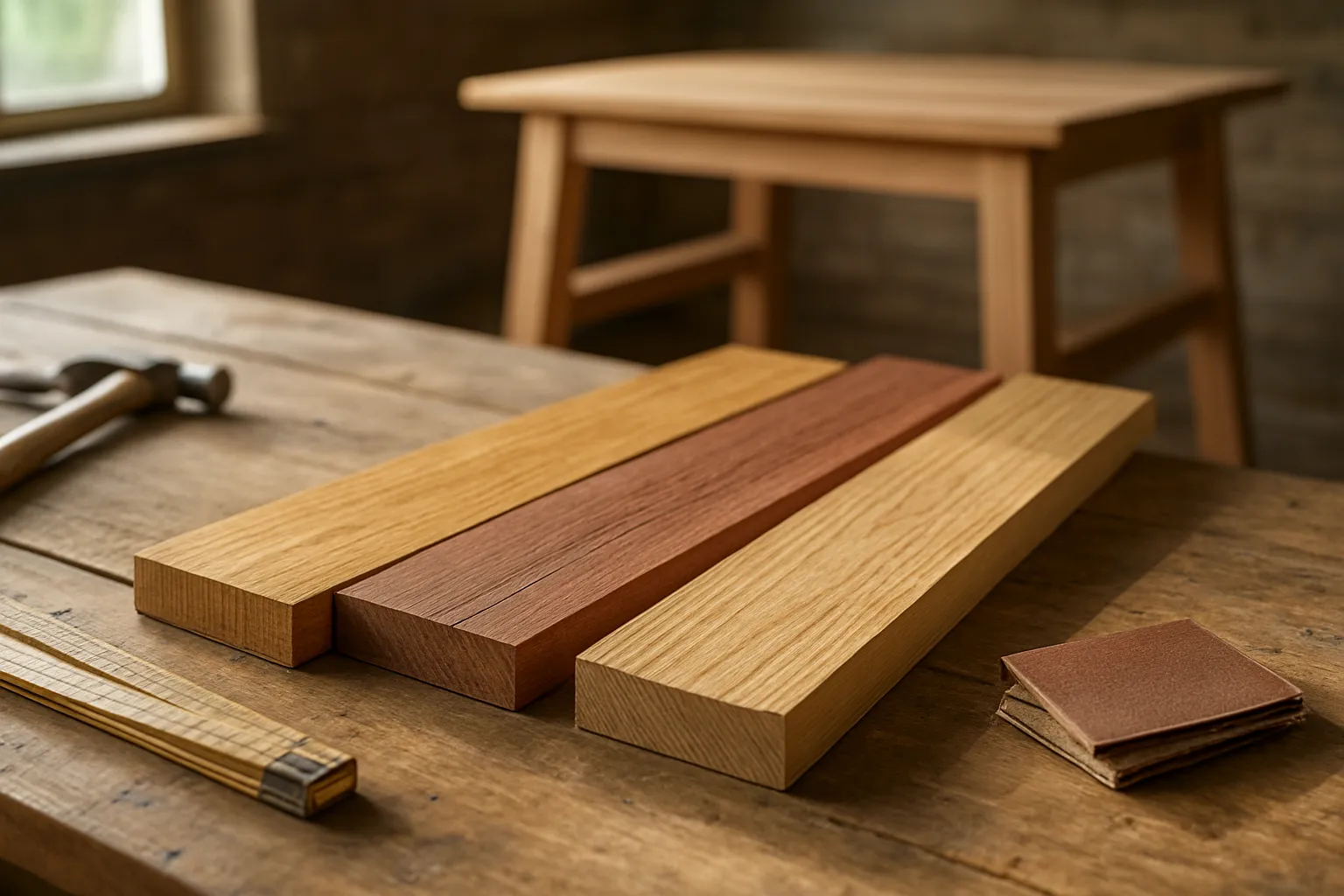
Building an outdoor table is one of those projects that feels simple until you’re standing in the lumber aisle trying to decide between a dozen species that all look roughly like wood. The truth is, the lumber you choose for an outdoor table matters more than almost any other decision you’ll make. Pick the wrong species and you’ll be rebuilding in three years. Pick the right one and you’ll hand the table down to someone else.
This guide walks through why table tops have different demands than other outdoor furniture, ranks seven proven species by real-world performance, compares them side by side, and covers how to match wood to your climate, design, and finishing routine. If you want the short version: teak is the gold standard, white oak is the best all-around domestic choice, and cedar is the best budget option that still lasts.
A chair gets sat on. A planter holds dirt. A table top gets everything. It’s the one surface that faces direct rain, baking sun, hot plates, spilled wine, and the occasional knife mark — all while staying flat enough to eat off.
That combination puts unique demands on the wood:
Exposed surface area. A table top is a broad, horizontal plane. Water doesn’t run off it quickly like it does on the vertical legs of a chair. It pools. It sits on the grain and soaks in. That’s why rot resistance matters more here than almost anywhere else in outdoor furniture.
Thickness and span. Most outdoor table tops are 1.5 to 2 inches thick. At that thickness, wood moves — it cups, twists, and checks as moisture changes. Species with high dimensional stability resist this far better than species that are merely rot-resistant. A warped table top is functionally useless even if the wood is technically still sound.
Weight and joinery. Dense hardwoods like ipe and teak weigh a lot. A 6-seat ipe table top can weigh well over 100 pounds before you even attach the base. That affects your base design, your fastening choices, and whether you can realistically move the table at all. Dense woods also resist standard screws — you’ll be pre-drilling every hole.
Food safety. A table top is an eating surface. Whatever finish you apply needs to be safe for occasional food contact and stable under heat from plates and pans. Some finishes that work fine on a bench or a planter are questionable on a surface where food lands.
Here’s how the major contenders stack up, roughly ordered from best overall performance down to the more compromise-driven choices.
Teak is the benchmark, and there’s a reason it’s been the standard for boat decks and high-end outdoor furniture for centuries. It packs natural oils and silica that make it incredibly resistant to rot, insects, and moisture. Left untreated, a teak table can last 50 years or more, weathering to a soft silver-gray. Treated with occasional oiling, it keeps its warm golden-brown color.
Teak doesn’t need sealing to survive, which is the part that surprises people. The natural oils do the work. You can oil it purely for aesthetics.
The catch is cost. Teak typically runs $25–40 per board foot, which puts a full-size table top into luxury territory. It’s also heavier and harder than most domestic woods, so plan your base and fasteners accordingly. If the budget allows and you want the lowest-maintenance, longest-lasting option, teak is the answer.
White oak is the best domestic hardwood for outdoor tables and the species most builders should seriously consider first. Unlike red oak, white oak has tyloses — natural cellular plugs that block water absorption. That’s why it’s used for boat hulls and wine barrels. Outdoors, it holds up for 20–30 years with reasonable care.
It’s also remarkably stable. White oak moves less with moisture changes than almost any other domestic species, which matters a lot on a wide table top. It accepts finishes beautifully, whether you want a natural look, a stain, or paint. Cost is moderate, typically $8–15 per board foot depending on region and grade.
If teak is out of budget or you’d rather work with a domestic wood, white oak is the move. It’s the sweet spot of durability, workability, cost, and availability.
Western red cedar is the classic budget-friendly outdoor wood. It’s lightweight, naturally rot-resistant, and affordable at $4–8 per board foot. It also smells great, machines easily, and takes paint and stain well.
The tradeoff is hardness. Cedar is soft. It dents, scratches, and shows wear under heavy use — think dropped plates, kids climbing on it, or dragging chairs across the surface. Left untreated, it’ll last 10–15 years. With annual sealing, you can push that further.
Cedar is a great choice for slatted table tops where the wood can drain and move without cracking, and for anyone who values light weight and low cost over maximum lifespan.
Ipe (pronounced “ee-pay”) is about as tough as outdoor lumber gets. It’s extremely dense — so dense it sinks in water — and lasts 25 years or more with minimal care. It’s naturally resistant to rot, insects, and wear, and it handles high-traffic use better than almost anything else.
Two things to know. First, it’s heavy. A full ipe table top is a two-person lift at minimum, often more. Second, you must pre-drill every fastener hole, because ipe will snap screws and split without pilot holes. It’s also hard on tools.
Color-wise, ipe starts a rich dark brown and fades to gray over time unless you seal it. Cost is high but usually below teak. For a table that lives outside year-round in a punishing climate and gets used hard, ipe is hard to beat.
Acacia has become popular as a budget alternative to teak, and it looks the part — warm tones, interesting grain, decent hardness. It’s widely available in ready-made furniture as well as lumber.
The catch is maintenance. Acacia is prone to cracking and warping if it isn’t sealed regularly, and its natural rot resistance is moderate at best. Plan on sealing it two to three times a year if you want it to last. With that routine, you can realistically get 10–15 years out of an acacia table. Skip the maintenance and it’ll disappoint you within a few seasons.
For a first outdoor build or a table that lives under a covered porch, acacia is a reasonable value pick. Just go in with realistic expectations about upkeep.
Cypress is a solid middle-ground species, especially in the southeastern U.S. where it’s locally abundant. It has good natural rot resistance, takes paint exceptionally well, and lasts 15–20 years outdoors.
Like cedar, it’s on the soft side and will dent under heavy use. It’s a good candidate for painted tables where you want a traditional look and don’t mind touching up the finish every few years. It’s also friendly to work with — not too heavy, not too hard, machines cleanly.
If you’re painting your table anyway, cypress is an excellent choice that often costs less than white oak.
Mahogany — whether genuine mahogany or the more affordable Sapele — brings beautiful grain and rich color to an outdoor table. It’s stable, works well, and lasts 15–25 years with regular sealing.
It’s not as naturally rot-resistant as teak, ipe, or white oak, so it does need a finish to perform outdoors. Genuine mahogany is expensive and increasingly hard to source responsibly. Sapele is a common substitute with similar appearance and better availability at lower cost.
Choose mahogany if appearance is a priority and you’re willing to maintain the finish. It rewards that effort with a table that looks genuinely furniture-grade.
| Species | Cost per board foot | Lifespan (untreated / oiled) | Maintenance | Best climate match |
|---|---|---|---|---|
| Teak | $25–40 | 50+ yrs / 50+ yrs | Rarely needs it | Coastal, humid |
| White Oak | $8–15 | 20–30 yrs / 30+ yrs | Every 1–2 yrs | Freeze-thaw, mixed |
| Cedar | $4–8 | 10–15 yrs / 15–20 yrs | Annually | Wet, humid |
| Ipe | $18–30 | 25+ yrs / 25+ yrs | Every 1–2 yrs | High-traffic, humid |
| Acacia | $6–12 | 5–8 yrs / 10–15 yrs | 2–3x per year | Covered porches |
| Cypress | $6–12 | 15–20 yrs / 20 yrs | Every 1–2 yrs (or paint) | Humid, painted builds |
| Mahogany/Sapele | $12–25 | 10–15 yrs / 15–25 yrs | Annually | Sheltered, mixed |
A few patterns worth noting. Teak and ipe are in a durability class of their own — the difference is that teak costs more but requires almost no maintenance, while ipe is a bit cheaper but heavier and harder to work. White oak sits in the sweet spot for most builders: strong durability, moderate cost, easy to source, and pleasant to work with.
Cedar and cypress are the value picks, with cedar being lighter and more rot-resistant but softer, and cypress being a better candidate for paint. Acacia and mahogany both look great but demand more upkeep than their marketing sometimes suggests.
Species choice isn’t just about the wood itself — it’s about how the wood interacts with your design and where you live.
Thick slab tables (2+ inches). Go with white oak or ipe. Both have the dimensional stability to hold up in thick sections without cracking or cupping. Avoid softwoods entirely here — a thick cedar slab is prone to checking and splitting as it dries.
Slatted or slat-top tables. Cedar and cypress shine here. Slats drain water quickly and move independently, so the wood’s natural expansion and contraction doesn’t fight the design. This is the easiest way to get a long-lasting table out of a softer, cheaper species.
Coastal or humid climates. Teak, ipe, or white oak resist rot and salt air best. Salt spray is brutal on finishes and hardware, so a species that performs well unfinished — teak in particular — saves you a lot of maintenance.
Arid or desert climates. The enemy here is cracking from rapid moisture loss, not rot. Cedar and redwood handle this well because they move gradually and tolerate dryness. Avoid acacia, which is prone to warping when humidity swings.
Freeze-thaw climates. White oak and black locust handle the constant expansion and contraction of freeze-thaw cycles best. Both are dense, stable, and rot-resistant. If you live somewhere with hard winters, these two should be at the top of your list.
Budget DIY builds. Cedar or pressure-treated pine with a good paint job can last 10+ years. Pressure-treated pine needs more care around food safety (see the FAQ below), but for a painted table on a covered patio it’s a legitimate option.
Finishing is where a lot of outdoor tables go wrong. The finish you choose affects appearance, lifespan, and how safe the table is for eating.
Penetrating oils. Tung oil, linseed oil, and Australian timber oil soak into the wood rather than forming a surface film. They’re easy to apply, they don’t peel, and they’re food-safe once fully cured. The tradeoff is that they need reapplication, often annually. They also darken the wood slightly and bring out grain beautifully.
Film-forming finishes. Spar urethane and marine varnish sit on top of the wood and form a hard, glossy layer. They’re very durable while intact, but they crack, peel, and require sanding to repair — which is a real pain on a table top with slats or tight joints. They also tend to be less food-safe, so avoid polyurethane on eating surfaces.
Natural patina. Leaving the wood untreated is a legitimate choice, especially for teak and cedar. Both weather to an attractive silver-gray and don’t need finish to survive. If you go this route, just accept the color shift and the slightly rougher surface texture over time.
Food-safe considerations. If food will touch the surface, use cutting board oil or mineral oil for direct contact areas. Avoid polyurethane and other film finishes on eating surfaces. Even “food-safe” film finishes are a gray area once they start to degrade.
Heat resistance. Oiled surfaces are vulnerable to heat rings from hot plates. Use trivets. This isn’t a wood quality issue — it’s a finish issue, and it’s easy to avoid.
Application steps. Sand to 120–150 grit — no finer on outdoor wood, since a rough surface helps finish penetrate. Apply the first coat thin. Sand lightly between coats. For film finishes, build up 3–4 coats. For oils, two or three coats with a day between each is usually enough.
Buying the right boards is as important as choosing the right species.
Look for tight, straight grain and few knots on table top boards. Knots are weak points that can loosen and fall out over time, and they collect water.
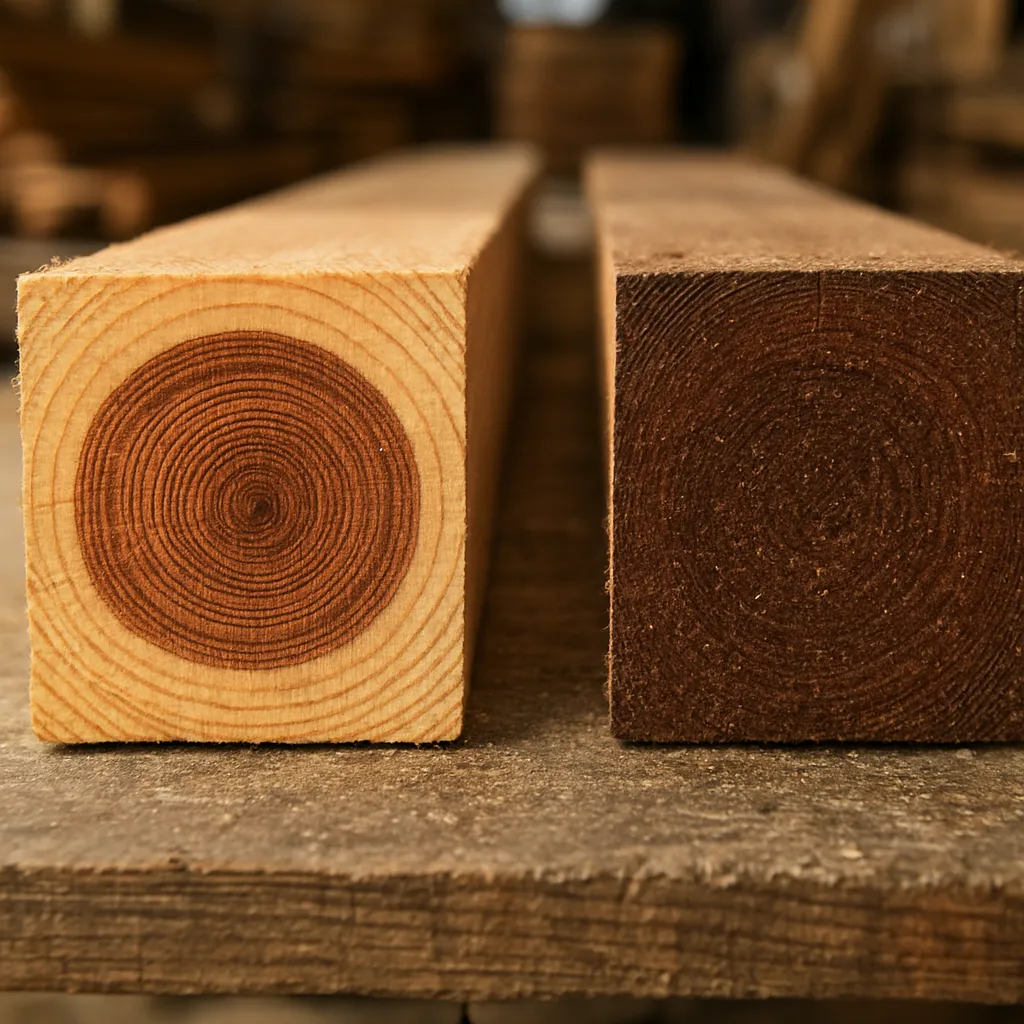
Avoid sapwood on rot-resistant species. The pale outer ring of a log is sapwood, and it lacks the natural decay resistance of the darker heartwood. On teak, ipe, cedar, and cypress, you want heartwood only for any exposed surface.
Check moisture content. For furniture-grade work, air-dried or kiln-dried wood at 6–8% moisture content is ideal. Green lumber will shrink and crack as it dries, which is a disaster on a table top.
Where to buy. Local sawmills are often the best source for white oak and cedar, usually at better prices than box stores. For teak, ipe, and other exotics, specialty hardwood dealers are your best bet — they’ll also have more consistent quality.
Price ranges by region. Prices vary widely. Teak and ipe cost more on the coasts and less near major import hubs. White oak and cedar are cheapest near where they grow.
Estimate board feet for a 6-seat table. A typical 6-seat table top runs about 20–30 board feet. Add 15–20% for waste and offcuts. So buy roughly 25–35 board feet.
Red flags. Walk away from green lumber, boards with excessive checking (surface cracks), soft spots that indicate rot, or insect holes. None of these get better with time.
What is the best lumber for an outdoor table top?
Teak is the best overall for longevity (50+ years) and low maintenance, but white oak offers the best balance of durability (20–30 years), cost, and availability for most DIY builders. Cedar is a solid budget-friendly choice for 10–15 years with annual sealing.
Is pressure-treated lumber good for an outdoor table?
Pressure-treated pine can work structurally, but the chemicals aren’t intended for regular skin contact and can leach onto food. If you use it, seal it with a food-safe finish and cover the table when not in use. Cedar or white oak are safer and more attractive alternatives.
How thick should an outdoor table top be?
For a 6- to 8-seat table, 1.5 to 2 inches is standard. For thicker slab tables (2.5+ inches), choose a species with high dimensional stability like white oak or ipe to prevent cracking.
Do I need to seal teak for an outdoor table?
No, teak naturally weathers to a silver-gray patina and does not require sealing. If you want to maintain the golden-brown color, apply a teak oil or sealer once or twice a year.
What is the cheapest wood for an outdoor table that still lasts?
Cedar is the most affordable naturally rot-resistant option, typically $4–8 per board foot. With annual sealing, a cedar table can last 10–15 years. Pressure-treated pine is cheaper but requires painting and may not be food-safe.
Can I use red oak for an outdoor table?
No. Red oak lacks tyloses, the natural plugs that block water absorption, so it rots quickly outdoors. White oak is the correct choice for outdoor use.