Address
304 North Cardinal
St. Dorchester Center, MA 02124
Work Hours
Monday to Friday: 7AM - 7PM
Weekend: 10AM - 5PM
Address
304 North Cardinal
St. Dorchester Center, MA 02124
Work Hours
Monday to Friday: 7AM - 7PM
Weekend: 10AM - 5PM
Is acacia wood good for outdoor furniture? Learn how long it lasts, how it compares to teak, and the simple yearly care that keeps acacia looking new.
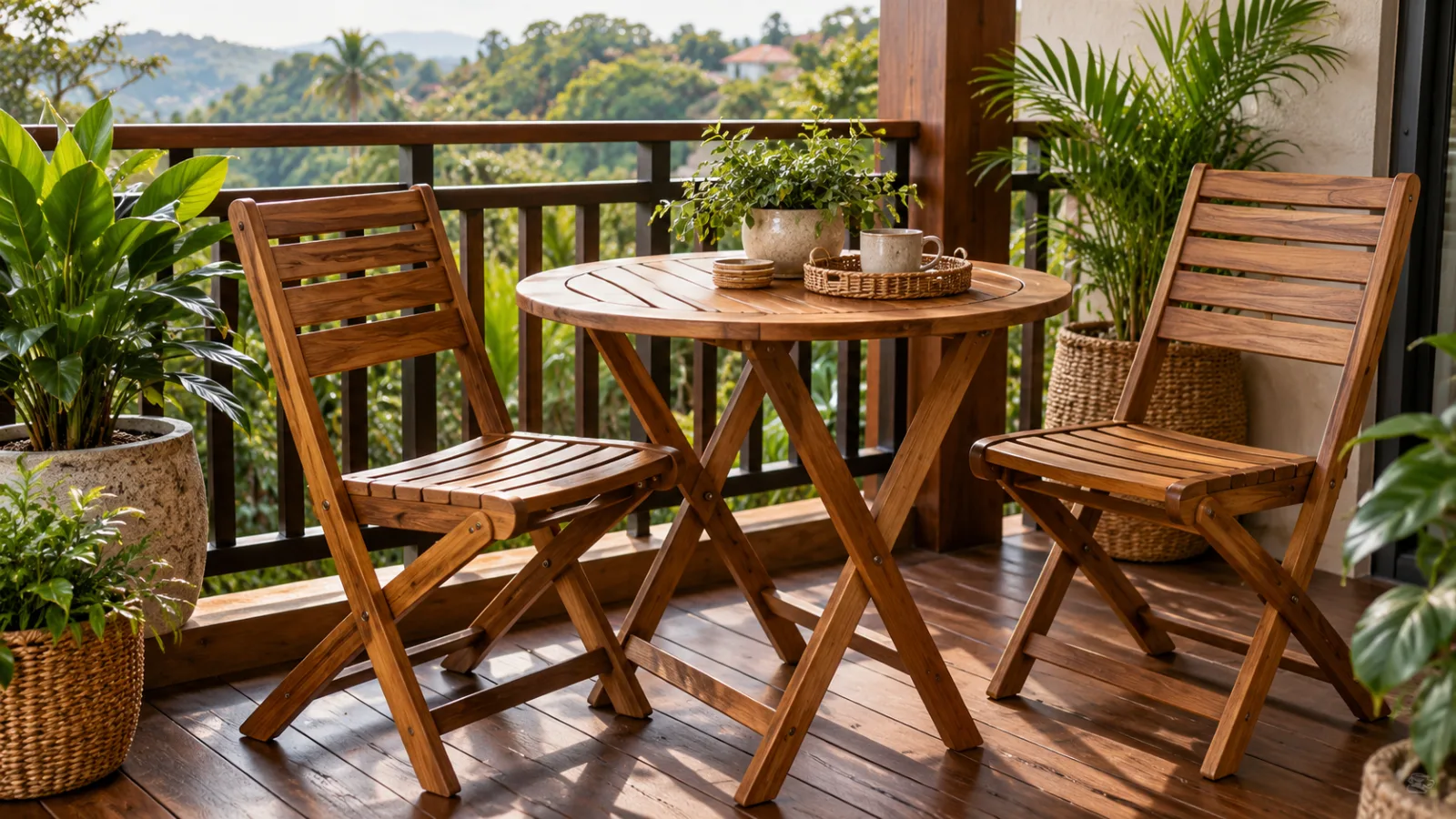
Yes, acacia wood is good for outdoor furniture, as long as it is sealed and maintained. It is a dense, naturally oily hardwood that resists water, scratches and everyday wear far better than pine or most indoor woods. It is not as weatherproof as teak, though. Left bare in full sun and rain, acacia can crack, gray and start to rot within a few seasons.
Think of acacia as the best value outdoor hardwood: around a third to half the price of teak, with good durability if you give it about 30 minutes of care a year. This guide covers how long it really lasts, where it works best, how it compares to teak and eucalyptus, and exactly how to protect it.
| Question | Short answer |
|---|---|
| Is it weather resistant? | Moderately. Natural oils help, but it needs a sealant or oil to handle rain and sun long term. |
| How long does it last outside? | About 5–7 years fully exposed with little care, 10–15+ years sealed and partly covered. |
| Is it hard enough? | Yes. Common furniture species are about as hard as teak or harder. |
| How much care does it need? | Clean twice a year and re-oil or reseal once a year. |
| Where does it work best? | Covered patios, porches, balconies and decks in mild or dry climates. |
| Where should you avoid it? | Fully exposed spots in very wet, humid or freeze-thaw climates, unless you commit to regular care. |
Acacia is a large genus of trees, with more than 1,000 species grown in Australia, Africa and Southeast Asia. Most acacia furniture sold today comes from fast-growing plantation species. Three traits make it a solid outdoor choice:
It is also one of the more sustainable hardwoods. Plantation acacia grows fast and is often harvested within 10–15 years. Look for FSC-certified pieces to be sure. Read more in our guide to the most sustainable woods.
Acacia’s main problem outdoors is not strength. It is movement. The wood swells when it absorbs moisture and shrinks as it dries. Over many wet-dry cycles, that movement causes small surface cracks called checks. Other weak points:
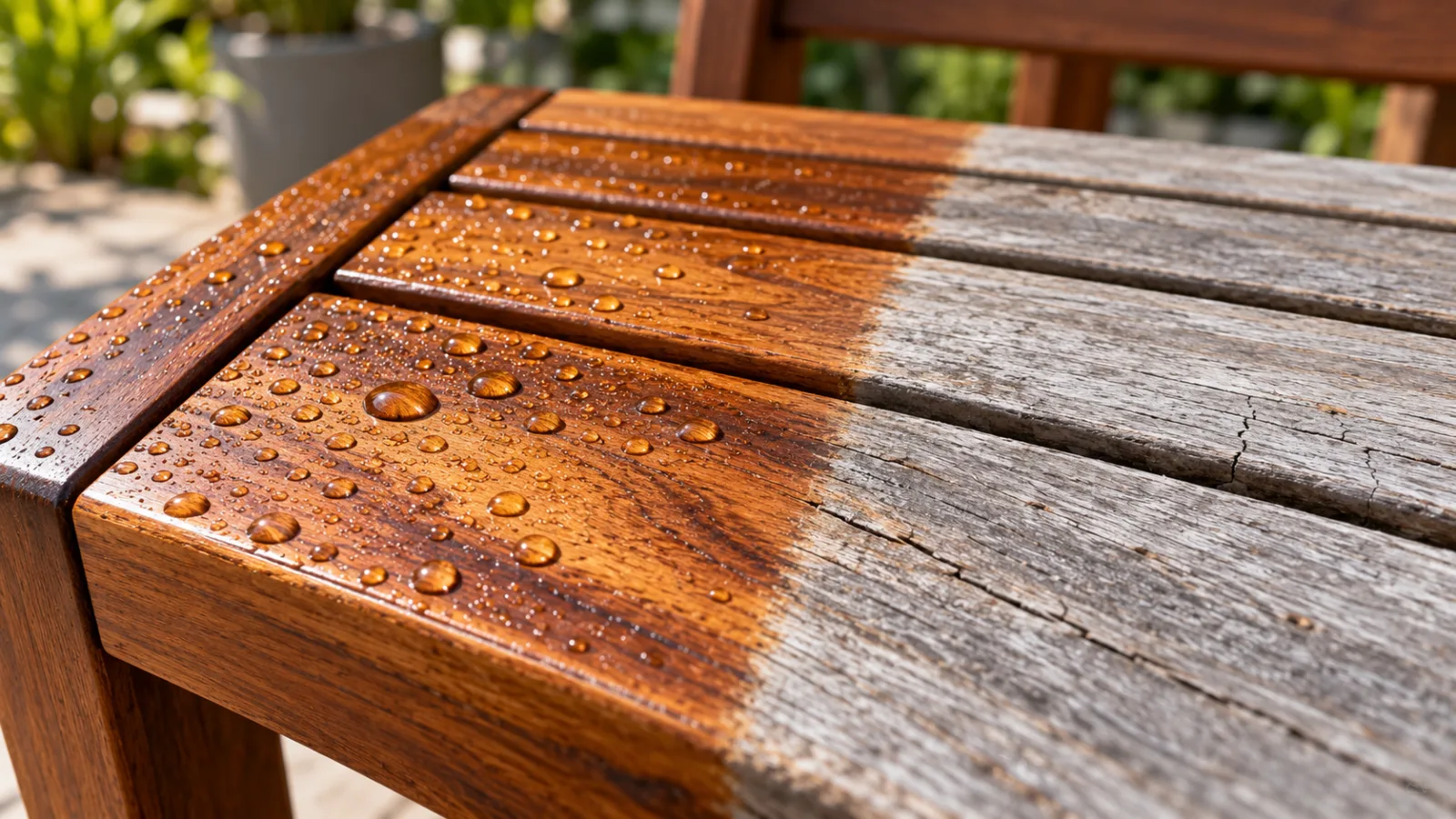
How long acacia lasts depends far more on exposure and care than on the wood itself. These are typical ranges for decent-quality, factory-sealed furniture:
| Placement and care | Typical lifespan |
|---|---|
| Fully exposed, never resealed | 3–5 years |
| Fully exposed, oiled or sealed yearly | 7–10 years |
| Covered patio or porch, sealed yearly | 10–15+ years |
| Covered and stored or covered in winter | 15+ years |
These are estimates based on how the wood behaves, not lab results. A wet, humid climate shortens each range. A dry, mild climate lengthens it.
These three woods are the most common choices for wooden patio sets. Here is how they compare:
| Feature | Acacia | Teak | Eucalyptus |
|---|---|---|---|
| Hardness (Janka, lbf) | ~1,160–1,790 (by species) | ~1,155 | Varies by species |
| Weather resistance | Moderate, needs sealing | Excellent, can stay bare | Moderate, needs frequent oiling |
| Typical lifespan outdoors | 5–15 years | 40–50+ years | 10–20 years |
| Maintenance | Reseal yearly | Clean only, oil optional | Oil 2–3 times a year |
| Relative cost | Low to medium | Highest | Low to medium |
| Best for | Covered patios, balconies, value buys | Exposed, wet or coastal sites | Budget sets in mild climates |
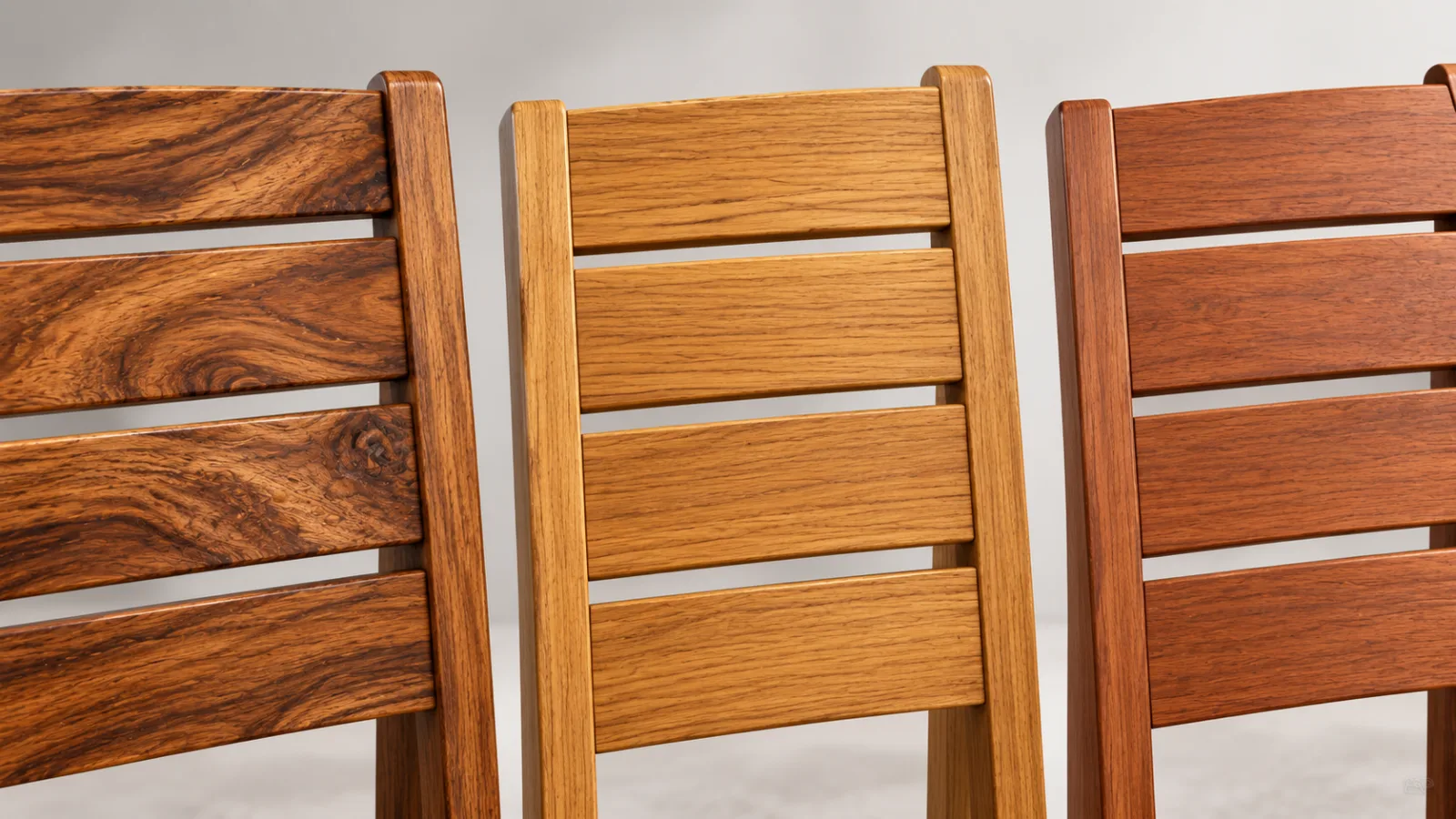
The bottom line: choose teak if you want to buy once and never think about it again. Choose acacia if you want real hardwood at a fair price and do not mind a yearly coat of oil. For a full comparison of nine outdoor woods, see our guide to the best wood for outdoor furniture.
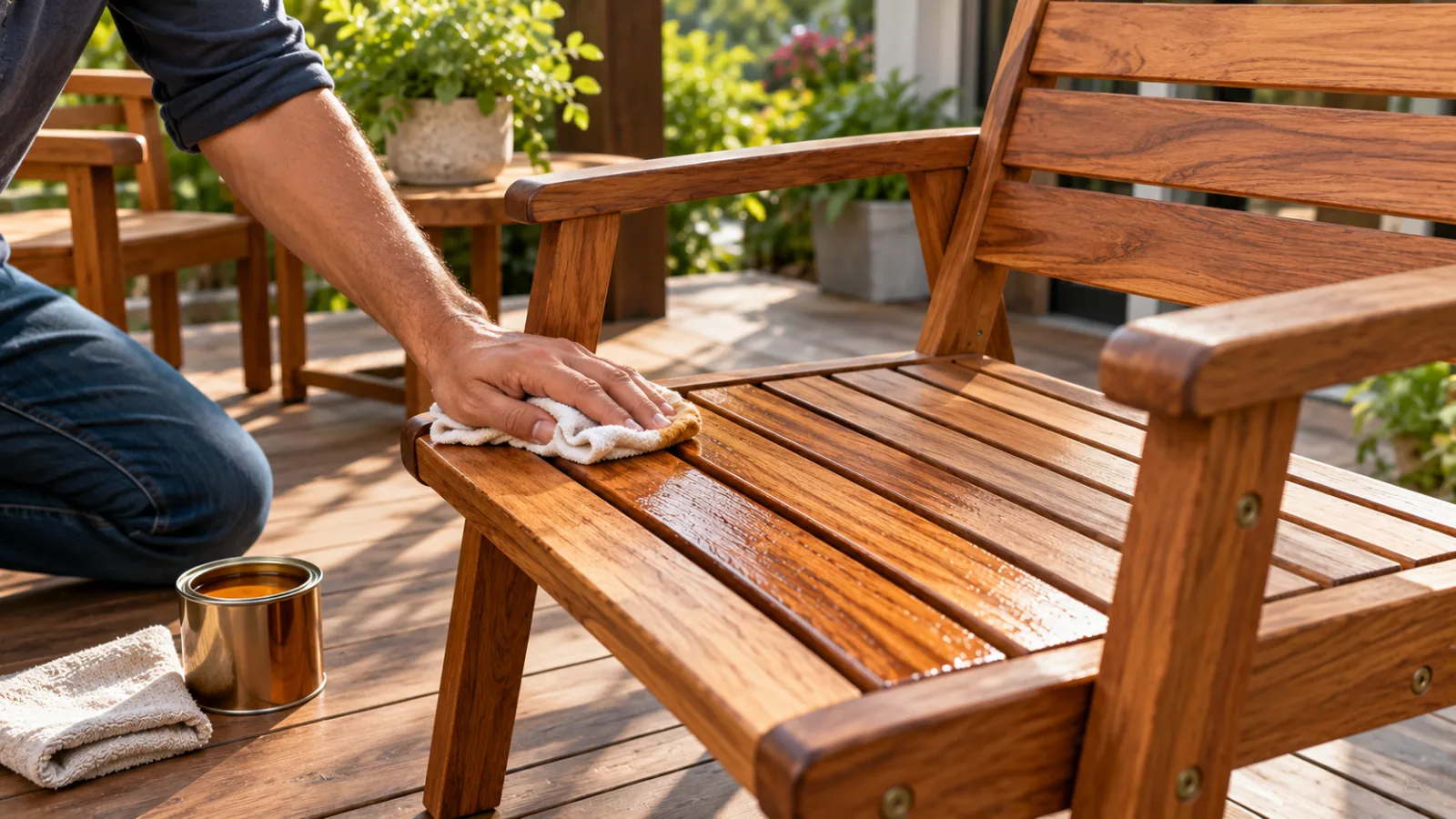
Most acacia furniture arrives with a factory oil or sealer. Your job is to keep that protection intact. You have two good finish options:
For most people, oil is the better choice for acacia. It is forgiving and keeps the wood’s warm color. If you prefer a non-toxic option, choose a water-based exterior sealer or a pure tung oil with no added metallic driers.
A good acacia set and a poor one can look identical online. Check these points before you buy:
Looking for a small-space set? Our 3-Piece Acacia Wood Patio Set includes two chairs and a 24-inch round table. It comes with a sealed light teak finish and an open-slat design that drains water, and it arrives fully assembled. It suits balconies, decks and small patios.
Yes. Acacia is a dense, naturally oily hardwood that handles outdoor use well when it is sealed or oiled once a year. It works best on covered patios, porches and balconies, and in mild or dry climates.
No wood is fully waterproof. Acacia is water-resistant thanks to its natural oils and tight grain, but it still needs an oil or sealer to stop rain from soaking in and causing cracks or rot over time.
For most people, a penetrating outdoor oil such as teak oil or pure tung oil is best. It keeps the natural look, never peels and takes minutes to reapply each year. An exterior sealer or spar varnish with UV protection lasts longer but must be sanded and redone once it cracks.
It can handle occasional rain if it is sealed and can drain and dry quickly. In freeze-thaw winters, store it in a garage or shed, or use a breathable cover, to prevent moisture from freezing inside the wood and splitting it.
Teak is more weather resistant and can last 40+ years with almost no care. Acacia costs much less and is as hard or harder, but needs yearly sealing and usually lasts 5–15 years. Choose teak for exposed, wet sites and acacia for covered spaces and value.
Graying comes from UV light breaking down the surface, and small cracks come from the wood swelling and shrinking as it gets wet and dries. Both are signs the finish has worn off. Clean, sand lightly and re-oil to restore it.
Wash it with mild soap, let it dry for two days, then sand with 150–220 grit until the gray layer is gone. Wipe off the dust and apply two thin coats of outdoor oil or sealer, wiping off any excess after 15–20 minutes.
Look at the edges and ends of each board. On solid acacia the grain pattern continues around the edge. On veneer it stops at a thin layer, and the edge often shows a different, plainer material underneath.
Acacia is a smart choice for outdoor furniture if you want the warmth and strength of real hardwood without paying teak prices. It performs best on covered patios, porches and balconies, and in mild or dry climates. Seal it, clean it twice a year and re-oil it once a year, and it can easily last more than a decade.
If your furniture will sit fully exposed in a wet or freezing climate and you never want to maintain it, spend more on teak. For everyone else, acacia gives the best balance of looks, durability and price. Building your own instead? See our guide to the best lumber for outdoor projects.