Address
304 North Cardinal
St. Dorchester Center, MA 02124
Work Hours
Monday to Friday: 7AM - 7PM
Weekend: 10AM - 5PM
Address
304 North Cardinal
St. Dorchester Center, MA 02124
Work Hours
Monday to Friday: 7AM - 7PM
Weekend: 10AM - 5PM
Teak, cedar, ipe, white oak or acacia? Compare the best woods for outdoor furniture by durability, cost and climate, plus the toughest finish for each.
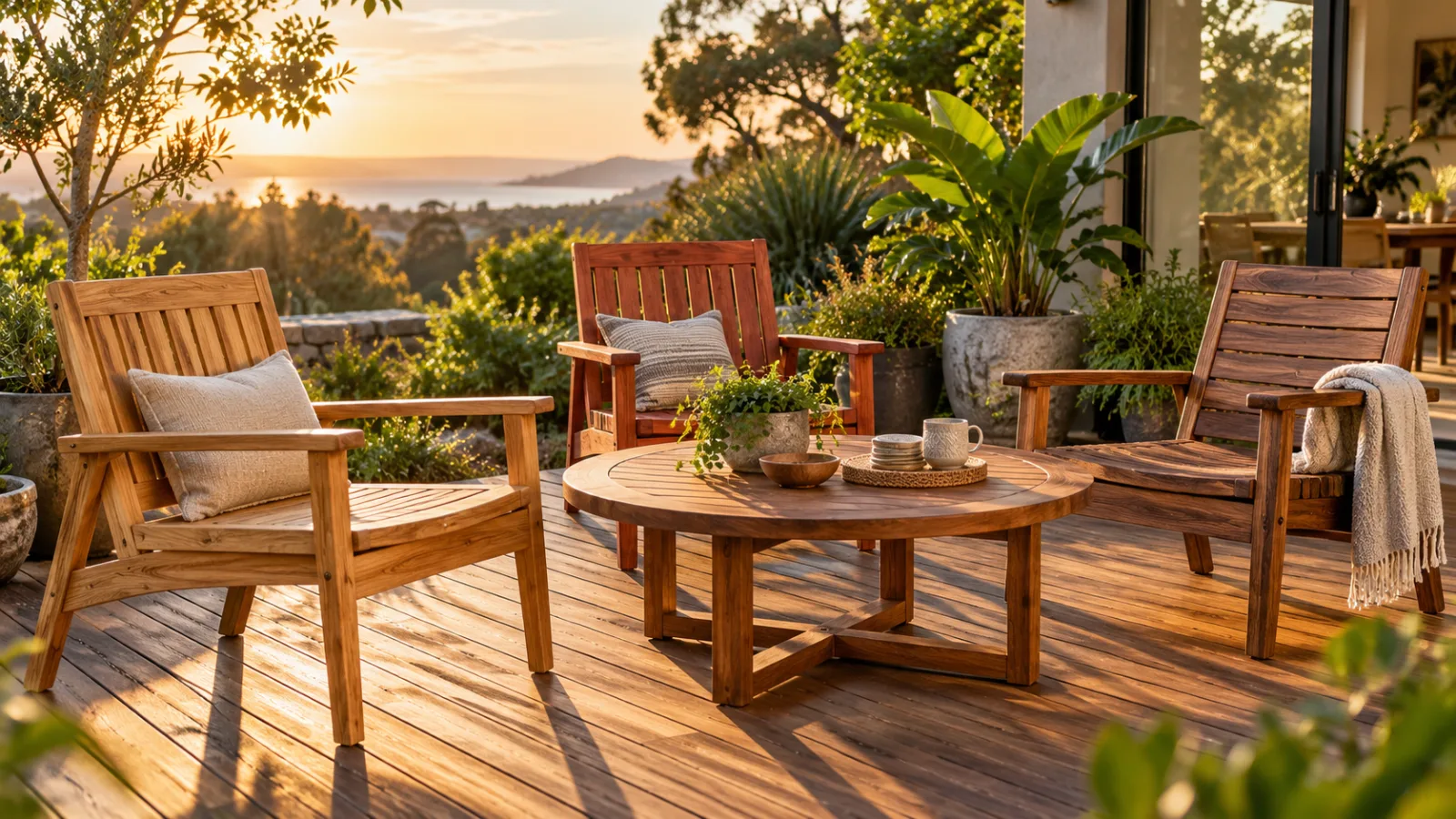
Teak is the best all-round wood for outdoor furniture. It resists rot, insects and moisture with almost no treatment, and it can last for decades. If teak is over budget, cedar is the best value for dry or mild climates, acacia is the best budget hardwood, and ipe is the toughest option for harsh sun and heavy wear.
But the “best” wood depends on three things most guides skip: your climate, your budget, and how much maintenance you will actually do. A teak bench in Arizona and a cedar chair in Seattle face very different problems.
This guide gives you:
Use this table to shortlist two or three woods, then read their profiles below. Hardness is the Janka rating (higher means more dent-resistant; see our classification of wood from hardest to softest). Lifespan assumes basic care.
| Wood | Rot resistance | Hardness (Janka, lbf) | Typical lifespan outdoors | Cost | Maintenance | Best for |
|---|---|---|---|---|---|---|
| Teak | Excellent | ~1,155 | 40–50+ years | Very high | Very low | Any climate, buy-once furniture |
| Ipe | Excellent | ~3,500–3,700 | 40+ years | Very high | Low | Hot sun, heavy use, poolside |
| White oak | Very good | ~1,360 | 20–30 years | High | Medium | Classic hardwood look, DIY builds |
| Black locust | Excellent | ~1,700 | 25+ years | High | Low | Eco-friendly, US-grown alternative to teak |
| Western red cedar | Good to very good | ~350 | 15–20 years | Medium | Medium | Dry or mild climates, lightweight pieces |
| Redwood | Good to very good | ~450 | 15–25 years | High | Medium | West Coast, Adirondack chairs |
| Cypress | Good | ~500 | 15–20 years | Medium | Medium | Humid Southeast US |
| Eucalyptus | Moderate to good | Varies by species | 10–20 years | Medium | Medium to high | Budget teak look, if oiled often |
| Acacia | Moderate to good | Varies by species | 5–15 years | Low | Medium to high | Budget sets, covered patios |
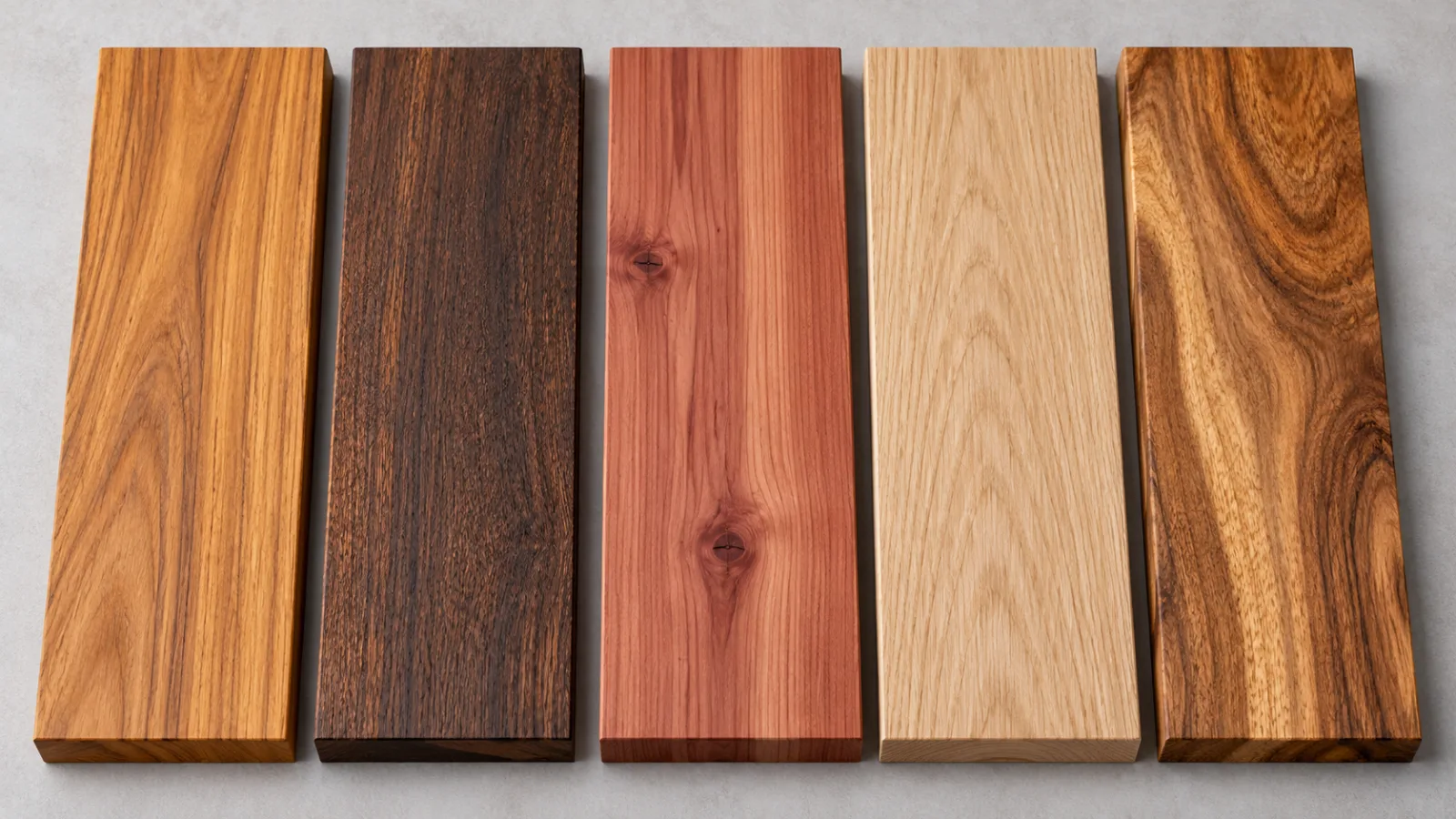
Hardness and lifespan figures are approximate. Real results depend on the exact species, the grade (heartwood lasts far longer than sapwood), and your climate.
The takeaway: if you want to buy once and forget it, choose teak or ipe. If you want the best balance of price and durability, choose cedar for mild climates or black locust for wet ones. Choose acacia only if you will keep it covered or oil it regularly.
Most outdoor furniture fails for one of two reasons: water gets in and the wood rots, or sun and heat crack and gray the surface. Your climate decides which problem you are fighting. Work through these four steps in order. (Building rather than buying? See our guide to the best lumber for outdoor projects.)
Rule of thumb: wet climate, buy dense and oily. Dry climate, buy UV-tolerant and keep it finished. Cold climate, buy stable and store it in winter.
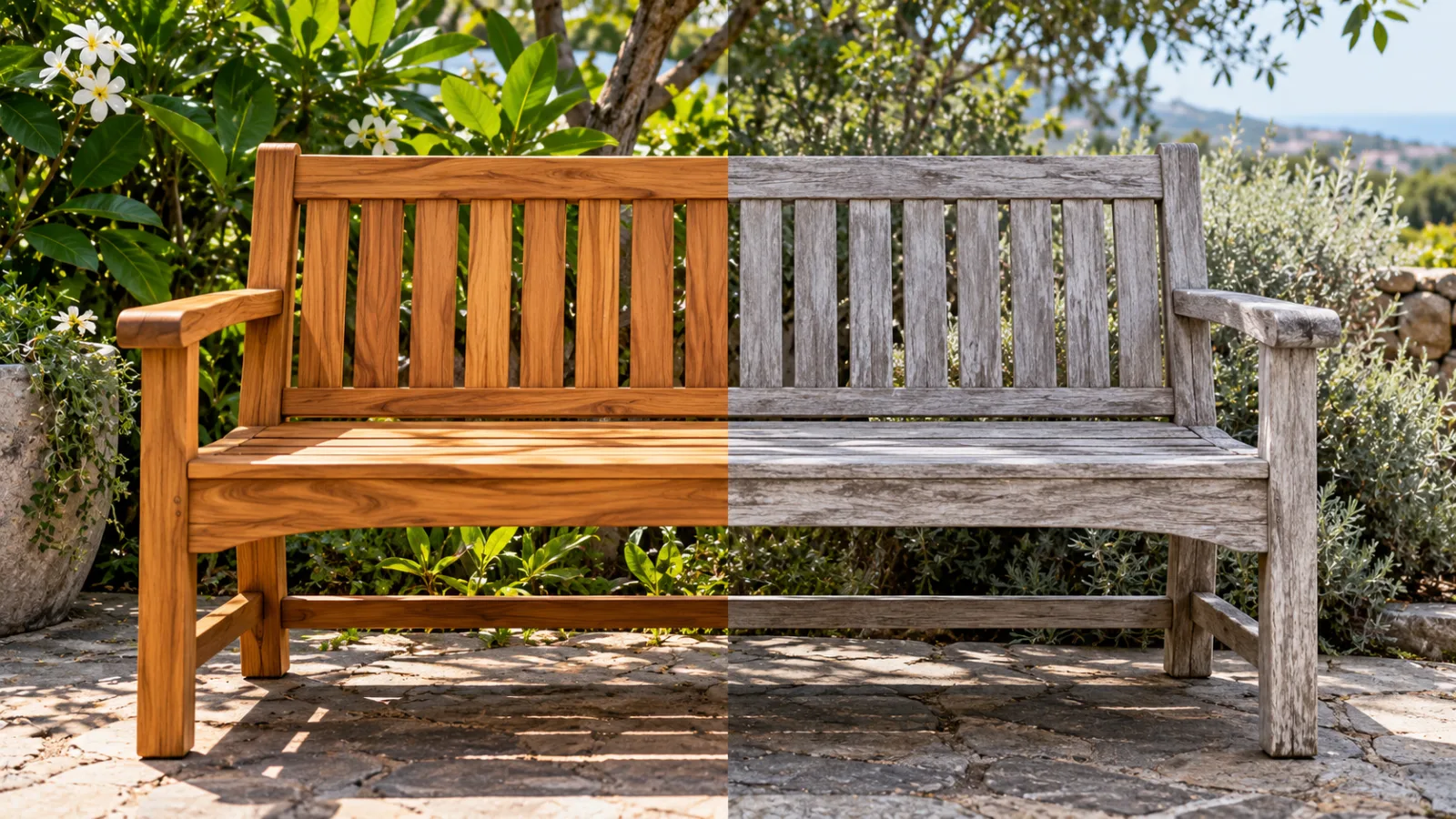
Teak is packed with natural oils and silica that repel water, rot and insects. That is why it has been used on boat decks for centuries. Left untreated, it weathers from honey-brown to a soft silver-gray within a year, with no loss of strength.
Ipe is a South American hardwood about three times harder than teak. It is so dense it sinks in water. It shrugs off sun, foot traffic and pool splash, which makes it ideal for benches and loungers in harsh climates.
White oak has closed pores that block water, which is why it is used for wine barrels and boats. Do not confuse it with red oak, which has open pores and rots quickly outdoors.
Black locust is one of the most rot-resistant woods grown in North America. Farmers have used it for fence posts that last 50 years in the ground. It is rarely seen in store-bought furniture, but woodworkers love it.
Cedar is light, aromatic and naturally resistant to rot and insects. It stays stable as humidity changes, so it rarely warps. It weathers to silver-gray if left unfinished.
Redwood heartwood resists rot and insects much like cedar, with a rich red color. Most redwood sold today is second-growth, which is less durable than the old-growth wood older guides describe.
Cypress grows in Southeastern swamps and holds up well in humid, wet conditions. It contains a natural preservative oil called cypressene.
Eucalyptus is a fast-growing plantation hardwood with a grain that resembles teak. Much of it is FSC-certified, which makes it an easy eco-friendly pick.
Acacia is dense, warm-toned and much cheaper than teak. Most acacia patio sets are made in Southeast Asia and come pre-finished. It covers many species, so quality varies widely between brands. See our full guide on whether acacia is good for outdoor furniture.
For a small balcony or deck: the 3-Piece Acacia Wood Patio Set comes sealed with a light teak finish, uses an open-slat design that drains water, and arrives fully assembled. Re-oil or reseal it once a year to keep it looking new.
Some woods look fine in the store but fail within one or two seasons outside. Skip these for anything that will sit in the weather:
The toughest outdoor wood finish is a marine (spar) varnish with UV absorbers, applied in 5–6 or more thin coats. For the longest life of all, boatbuilders seal bare wood with epoxy first and top it with that varnish. But the toughest finish is not always the best one. A thick film looks great until it cracks, and then you must strip and redo it. A penetrating oil never peels and takes ten minutes to refresh.
| Finish | Durability | Recoat interval | Look | Effort | Best for |
|---|---|---|---|---|---|
| Epoxy base + marine varnish | Highest | Varnish every 1–2 years | High gloss | Very high | Heirloom pieces, wet climates |
| Marine / spar varnish (UV-rated) | Very high | 1–2 years | Gloss or satin | High | White oak, cedar, redwood, acacia |
| Exterior penetrating stain-sealer | High | 1–3 years | Matte, tinted | Medium | Cedar, redwood, cypress |
| Penetrating oil (teak, tung or Danish oil) | Medium | 2–4 times a year | Natural, low sheen | Low | Teak, eucalyptus, acacia, ipe |
| Exterior paint | High, if kept intact | 3–5 years | Opaque color | Medium | Pine, budget or painted designs |
| No finish | Depends on wood | Clean only | Silver-gray patina | None | Teak, ipe, black locust |
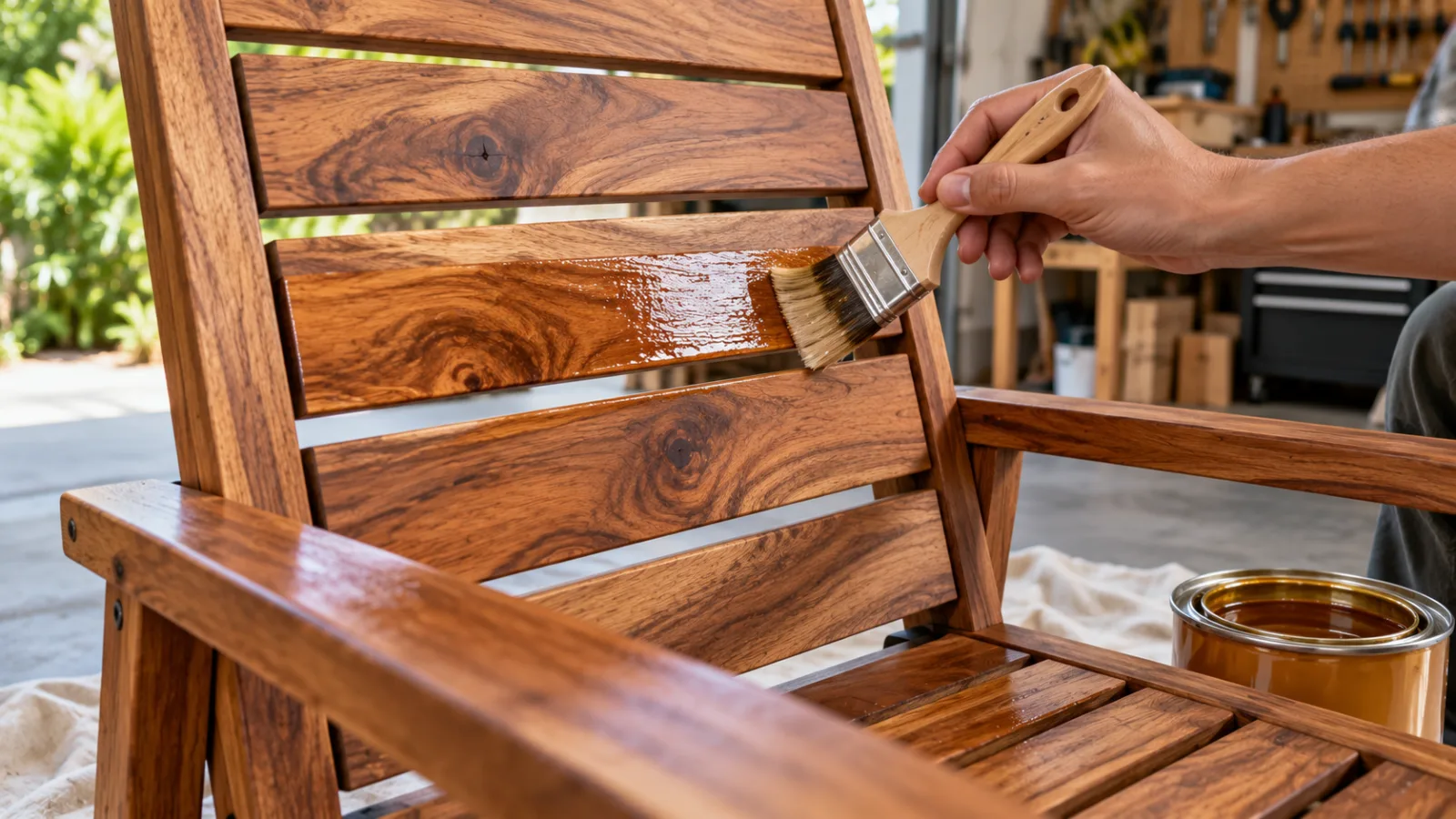
Avoid interior polyurethane outdoors. Sunlight breaks it down, and it yellows, cracks and peels within a season.
A few minutes each season adds years to any outdoor wood furniture. Follow this schedule:
| When | What to do |
|---|---|
| Spring | Wash with mild soap and a soft brush. Check for cracks, loose joints and worn finish. Re-oil or recoat if water no longer beads on the surface. |
| Summer | Wipe spills quickly, especially oil and food. Move pieces out of standing water after storms. |
| Fall | Clean off leaves and pollen, which hold moisture against the wood. Apply a fresh coat of oil or sealer before winter. |
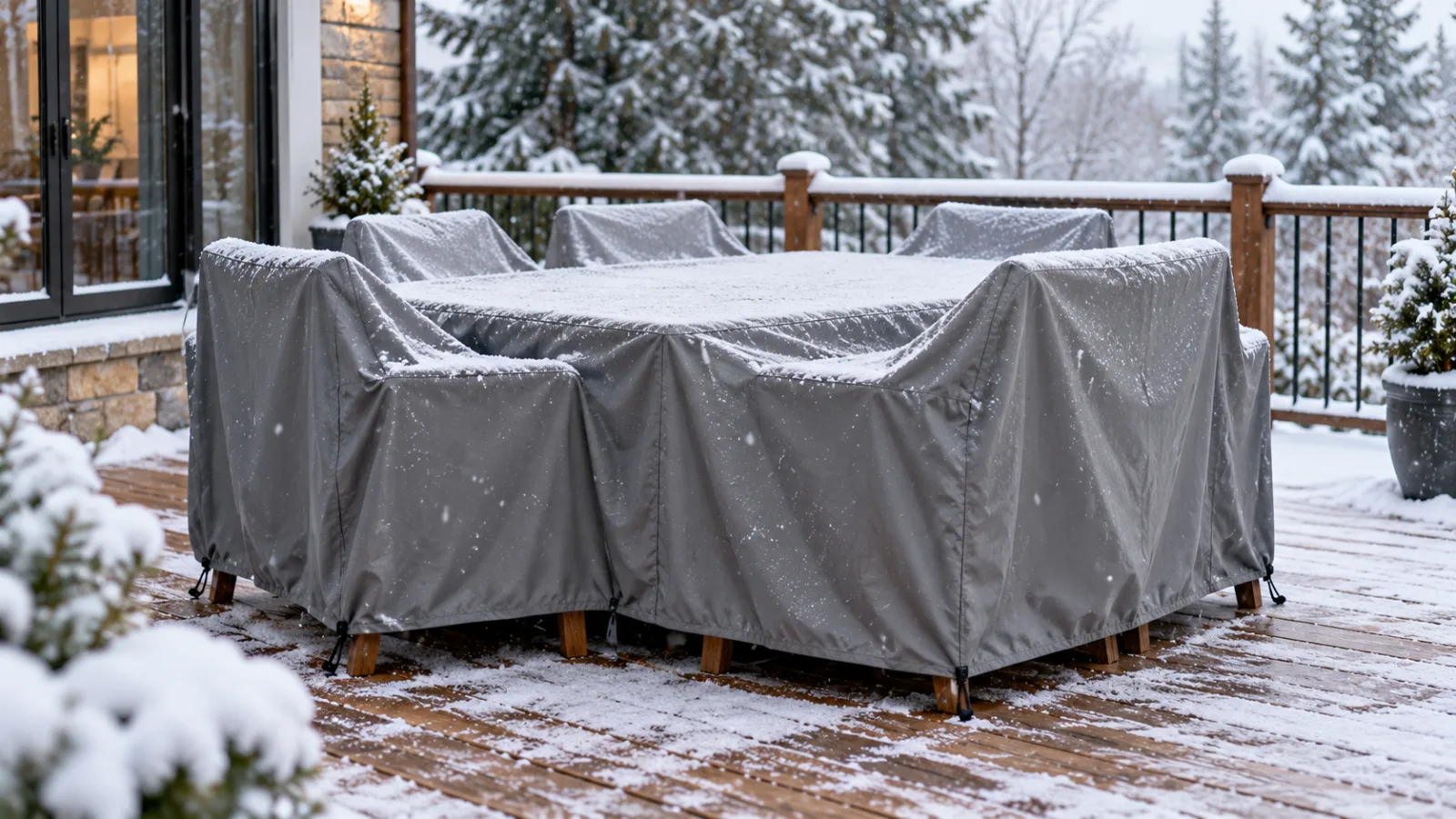
| Winter | Cover with breathable covers, or store indoors in freeze-thaw climates. Never wrap wood in plastic, as it traps moisture. |
The water test: sprinkle a few drops of water on the surface. If they bead up, the finish is still working. If they soak in and darken the wood, it is time to recoat.
When to replace instead of repair: if rot reaches joints, legs or load-bearing rails, the piece is no longer safe to sit on.
Teak is the best overall, thanks to its natural oils, rot resistance and 40+ year lifespan. Ipe is tougher but heavier and harder to find. For tighter budgets, cedar suits mild climates and acacia suits covered patios.
A UV-rated marine or spar varnish in 5–6 or more thin coats is the toughest common finish. An epoxy base under that varnish lasts even longer. On oily woods like teak and ipe, a penetrating oil works better because film finishes tend to peel.
Western red cedar gives the best balance of price, availability and durability. Acacia and eucalyptus are cheaper, but they need sealing or oiling every year to reach their full lifespan. For more budget options, see the best cheap wood to make furniture.
Yes, if it is sealed and kept partly sheltered. Acacia is hard and attractive, but it is less rot-resistant than teak. Expect 5–15 years, depending on care and climate. Read our full guide: is acacia wood good for outdoor furniture?
Teak lasts longer, is harder and needs less care, but it costs several times more. Cedar is lighter, cheaper and fine for mild or dry climates if you keep it finished. Choose teak for wet climates or buy-once furniture.
Teak, ipe and black locust can stay out under a breathable cover. Softer woods like cedar and acacia last longer if stored in a garage or shed during freeze-thaw months.
It ranges from about 5 years for unsealed budget wood to 50+ years for quality teak. The wood species, the grade and how often you refresh the finish matter most.
If you want outdoor furniture that lasts for decades with almost no work, buy teak. If you want the toughest surface for harsh sun or poolside use, buy ipe. For the best value, choose cedar in mild climates and black locust in wet ones. For a budget patio set, acacia works well as long as you seal it every year and keep it partly covered.
Whatever you choose, the finish and the care schedule matter as much as the wood. Pick the right wood for your climate, seal every surface, and refresh it before water stops beading. Good outdoor furniture will then reward you for many summers.
Furnishing a small outdoor space? Start with our acacia wood patio set, which ships from our US warehouse ready to use.