Address
304 North Cardinal
St. Dorchester Center, MA 02124
Work Hours
Monday to Friday: 7AM - 7PM
Weekend: 10AM - 5PM
Address
304 North Cardinal
St. Dorchester Center, MA 02124
Work Hours
Monday to Friday: 7AM - 7PM
Weekend: 10AM - 5PM
End grain vs edge grain cutting board: compare knife wear, durability, care and cost, plus face grain and plastic, and find which board suits how you cook.
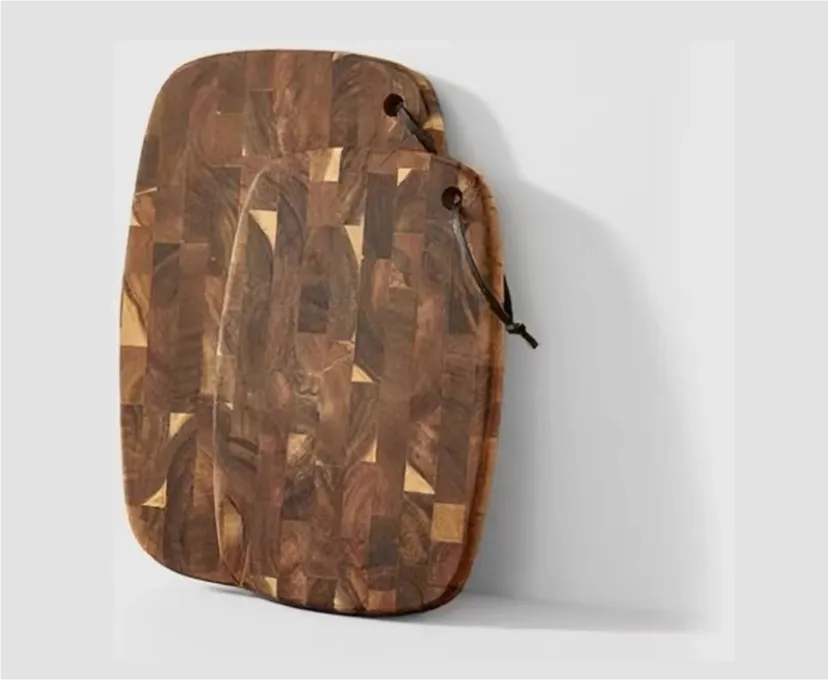
Quick answer: End grain cutting boards are gentler on knives and hide knife marks better, because the blade slips between the wood fibers instead of slicing across them. Edge grain boards are cheaper, lighter, easier to care for and less likely to warp. Choose end grain if you chop a lot and care about your knives; choose edge grain if you want a durable, low-maintenance board at a lower price.
Table of contents
Two wooden boards can look alike in a photo and behave very differently on the counter. The difference is the direction of the wood grain on the cutting surface. It decides how your knife feels, how the board wears, how much oil it needs and how much it costs.
Think of wood as a tight bundle of drinking straws running the length of the tree. How a board is cut and glued decides which side of those straws faces up.
| End grain | Edge grain | Face grain | |
|---|---|---|---|
| Knife feel | Softest on edges; blade slips between fibers | Firmer; blade cuts across fibers | Firmer; similar to edge grain |
| Knife marks | Close up and stay less visible | Show over time, can be sanded out | Show most clearly |
| Oil and upkeep | Absorbs more oil; needs oiling more often | Moderate | Moderate |
| Warping and cracking | Can dry out and check if neglected | Most stable; glued strips resist warping | More likely to cup or warp on wide boards |
| Weight and thickness | Usually thick and heavy | Lighter, thinner options available | Usually thin and light |
| Price | Highest (more labor to build) | Mid-range | Often the cheapest |
| Best for | Heavy daily chopping, prized knives | Everyday prep, carving, easy care | Serving, bread, light prep |
When your knife hits an end grain board, the edge slides between the fiber ends, which part and then close back up. Board maker John Boos describes this as the reason end grain keeps a knife edge sharper for longer.
Edge grain boards are made from long strips glued side by side. They are the most common style and the one most home cooks already own.
Face grain boards show the wide, flat side of the wood. They are often the most attractive and the least expensive, which is why they are common as serving and bread boards. The trade-off is that they show knife marks most clearly and a wide single plank is more likely to cup if it gets wet on one side. They are great for slicing bread, cheese and fruit and for serving, and less suited to heavy daily chopping.
One of the most common questions cutting board owners ask is whether there is something between a cheap plastic board and an expensive end grain block. There is: an edge grain hardwood board. It costs less than end grain, is kinder to knives than glass or stone, and lasts for years with basic care.
Plastic boards have one real advantage: many can go in the dishwasher. But they scar with use, and the deep knife grooves are hard to clean, so they need replacing more often. Many cooks keep a plastic board for raw meat and a wooden board for everything else.
Wood species matters as much as grain direction. Dense, closed-grain hardwoods hold up best; our guide to the hardest woods and the Janka scale explains how species compare.
The basic routine is the same for every wooden board: wash by hand with hot, soapy water, never soak it or put it in the dishwasher, dry it standing on its edge, and oil it with food-grade mineral oil. Our step-by-step guide on how to clean a wooden cutting board covers washing, sanitizing and oiling in detail.
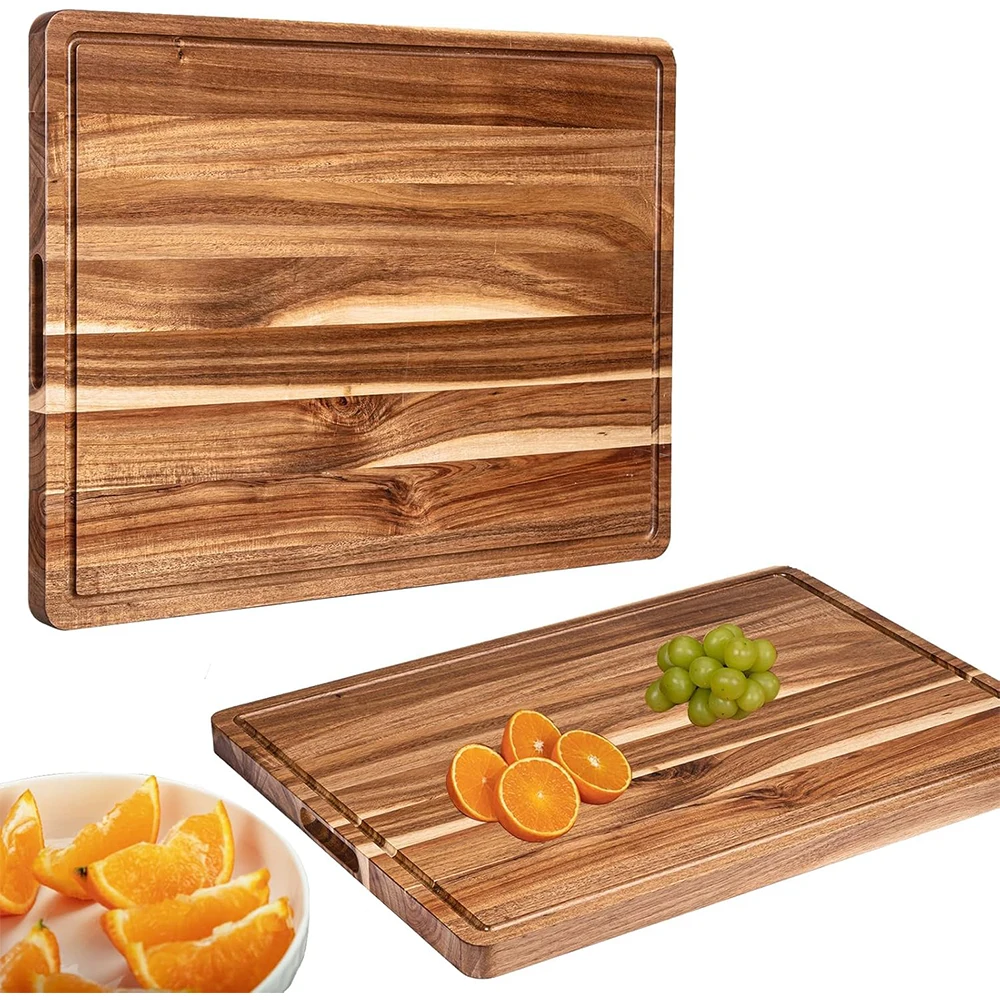
If you want the end grain experience, our wooden butcher block with rounded corners has a checkered end grain surface and a hanging hole for drying upright. For carving and big prep jobs, our extra-large butcher block cutting board (24 x 18 in) has a juice groove and a reversible surface. Browse all our wooden cutting boards.
Related guides: How to Clean a Wooden Cutting Board · Top 10 Hardest Woods (and Hardest-to-Softest Chart) · Strongest Woods for Furniture
If you chop every day and care about keeping your knives sharp, yes. End grain is gentler on edges and hides knife marks. If you mainly do light prep or want low maintenance, an edge grain board is the better value.
Yes, that is its main advantage. The blade slips between the ends of the wood fibers instead of cutting across them, so the edge meets less resistance.
They are built from many small blocks that have to be cut, arranged and glued with the fiber ends facing up. That takes more material, time and skill than gluing long strips.
Yes. The exposed fiber ends absorb oil and water faster, so oil them more often, especially when the board is new. Edge grain boards are fine with a monthly coat.
Either works if you clean and sanitize it afterward. For carving roasts, a large board with a juice groove matters more than the grain direction.
Edge grain is slightly easier because its smooth, tight surface dries faster. Both should be washed by hand and dried upright; neither should go in the dishwasher.
An edge grain hardwood board is the usual middle option. It costs less, is still kind to knives compared with glass or stone, and lasts for years with basic care.