Address
304 North Cardinal
St. Dorchester Center, MA 02124
Work Hours
Monday to Friday: 7AM - 7PM
Weekend: 10AM - 5PM
Address
304 North Cardinal
St. Dorchester Center, MA 02124
Work Hours
Monday to Friday: 7AM - 7PM
Weekend: 10AM - 5PM
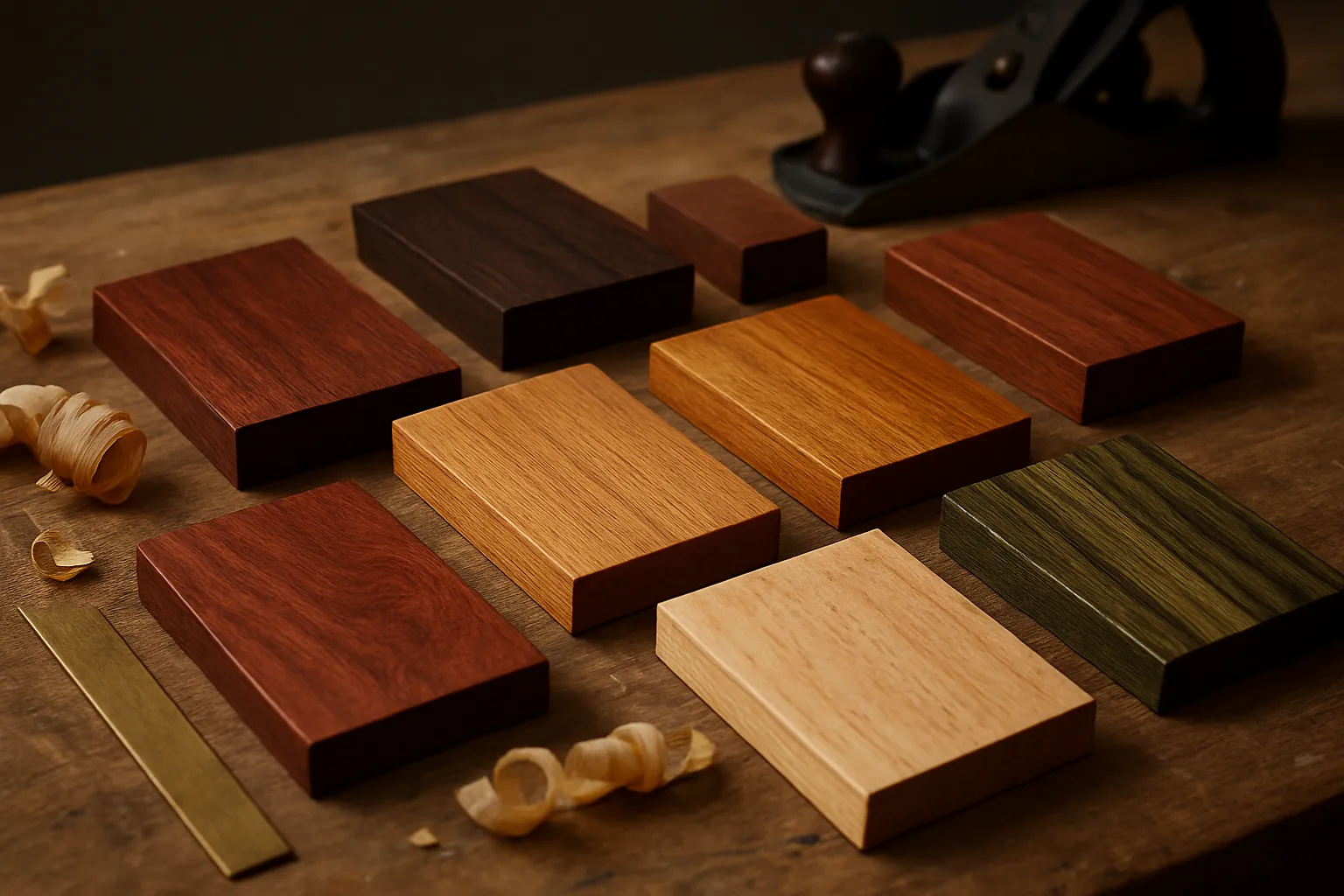
Quick answer: Exotic woods are imported species, many of them tropical, valued for colors, figure and hardness that domestic woods like oak and maple rarely match. Popular types include bloodwood, bocote, bubinga, canarywood, cocobolo, padauk, purpleheart and zebrawood. They cost more, and some, including several rosewoods and ebonies, are CITES-regulated, so buy from suppliers who can document where the wood comes from.
Exotic woods have a way of stopping you mid-step in a lumber yard. That deep purple board, the one with stripes like a zebra, the reddish-orange plank that looks almost artificial—these aren’t your standard hardware store pine or red oak. They’re woods from forests across Africa, South America, and Southeast Asia, and they’ve become staples in woodworking shops, custom furniture studios, and luthier benches around the world.
If you’re trying to figure out which exotic wood fits your next project, this guide walks through the most popular species, what makes each one distinct, and how to choose wisely.
In the simplest terms, exotic woods are lumber imported from outside the United States. That’s the working definition most woodworkers and suppliers use, though it’s worth noting the label has more to do with geography and trade than with any botanical category. A tree species growing in Brazil, Gabon, or Indonesia is “exotic” to an American buyer even if it’s completely ordinary in its home region.
The appeal comes down to what these woods offer that domestic species often don’t. Many exotics bring intense, saturated color—think Padauk’s orange-red or Purpleheart’s violet. Others have dramatic grain patterns, exceptional density, or natural oils that make them resistant to rot and insects.
Domestic woods like oak, maple, walnut, and cherry are generally easier to source, less expensive, and well-documented in terms of working characteristics. They’re also more likely to come from managed North American forests with established supply chains.
Exotic woods tend to be denser and harder on average, though there are plenty of exceptions. They often have higher oil content, which affects how they glue and finish. And because they’re imported, they typically cost more per board foot and come in more limited dimensions.
Uses differ too. Domestic species dominate framing, cabinetry, and mass-produced furniture. Exotics show up more often in high-end furniture, musical instruments, turned objects, inlays, and decorative accents where their appearance justifies the price.
Woodworkers gravitate toward exotics for a few reasons. First, the visual impact—a Cocobolo bowl or Zebrawood tabletop makes a statement that domestic woods rarely match. Second, performance: species like Ipe and Iroko offer rot resistance and durability that make them genuinely practical for outdoor applications. Third, workability in specific contexts: some exotics turn beautifully on a lathe or hold fine detail in carving in ways that softer domestic woods can’t.
Picking an exotic wood isn’t just about which one looks best. A few practical factors matter just as much.
Hardness determines how the wood holds up to wear. The Janka scale measures this, and exotic woods span a wide range—from moderately hard species to some of the densest woods on earth. High-wear surfaces like floors and cutting boards call for harder species.
Color and grain are usually why people choose exotics in the first place. But keep in mind that color can shift over time. Padauk darkens to brown. Purpleheart can lose its purple and turn grayish-brown with UV exposure. Cherry does this too, but with exotics the change can be more dramatic.
Workability covers how easily the wood cuts, planes, glues, and finishes. Dense woods dull tools faster. Oily woods resist glue. Some species tear out easily during machining. Knowing these quirks before you start saves frustration.
Cost varies enormously. Some exotics are reasonably affordable; others are genuinely expensive, especially in wide, clear boards.
Sustainability and sourcing deserve real attention. CITES (the Convention on International Trade in Endangered Species) regulates trade in certain woods, including several rosewoods and ebony species. Look for FSC certification when possible, and don’t hesitate to ask suppliers where their stock comes from.
Bloodwood earns its name from its deep, reddish-crimson color, which tends to deepen over time rather than fade. It’s dense and hard, with a fine texture that takes a polish well. Originating from South America, it’s commonly used for inlays, turnings, and small decorative pieces. Its density makes it challenging to work with hand tools, but it machines cleanly with sharp cutters.
Bocote comes from Mexico and Central America and is known for its striking grain—dark brown or black streaks running through a lighter tan or yellow background. The patterns can be wildly variable, which makes it a favorite for knife handles, game calls, and decorative boxes. It’s moderately hard and works reasonably well, though the grain can sometimes tear out during planing.
Bubinga is an African hardwood with a rich, reddish-brown color and often dramatic figure, including waterfalls and pommele patterns. It’s hard and dense but works surprisingly well with both hand and power tools. Common uses include fine furniture, cabinetry, and musical instruments. Its density gives it a solid, substantial feel.
As the name suggests, Canarywood ranges from yellow to orange, often with streaks of red, pink, or brown running through it. It comes from South America and is moderately hard—easier to work than many denser exotics. It’s popular for bowls, pens, and decorative items where its color variations can really show off.
Cocobolo is one of the most beautiful and most challenging exotics. It’s extremely dense, with colors ranging from orange-red to deep brown, often with dramatic black streaks. Its high oil content makes it naturally durable but also makes gluing tricky—surfaces often need to be wiped with solvent before adhesive is applied. It’s a classic tonewood for guitars and also used for knives, pens, and turnings.
A safety note: Cocobolo is a known sensitizer. Repeated exposure to its dust can cause allergic reactions, skin irritation, and in some cases respiratory problems. Good dust collection and a quality respirator aren’t optional with this species.
Padauk starts out a vivid orange-red—almost alarmingly bright when freshly cut. Over time, exposure to light and air causes it to darken to a rich reddish-brown. It’s moderately hard, works well, and is a favorite for furniture accents, turnings, and instruments. The color change is normal and worth planning for if color matching matters in your project.
Few woods generate as much curiosity as Purpleheart, which is genuinely purple when freshly cut. Unfortunately, that purple tends to fade to a brownish-gray with UV exposure unless protected with a finish that includes UV inhibitors. It’s dense, hard, and strong—sometimes used in applications where strength matters, like tool handles and structural accents, in addition to decorative work.
Zebrawood’s defining feature is its bold striping—alternating bands of light tan and dark brown that run along the grain. It comes from West Africa and is moderately hard. The grain can be interlocked, which makes it prone to tearout during planing, so sharp tooling and light passes are important. It’s popular for veneers, decorative boxes, and automotive interiors.
Wenge is dark brown to nearly black with fine, closely spaced grain lines. It’s hard and dense but splinters easily—handle with care.
Sapele resembles mahogany and is often used as a substitute. It works well, finishes beautifully, and is more affordable than many exotics.
Iroko is an African wood that’s durable and rot-resistant, making it a common alternative to teak for outdoor furniture.
Leopardwood has a distinctive speckled pattern that looks, unsurprisingly, like leopard spots. It’s used for decorative turnings and inlays.
| Wood | Janka Hardness (approx.) | Origin | Color | Typical Uses | Notes |
|---|---|---|---|---|---|
| Bloodwood | Very hard | South America | Deep red | Inlays, turnings | Dense, takes polish well |
| Bocote | Moderately hard | Mexico, Central America | Tan with dark streaks | Knife handles, boxes | Variable grain patterns |
| Bubinga | Hard | Africa | Reddish-brown | Furniture, instruments | Often highly figured |
| Canarywood | Moderate | South America | Yellow-orange | Bowls, pens | Easy to work |
| Cocobolo | Very hard | Central America | Orange-red to brown | Guitars, knives, pens | Oily; allergen risk |
| Padauk | Moderately hard | Africa, Asia | Orange-red | Furniture, turnings | Darkens over time |
| Purpleheart | Hard | South America | Purple | Accents, handles | Fades with UV exposure |
| Zebrawood | Moderately hard | West Africa | Striped tan/brown | Veneers, boxes | Prone to tearout |
| Wenge | Hard | Africa | Dark brown/black | Furniture, flooring | Splinters easily |
| Sapele | Moderate | Africa | Mahogany-like | Furniture, cabinetry | Good mahogany substitute |
| Iroko | Hard | Africa | Golden brown | Outdoor furniture | Rot-resistant |
| Leopardwood | Hard | South America | Speckled tan/brown | Turnings, inlays | Distinctive figure |
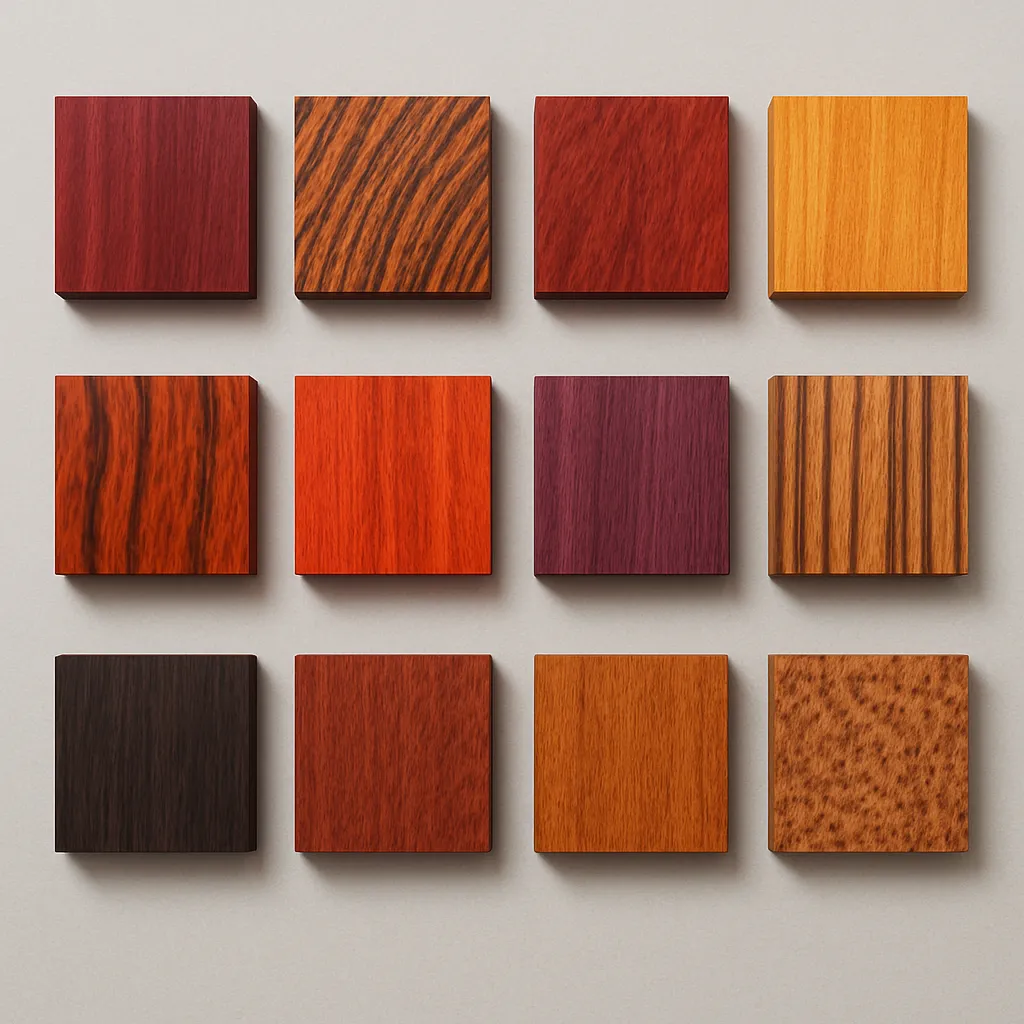
Prices fluctuate based on availability, grade, and dimensions, so treat any price range as a rough guide rather than a fixed number. Sustainability status also varies—some of these species are abundant, while others face pressure from overharvesting.
Dense exotics dull blades quickly. Carbide tooling helps, and so does slowing your feed rate. For oily woods, clean your cutters periodically—resin buildup affects cut quality. Interlocked grain species like Zebrawood benefit from light passes and sharp blades to minimize tearout.
Oily woods like Cocobolo and Bocote can resist standard wood glues. Wiping the joint surface with acetone or denatured alcohol right before gluing improves adhesion. For finishing, many exotics take oil finishes beautifully, though some benefit from a sanding sealer first to prevent blotching.
This is not a minor point. Exotic wood dust can cause allergic reactions, and some species are worse than others. Cocobolo, in particular, is well-known for causing skin and respiratory irritation. Always use dust collection, wear a quality respirator, and work in a ventilated space. If you notice itching, rashes, or breathing issues, stop and reassess your protection.
Outdoor applications: Ipe, Iroko, and Teak offer excellent rot resistance. Ipe is exceptionally dense and durable, often used for decking and boardwalks.
Kitchen items: For cutting boards and utensils, choose closed-grain, food-safe woods. Maple is the classic choice, but some exotics work well too—just avoid species with known toxicity concerns.
Turning and carving: Cocobolo, Bocote, Canarywood, and Bloodwood all turn beautifully. Their density and figure make them rewarding on the lathe.
Musical instruments: Cocobolo and rosewood species are traditional tonewoods for guitars, particularly back and sides. Their density and tonal properties are highly valued by luthiers.
Understanding lumber grading helps. Most exotic lumber is sold as FAS (First and Seconds), which is the highest grade, or in lower grades with more defects. Moisture content matters too—kiln-dried stock is generally more stable for furniture, while air-dried material may be fine for turning.
Watch out for mislabeling. Some suppliers substitute similar-looking species, and not always honestly. Ask for species verification when it matters. Also be cautious of unusually low prices—they can signal unsustainable sourcing or misrepresented material.
Where to buy: specialty lumber dealers, online retailers like Bell Forest Products or Woodcraft, and local sawmills that carry exotics. Local sources let you inspect boards in person, which is a real advantage for figured species.
Exotic woods offer color, character, and performance that domestic species often can’t match. The trade-off is cost, availability, and the need for more careful handling—both in the shop and in how you source your material. Choose based on what the project actually needs: hardness where it counts, color where it shows, workability where it matters. And when you can, buy from suppliers who can tell you where their wood comes from. The best exotic wood is one you can feel good about using.
Related guides: Top 10 Hardest Woods (and Hardest-to-Softest Chart) · Types of Mahogany Wood · How to Identify Wood Types
What are the most popular types of exotic woods for woodworking?
Popular choices include Bloodwood, Bocote, Bubinga, Canarywood, Cocobolo, Padauk, Purpleheart, and Zebrawood. Each offers unique colors, grain patterns, and working properties suited to different projects.
How do I choose the right exotic wood for my project?
Consider the project’s requirements: hardness and durability for high-wear items, color and grain for aesthetics, and workability for ease of machining. Also factor in cost, availability, and sustainability.
Are exotic woods sustainable?
Sustainability varies by species. Some are harvested responsibly, while others are threatened. Look for certifications like FSC and check CITES regulations. Alternatives to endangered species are available.
What safety precautions should I take when working with exotic woods?
Exotic woods can cause allergic reactions and respiratory issues. Always wear a dust mask, use dust collection, and work in a well-ventilated area. Some species like Cocobolo can cause skin irritation.
How can I tell if an exotic wood is genuine?
Genuine exotic woods have distinct characteristics like unique grain patterns, color, and density. Purchase from reputable dealers and ask for species verification. Be wary of unusually low prices.
What is the hardest exotic wood?
Some of the hardest exotic woods include African Blackwood, Lignum Vitae, and Ipe. They are extremely dense and durable, often used for tool handles, flooring, and outdoor applications.