Address
304 North Cardinal
St. Dorchester Center, MA 02124
Work Hours
Monday to Friday: 7AM - 7PM
Weekend: 10AM - 5PM
Compare butcher block woods for countertops and chopping blocks: hardness, looks and trade-offs of maple, walnut, oak, hickory and more, plus finishes, sink areas, maintenance and repairs.
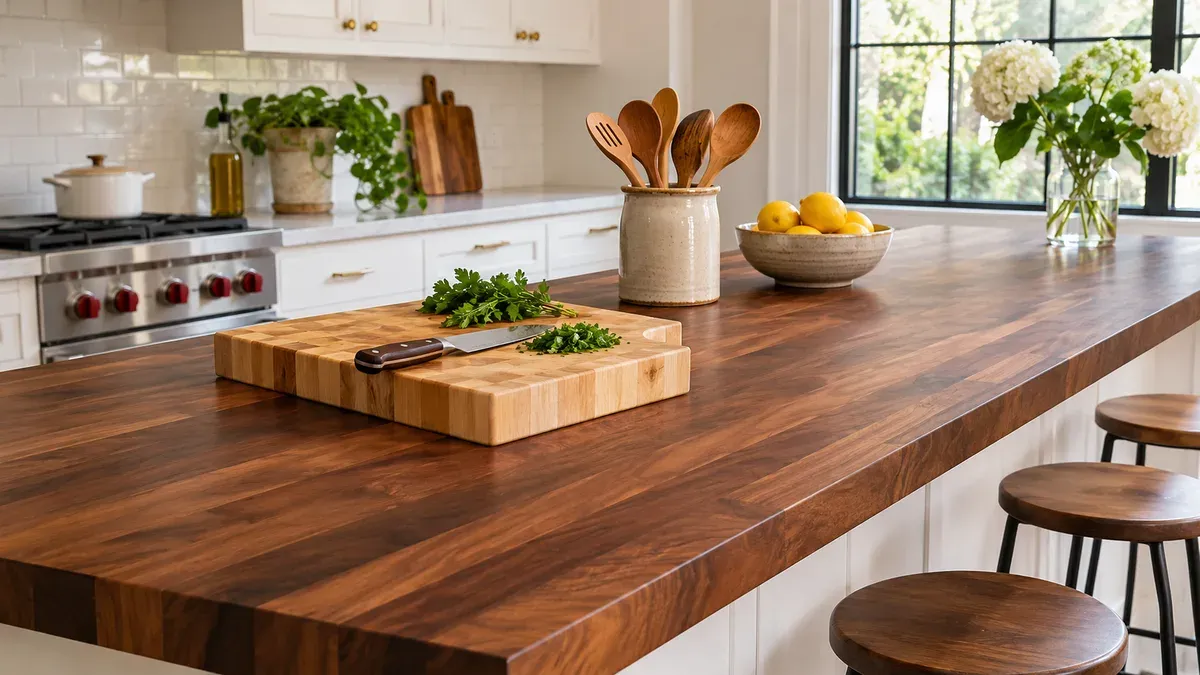
Quick answer: Hard maple is the best all-round butcher block wood: it is hard, tight-grained, food safe and affordable, which is why it is the classic choice for both countertops and chopping blocks. Walnut is the best-looking premium option and hides stains well, white oak and hickory are very durable, and cherry, birch, beech, acacia and rubberwood are good-value alternatives. Avoid red oak near the sink, because its open pores soak up water. The finish matters as much as the wood: use oil or hardwax oil if you will cut on the surface, and a hard film finish such as polyurethane or a tung oil and resin blend if you will not.
Table of contents
Butcher block is made from many strips or blocks of solid hardwood glued together into one thick slab. The name comes from the heavy end grain blocks butchers once used for chopping meat. Today it covers two things: butcher block countertops and islands, usually about 1.5 inches thick, and butcher block cutting boards, thick boards you chop on at the counter. The wood choice is similar for both, but the finish and care are different.
| Wood | Typical Janka hardness (lbf) | Look | Best for | Watch out for |
|---|---|---|---|---|
| Hickory | About 1,800 | Bold light-and-dark contrast | Heavy-use kitchens, rustic style | Hard to work; dramatic color variation |
| Hard maple | 1,450 | Pale, creamy, fine grain | All-round countertops and chopping blocks | Shows stains and darkens slightly with age |
| White oak | About 1,350 | Golden with visible grain rays | Durable counters, farmhouse and modern style | Strong grain shows knife marks |
| Beech | About 1,300 | Pale pinkish, fine grain | Budget-friendly European-style counters | Moves more with humidity; oil often |
| Red oak | About 1,300 | Warm with pronounced grain | Dry areas, desks, tables | Open pores absorb water; avoid near sinks |
| Birch | About 1,250 | Light, even grain | Affordable, Scandinavian look | Softer surface; finish it well |
| Acacia | About 1,150–1,800 | Golden to dark, dramatic streaks | Good value with bold character | Varies by species and supplier |
| Teak | About 1,070 | Golden brown, naturally oily | Wet areas, islands with sinks | Expensive; oily surface affects some finishes |
| Walnut | 1,010 | Rich chocolate brown | Premium islands and statement counters | Softer; dents and scratches sooner |
| Rubberwood (hevea) | About 1,000 | Pale, even, often stained | Budget counters and desks | Softer; usually finger-jointed strips |
| Cherry | 995 | Warm reddish brown that deepens | Classic kitchens, accent islands | Softer; darkens noticeably in sun |
Janka hardness measures how much force it takes to press a steel ball into the wood; higher numbers resist dents better. Figures are typical published values and vary between sources and boards (USDA Forest Products Laboratory, Wood Handbook).
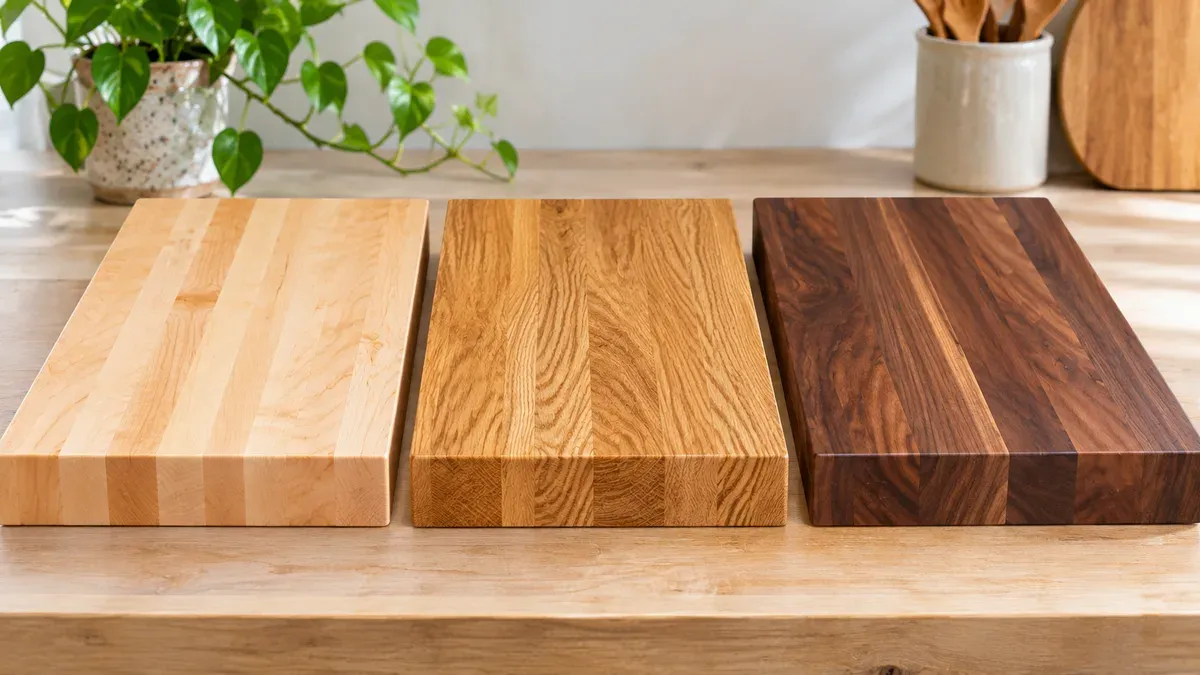
Hard maple has a tight, closed grain that resists moisture and bacteria, it is hard enough to shrug off daily wear, and it is not so hard that it ruins knives. It is also widely available and reasonably priced, which is why most butcher block counters and professional chopping blocks are maple.
Walnut’s deep brown color makes a kitchen feel warm and expensive, and it hides stains well. It is softer than maple, so it shows dents and fine scratches sooner, but many owners like the patina. Walnut costs noticeably more than maple or oak.
White oak is hard, stable and more water resistant because its pores are largely blocked, which makes it a good countertop wood. Red oak has open pores that wick water deep into the wood, so it is better kept away from sinks and is a poor choice for cutting surfaces.
Hickory is one of the hardest domestic woods, with striking light and dark streaks. It suits busy family kitchens and rustic designs, but it is harder to work and very hard on knives in end grain form.
Cherry has a warm color that deepens beautifully over time. Birch and beech are pale, affordable and tight-grained, and beech is widely used in European butcher block. All three need a good finish and regular care.
Acacia is dense and attractive; teak is naturally oily and handles moisture well; rubberwood, often sold as hevea, is an affordable plantation hardwood. Quality varies a lot by supplier, so check the strip size, glue lines and flatness. Exotic species such as Osage orange are extremely hard and rot resistant, but they are difficult to source in large pieces and can be very hard on tools and knives.
| Construction | What it looks like | Best for | Trade-offs |
|---|---|---|---|
| Edge grain | Long narrow strips glued side by side | Most countertops and islands | Good balance of cost and durability |
| End grain | Checkerboard of block ends facing up | Chopping blocks and cutting stations | Kind to knives, self-healing look; expensive, needs more oil |
| Face grain or plank | Wider boards glued edge to edge | Rustic counters, desks, tables | Shows the most grain; moves more and dents more easily |
For cutting boards, the same choices apply; see our comparison of end grain vs edge grain cutting boards.
| If you want… | Choose |
|---|---|
| The safest all-round choice | Hard maple |
| A dramatic, high-end look | Walnut |
| Maximum durability for a busy family | White oak or hickory |
| A light Scandinavian look on a budget | Birch or beech |
| A sink in the island | White oak or teak, with a hard film finish |
| The lowest price | Rubberwood, birch or acacia |
| A surface you chop on every day | End grain maple or a separate thick board |
The right finish depends on one question: will you cut directly on it?
| Finish | Food contact | Water resistance | Maintenance |
|---|---|---|---|
| Food-grade mineral oil or board butter | Yes, ideal for cutting surfaces | Low | Reapply often, especially in the first months |
| Hardwax oil (for example Rubio Monocoat or Osmo) | Food safe once cured | Moderate to good | Spot-refresh worn areas every year or two |
| Tung oil and resin blends (for example Waterlox) | Food safe once fully cured | Good | Refresh occasionally; long cure time |
| Polyurethane or varnish | Fine for eating surfaces; not for cutting | Very good | Lasts years; damage needs sanding and recoating |
Mineral oil is simple and food safe but offers little water protection, while hardening finishes and tung oil and resin blends resist water much better; near sinks a more water-resistant finish is the safer choice (House Digest). Always let a finish cure fully, often several days or longer, before heavy use, and test the color on an offcut first, because some oils noticeably warm or yellow pale woods like maple and birch.
Wood around a sink is the most common source of butcher block problems: standing water and steam from the dishwasher can cause dark stains, swelling and cracks. If you want a sink in a butcher block counter:
You can, if the counter has an oil or hardwax finish and you accept knife marks as part of its character. Many owners prefer to keep the counter looking clean and use a separate board instead, especially on counters with a film finish such as polyurethane, which knives will scratch through. Raw meat is best cut on a board you can wash thoroughly at the sink. A thick 24 x 18 in butcher block board gives you a large chopping area without marking the counter.
Butcher block does not need constant sanding. Most of the time, cleaning and re-oiling are enough:
For board care routines, read how to clean a wooden cutting board.
Butcher block countertops are sold by big-box home improvement stores, flooring retailers, specialty countertop makers and online suppliers. Some home centers will cut slabs to size. If you have a sawmill or lumberyard nearby, buying rough lumber and gluing up your own top can cost less, but it takes planing, jointing and clamping skills. Whatever you buy, check:
We do not sell countertops, but we do offer butcher block boards for daily chopping. The extra large butcher block cutting board measures 24 x 18 x 1.2 in with a juice groove and works as a large prep station or serving board. The wooden butcher block with rounded corners has a checkered end grain pattern and comes in three sizes. Browse all wooden cutting boards, and compare woods in our guides to the best wood for cutting boards and walnut cutting boards.
Hard maple is the best all-round choice for hardness, food safety and price. Walnut is the top premium choice for looks, and white oak or hickory are best for heavy use.
Maple is harder, more affordable and shows fewer dents. Walnut is darker, hides stains and looks more luxurious, but it is softer and costs more.
White oak is a good choice because it resists water well. Red oak has open pores that absorb water, so it is better for dry areas than for sinks or cutting surfaces.
Use food-grade mineral oil or board butter if you cut on it, hardwax oil for a natural look with better protection, and a tung oil and resin blend or polyurethane if you never cut on it and want the most water resistance.
When it looks dry or water stops beading, often monthly at first and less often over time. Hardwax and film finishes need much less frequent care.
Yes, but choose a water-resistant wood, seal every surface including the cutout with a water-resistant finish, and wipe up standing water. Many owners choose stone around the sink instead.
Not if you match the finish to how you use it. Wipe spills, re-oil occasionally and sand only to remove damage.
Yes, if it has an oil or hardwax finish and you accept knife marks. Use a separate board for raw meat and on counters finished with polyurethane.
About 1.5 inches is standard for countertops. Chopping blocks and end grain boards are often 2 inches or thicker.
Usually because of dry air, uneven sealing or water exposure. Seal all sides, keep humidity moderate and fill small cracks before they grow.