Address
304 North Cardinal
St. Dorchester Center, MA 02124
Work Hours
Monday to Friday: 7AM - 7PM
Weekend: 10AM - 5PM
Address
304 North Cardinal
St. Dorchester Center, MA 02124
Work Hours
Monday to Friday: 7AM - 7PM
Weekend: 10AM - 5PM
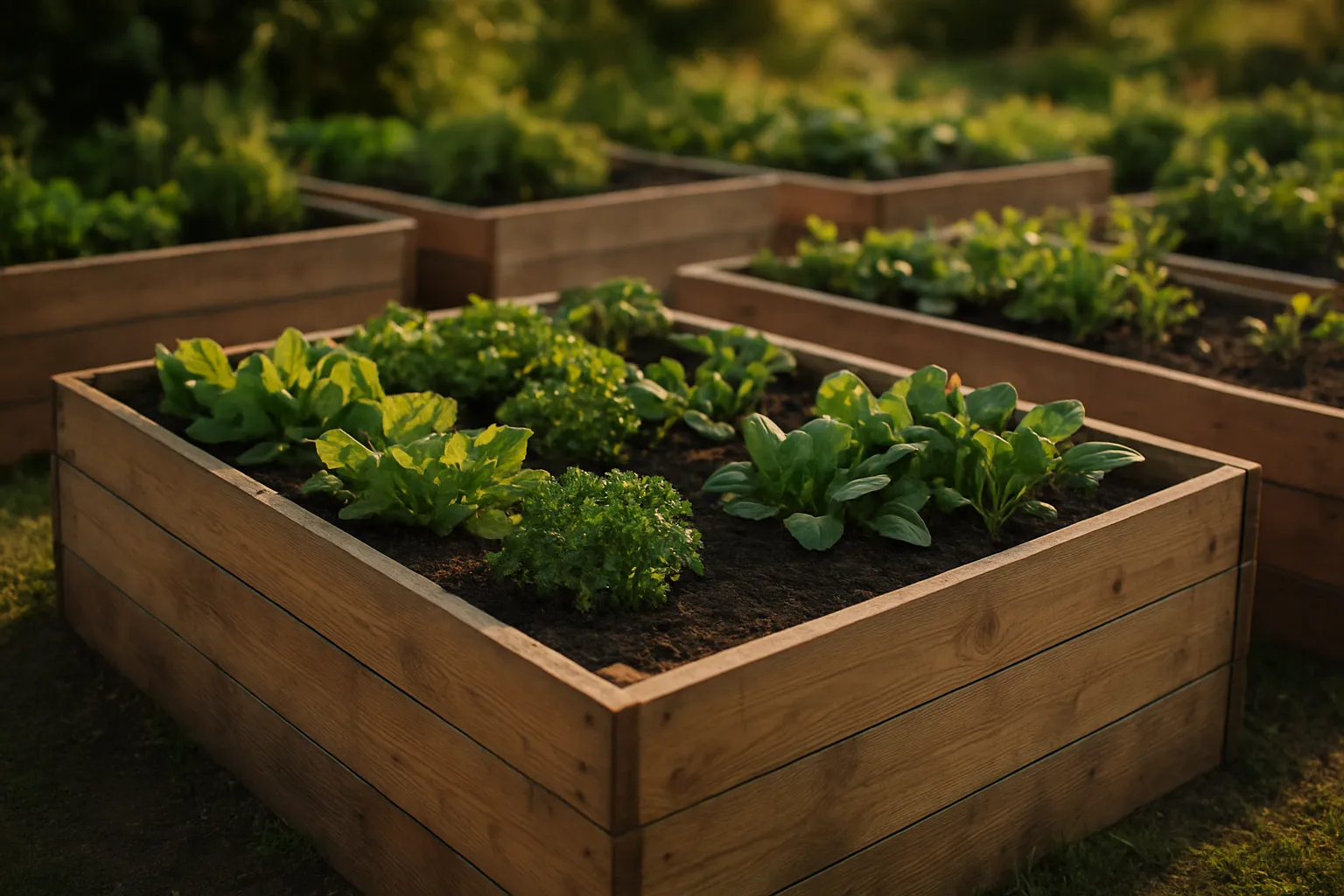
If you’ve ever watched a raised bed fall apart after just a couple of seasons, you know that the wood you choose matters far more than most gardeners expect. A garden bed isn’t like a fence or a deck. It sits in constant contact with wet soil, gets rained on, dries out, freezes, thaws, and repeats that cycle year after year. The wood has to survive all of it while holding back hundreds of pounds of damp earth.
Pick the wrong material and you’ll be rebuilding in two or three years. Pick the right one and you might not touch that bed again for 15 or even 20 years. This guide walks through the best wood for outdoor garden beds, compares the top options by lifespan and cost, and explains how to make a smart choice for your climate, your budget, and your vegetables.
A raised garden bed is one of the harshest environments you can put lumber in. The bottom boards sit in permanently damp soil. The sides get baked by sun, soaked by rain, and flexed by freeze-thaw cycles. Microbes and fungi treat untreated wood as a food source, and moisture is the delivery system that lets them in.
Compare that to a fence, which mostly deals with rain hitting one side and drying out fairly quickly. A raised bed never really dries out at the soil line. That constant moisture is what accelerates rot and shortens the life of a wooden bed.
The consequence of choosing poorly is real. Untreated pine in direct soil contact can start softening within two seasons and be structurally questionable by year three. Choose a naturally rot-resistant species and use thicker boards, and that same bed can realistically last 15 to 20 years or more with minimal fuss.
When you’re deciding which wood to use, there are five factors that actually drive the outcome:
Keep those five factors in mind as you read. The “best” wood is the one that balances them for your specific situation, not a single universal winner.
Here’s a side-by-side look at the most common choices. Lifespans are estimates for untreated wood in direct soil contact and will shift depending on your climate and how the bed is built.
| Wood | Typical Lifespan | Upfront Cost | Food Safety (Untreated) |
|---|---|---|---|
| Black Locust | 50+ years | High | Food safe |
| Redwood | 20+ years | High | Food safe |
| Cedar | 15–20 years | Moderate–High | Food safe |
| White Oak | 15–20 years | Moderate | Food safe |
| Cypress | 10–15 years | Moderate | Food safe |
| Douglas Fir | 5–7 years | Low | Food safe (untreated) |
| Pine | 2–5 years | Low | Food safe (untreated) |
| Pressure-treated | Varies | Low–Moderate | Avoid for edibles |
The safety column is where a lot of gardeners get tripped up. Untreated cedar, redwood, black locust, white oak, and cypress are all considered safe for growing food. Pressure-treated lumber is a different story, and we’ll dig into that in its own section.
Now here’s the part people often skip: cost per year of service. The cheapest board isn’t the cheapest bed.
Say a cedar board costs about $25 and lasts 15 years. That’s roughly $1.67 per year of use. A pine board at $10 that lasts only 3 years works out to about $3.33 per year — nearly double the annual cost, even though it was “cheaper” at the register. This single calculation reframes the whole decision. Cheap wood that rots fast isn’t a bargain; it’s a subscription you keep paying for.
No single species wins everywhere. What performs beautifully in a dry climate can fail in a humid one, and regional availability often matters as much as the wood’s natural properties.
Humid Southeast. Moisture is the enemy here, and it’s relentless. Cypress and Eastern Red Cedar do well because of their natural oils and dense heartwood, which resist decay in consistently wet conditions. Both are regionally abundant, which keeps them more affordable than they’d be elsewhere.
Arid Southwest. There’s far less moisture stress on the wood, but intense UV radiation takes a toll, drying and cracking boards over time. Redwood and Western Red Cedar hold up well in these conditions. In drier climates, lifespans for these species often push toward the higher end of their ranges.
Cold Northeast and Midwest. Freeze-thaw cycles are the challenge, repeatedly expanding and contracting the wood and stressing joints. White Oak and Black Locust deliver extreme durability here, especially if you can source them locally. Cedar remains a dependable, widely available choice.
Pacific Northwest. This is cedar and redwood country. Western Red Cedar and Redwood are abundant, naturally rot-resistant, and well suited to the damp climate. Availability and price tend to be better here than almost anywhere else.
Canada and Northern Europe. Hemlock is the regional equivalent to fir, with durability that’s roughly comparable but slightly better rot resistance. Where cedar isn’t locally available or is expensive, hemlock is a practical stand-in.
Tropical regions. Teak and Ironwood are naturally suited to heat and humidity, but they’re expensive and often hard to source in garden-lumber dimensions. Most gardeners in these climates are better served by a locally abundant rot-resistant species than by importing a premium tropical hardwood.
The takeaway: check what’s available and affordable near you before deciding. A locally abundant cedar or cypress will usually beat a “better” species that has to be special-ordered at a premium.
Species gets all the attention, but thickness quietly determines how long your bed survives. A thin board of excellent wood can fail faster than a thick board of merely good wood, because rot is a race against how long it takes moisture and fungi to eat through the material.
1-inch boards (nominal 1×6, for example) are common and cheap, but they warp and rot faster. They flex under soil pressure and don’t hold up well to seasonal movement.
2-inch boards (2×6, 2×8, 2×12) add years of structural integrity. The extra mass resists soil pressure, holds its shape through wet-dry cycles, and simply has more material for rot to work through before it becomes a structural problem.
A practical recommendation for most gardeners:
Thicker boards matter most in freeze-thaw climates, where thin wood cracks and splits under repeated expansion and contraction. If you live somewhere with hard winters, going thicker is one of the highest-value upgrades you can make.
One last thing: understand nominal versus actual dimensions. A “2×6” is not two inches by six inches. It’s actually 1.5 x 5.5 inches once it’s been milled and dried. A “1×6” is really 0.75 x 5.5 inches. Plan your bed’s finished dimensions around actual sizes, or your corners won’t line up the way you expect.
This is the question that worries most vegetable gardeners, and it deserves a clear answer.
Untreated cedar, redwood, and black locust are safe for vegetable gardens without chemical concerns. Their rot resistance is natural and doesn’t introduce anything problematic to the soil. These are the materials most often recommended for edible gardens for exactly this reason.
Pressure-treated lumber is the one to avoid for edibles. Older CCA-treated wood (chromated copper arsenate) could leach arsenic and chromium into the soil. That formulation has largely been phased out for residential use, but plenty of it is still out there in older beds and structures. Modern treatments like ACQ and CA are considered safer than CCA, but they still raise concerns for organic growers and anyone who wants to keep their soil as clean as possible. The cautious, widely recommended approach is to avoid pressure-treated wood for anything you’ll eat from.
There’s a persistent myth worth clearing up: the idea that pressure-treated wood dramatically changes soil pH. Under normal garden conditions, that effect is minimal. The real concern isn’t pH — it’s the leaching of preservative chemicals into the soil over time. So don’t relax about pressure-treated wood just because the acidity claim doesn’t hold up. The preservative leaching is the actual issue.
Reclaimed wood can be a great option, but only if you know its source and it’s untreated. Two categories to avoid outright:
If you’re using reclaimed lumber, verify the history. “Free and sturdy” isn’t good enough when you don’t know what soaked into it.
Even a budget wood can last much longer with a few smart moves. If you’re leaning toward pine or fir to save money upfront, these techniques are what close the gap.
Line the interior with a food-safe barrier. A food-safe pond liner or HDPE plastic between the soil and the wood dramatically reduces soil contact, which is where most rot starts. This single step can double the lifespan of budget woods like pine.
Apply a food-safe sealant to exterior surfaces only. Raw linseed oil or pure tung oil protect the outside faces of the boards without introducing questionable chemistry. Avoid polyurethane and stains, which may leach. Seal the exterior, line the interior, and you’ve protected both sides.
Add drainage. Set the bed on a gravel or sand base so water doesn’t pool at the bottom of the posts. Standing water is where rot begins, and good drainage keeps the base of the bed dry.
Improve ventilation. Avoid direct soil-to-wood contact on all sides where you can. Using corner brackets to lift the boards slightly off the ground lets air circulate under and around the bed, helping the wood dry between wet periods.
None of these steps is complicated, and together they can turn a cheap pine bed from a three-year throwaway into something that gives you five to seven years or more — often enough to make it worthwhile if your budget is tight.
Let’s put real numbers to the choice. Here are rough upfront costs for common boards (prices vary by region and fluctuate with the lumber market):
And their estimated lifespans in a raised bed:
Run the math and the picture gets clear. For most gardeners, cedar is the cost-per-year winner — it offers the best balance of cost, availability, and lifespan. It’s not the cheapest at the register, but divided across 15 to 20 years of service, it comes out far ahead of pine and far more accessible than black locust.
If your budget is genuinely tight and you’re willing to line and seal the bed, pine can be cost-effective for 5–7 years with maintenance. You’re trading labor and a shorter horizon for a much lower entry price. That’s a legitimate choice, as long as you go in knowing you’ll be maintaining it.
The trap to avoid is buying cheap wood and doing nothing to protect it. That’s how you end up paying pine’s low price three times over while cedar owners are still on their first bed.
Here’s a quick way to cut through the options based on what matters most to you:
There’s no single correct answer, because “best” depends on whether you’re optimizing for upfront price, total lifespan, food safety, or local availability. Match the wood to your priority and you’ll make a choice you won’t regret in three years.
Can I use pressure-treated wood for a vegetable garden?
Most gardening experts and organic certification bodies recommend against pressure-treated wood for edible gardens because the chemical preservatives (copper, and arsenic in older CCA-treated wood) can leach into the soil over time. While modern treatments like ACQ and CA are considered safer than CCA, many gardeners prefer untreated, naturally rot-resistant woods like cedar or redwood to avoid any risk of chemical exposure.
How long does cedar last in a raised garden bed?
Untreated cedar (Western Red Cedar or Eastern Red Cedar) typically lasts 15–20 years in an outdoor raised bed, depending on climate and soil contact. In humid or wet climates, lifespan may be closer to 10–15 years, while in drier regions it can exceed 20 years. Using 2-inch-thick boards and lining the interior with a food-safe liner can further extend its life.
Is pine a good choice for a raised bed if I seal it?
Yes, pine can be a cost-effective option if you take steps to extend its lifespan. Untreated pine typically lasts only 2–5 years in direct soil contact, but with a food-safe sealant (like raw linseed oil or pure tung oil) on the exterior and a liner on the interior, you can get 5–7 years or more. It’s a good budget choice if you’re willing to maintain it.
What is the cheapest wood for raised garden beds that still lasts?
Pine and Douglas fir are the cheapest untreated options, typically costing $10–$20 per board, but they have the shortest lifespan (2–7 years). For a better cost-per-year value, cedar is often the sweet spot: it costs more upfront (around $25 per board) but lasts 15–20 years, bringing the annual cost down to roughly $1.50–$2 per year. Black locust and redwood last even longer but are harder to source and more expensive.
Does cedar leach anything into the soil?
No, untreated cedar does not leach harmful chemicals into the soil. Cedar’s natural rot resistance comes from aromatic oils (thujones) that are not toxic to plants or humans in the concentrations present in the wood. In fact, cedar is one of the most recommended woods for organic and vegetable gardens precisely because it is chemical-free and safe for edible plants.
Should I line my wooden raised bed?
Lining the interior of a wooden raised bed with a food-safe material like HDPE plastic or pond liner is a smart way to extend the life of any wood, especially budget options like pine or fir. The liner creates a barrier between the wet soil and the wood, reducing rot and decay. Just ensure the liner is food-safe and allows for some drainage at the bottom to prevent waterlogging.