Address
304 North Cardinal
St. Dorchester Center, MA 02124
Work Hours
Monday to Friday: 7AM - 7PM
Weekend: 10AM - 5PM
A practical guide to wooden bowls: types, best woods, sizes, uses for salad, dough and storage, hot food, food-safe finishes, cleaning and how to restore a dry bowl.
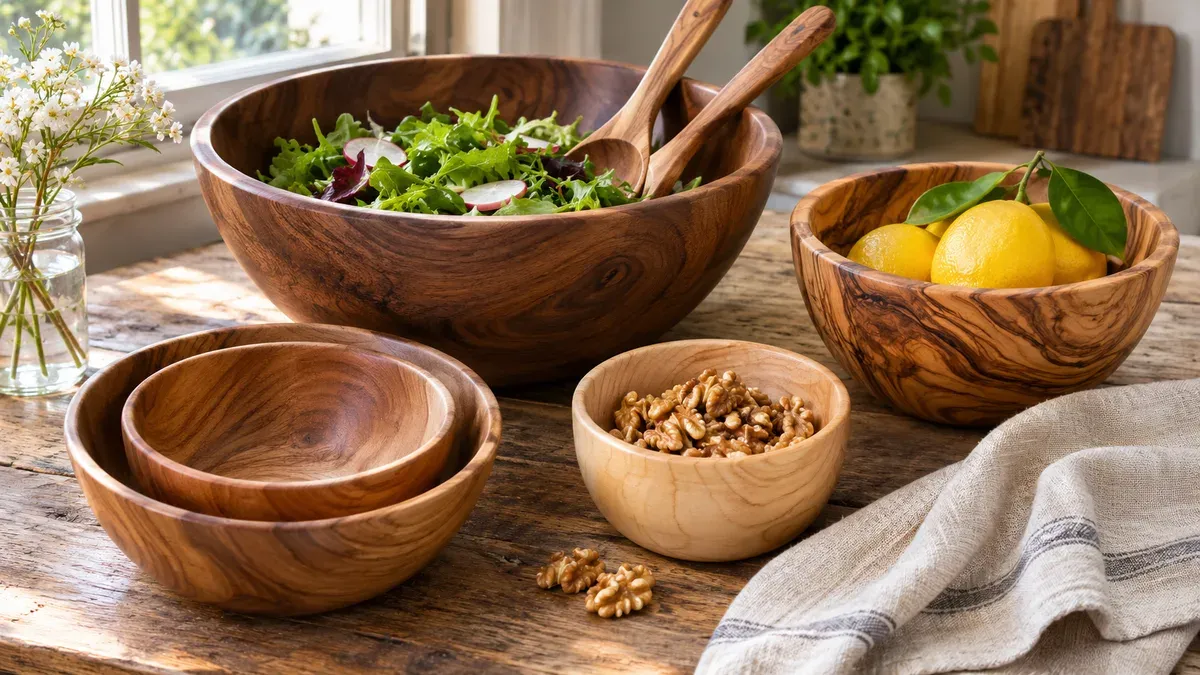
Quick answer: A good wooden bowl is turned or carved from one solid piece of dense hardwood such as maple, cherry, walnut, olive, beech or acacia, and finished with a food-safe oil or wax. Wooden bowls are ideal for salads, fruit, bread dough, snacks and dry storage such as onions and garlic. Wash them by hand with mild soap, dry them right away, never soak them or put them in the dishwasher or microwave, and rub in mineral oil or a beeswax blend whenever the wood looks dry. Avoid cooking oils such as olive oil or shortening for upkeep, because they can turn rancid.
Table of contents
The trade-offs: wooden bowls need hand washing, they can stain from strong colors such as turmeric or beet, and they are not for the microwave, oven or dishwasher.
| Type | How it is made | Good to know |
|---|---|---|
| Turned, one-piece | Shaped on a lathe from a single block | The most durable and traditional; no glue joints |
| Carved | Carved by hand or machine from one piece | Often thicker; dough bowls are usually carved |
| Segmented or laminated | Many pieces glued together, then shaped | Decorative patterns; glue lines can fail if soaked |
| Live edge or burl | Keeps the natural edge or a figured burl | Beautiful for display; may have cracks or voids |
| Lacquered | Coated with a hard lacquer, such as Japanese urushi | Handles hot soup better; avoid scratching the coating |
Dense, tight-grained hardwoods make the best bowls for food, because they resist cracks and absorb less liquid.
| Wood | Why it works | Good to know |
|---|---|---|
| Hard maple | Tight grain, hard-wearing, neutral taste | Pale color shows stains |
| Cherry | Smooth, warm reddish tone that deepens with age | A classic for salad bowls |
| Walnut | Rich dark color that hides stains | Slightly softer; elegant for serving |
| Olive wood | Very dense with dramatic swirling grain | Usually small bowls; oil it often |
| Beech | Tight grain and affordable | Needs regular oiling to avoid drying |
| Acacia | Dense, oily and affordable | Very common in imported bowls; quality varies |
| Teak | Naturally oily and water resistant | Good for salads and humid kitchens |
| Mango | Affordable with attractive grain | Softer; best for serving and decor |
If you want to learn more about how these woods behave in the kitchen, read whether acacia is good for cutting boards and our walnut cutting board guide.
| Bowl diameter | Good for |
|---|---|
| About 5–7 in (13–18 cm) | One serving of cereal, rice or salad; nuts, olives, dips, snacks |
| About 8–10 in (20–25 cm) | Fruit, a side salad for 2–3, popcorn, mixing small batches |
| About 11–13 in (28–33 cm) | A main salad for about 4–6, bread dough for one loaf |
| 14 in (35 cm) and up | Party salads, large batches of dough, a statement centerpiece |
Depth matters too: a deeper bowl is easier for tossing salad and mixing dough without spills, while a shallow bowl is better for display and serving fruit.
Wooden salad bowls are a classic for good reason: leaves do not bruise against the soft surface, and the bowl looks great on the table. Some cooks rub the inside with a cut garlic clove before adding greens, or whisk the dressing right in the bowl, which works well for Caesar salads. That is fine, but wash the bowl with warm water and mild soap afterwards. The old advice never to wash a salad bowl leads to a layer of old oil that turns sticky and smells rancid.
Wide, carved dough bowls have been used for generations to mix, knead and proof bread. Wood holds a steady temperature and the dough does not stick as badly as it can to steel. Scrape out leftover dough, rinse with warm water, wash with a little soap and dry the bowl right away.
A wooden bowl on the counter is a good home for onions, garlic, shallots, avocados and sweet potatoes, as long as it sits in a cool, dry spot away from direct sun. Keep potatoes in a separate bowl or bag, because onions and potatoes stored together tend to spoil faster. Empty and wipe the bowl now and then to remove dry skins.
Small wooden bowls are perfect for nuts, olives, chips, popcorn and dips. On a party table, group them on a tray; our guide to setting up a serving tray for a party shows how. A bowl of seasonal fruit or pine cones also works as simple table or coffee table decor.
Wooden mortars and pestles are good for pounding garlic, herbs and soft spices, and they are quieter than stone. Strong ingredients such as basil, chili and turmeric will stain and scent the wood, so many cooks keep one mortar just for savory pastes.
| Material | Best for | Limits |
|---|---|---|
| Wood | Salads, dough, serving, dry storage | Hand wash only; not for microwave or raw meat marinades |
| Plastic | Everyday prep, stacking, dishwasher use | Scratches, stains and can hold odors |
| Glass | Microwave, prep you want to see, storage | Heavy and breakable |
| Stainless steel | Whisking, marinating, heavy daily prep | Noisy; can dull the look of the table |
Most kitchens are best served by a mix: steel or glass for messy prep and raw meat, and wood for salads, bread and serving.
An oil-finished wooden bowl can hold warm food, such as rice, pasta or a bowl of soup you eat right away. What damages wood is long exposure to heat and liquid: leaving hot soup sitting for a long time, pouring in boiling liquid or soaking the bowl. That can raise the grain, crack the wood or loosen glue joints. Lacquered soup bowls, such as traditional Japanese miso bowls, are made for hot liquids. Never put a wooden bowl in the microwave or oven.
Many simple finishes for food-contact wood are also the least protective, so they need to be renewed often (Fine Woodworking). The common choices:
| Finish | Pros | Cons |
|---|---|---|
| Food-grade mineral oil | Inert, cheap, easy to apply | Low water resistance; reapply often |
| Mineral oil and beeswax blend | Better water resistance, pleasant feel | Still needs regular reapplication |
| Walnut oil (drying type) | Easy to apply, does not go rancid once dried | Avoid for anyone with a nut allergy |
| Pure tung oil | Good water resistance | Many coats and a long curing time |
| Raw linseed oil | Traditional and food safe | Very long curing time; different from boiled linseed oil |
What to avoid for upkeep: olive oil, vegetable oil and shortening such as Crisco. They do not cure, they can go rancid and they leave a sticky film that smells over time.
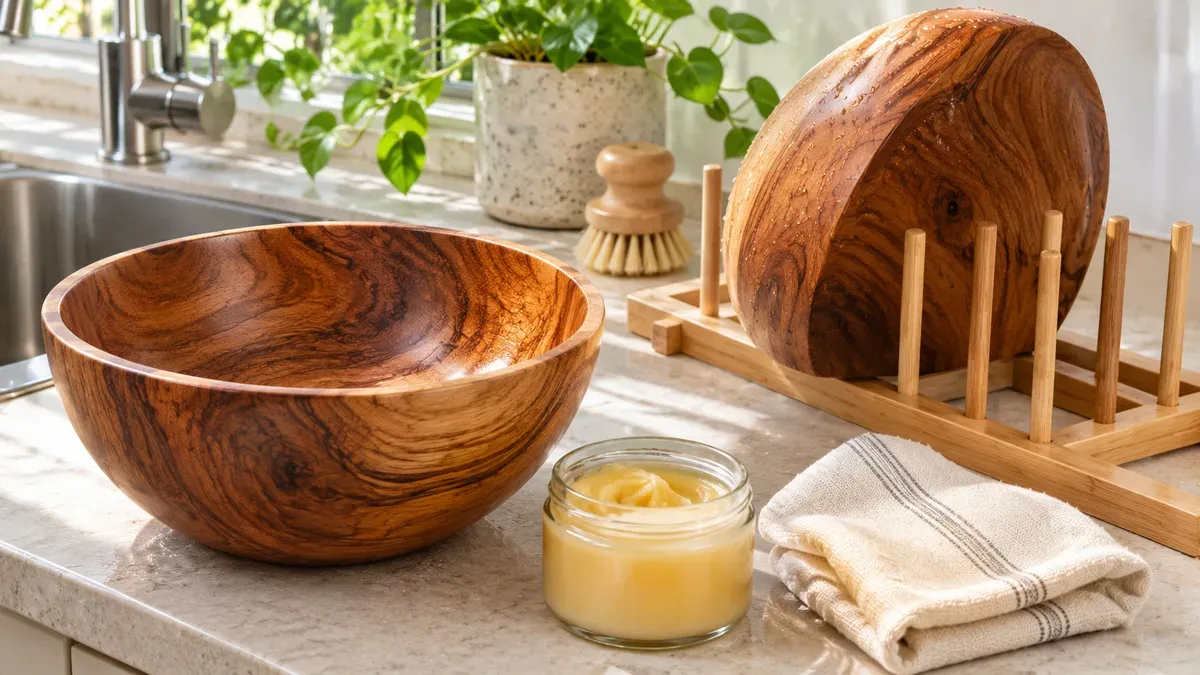
Keep wooden bowls out of strong direct sun and away from heaters, which dry the wood and can crack it. The same routine works for all wooden kitchenware; see our guides to wooden kitchen utensils and how to clean a wooden cutting board.
If a bowl has lost its smooth finish, feels fuzzy or looks gray and dry, you can usually bring it back in an afternoon:
Small surface cracks can be sanded and oiled. A crack that goes all the way through, or a glue joint that has opened, usually means the bowl should become a decorative piece rather than a food bowl.
Our solid walnut wooden serving bowl comes in two sizes, about 16 cm (6.3 in) and 20 cm (7.9 in) across, a good fit for fruit, snacks, breakfast and side dishes. Pair it with a tray from our solid wood serving trays collection, or a long handle wooden spoon for serving. A walnut bowl also makes an easy, useful present; see more wooden gift ideas.
Yes. Solid hardwood bowls with a food-safe finish are safe for everyday food. Wash them after use, dry them well and retire any bowl with deep cracks.
No. The heat and long wet cycle can crack, warp and dry out the wood. Wash wooden bowls by hand.
Warm soup that you eat right away is usually fine in an oil-finished bowl, but avoid boiling liquids and long soaks. Lacquered wooden soup bowls handle heat best.
Food-grade mineral oil or a mineral oil and beeswax blend. Drying oils such as walnut oil or pure tung oil also work. Avoid olive oil, vegetable oil and shortening.
Yes, in a cool, dry spot. Keep onions and potatoes in separate bowls, because they tend to spoil faster when stored together.
Yes. Many cooks rub the bowl with garlic and whisk dressing right in it. Just wash the bowl afterwards so old oil does not build up and go rancid.
Yes. Wooden dough bowls are a traditional tool for mixing, kneading and proofing. Scrape, wash and dry the bowl right after use.
Usually from cooking oil or old dressing that has built up and turned rancid. Wash with warm, soapy water, sand lightly if needed and re-oil with mineral oil.
Sand lightly with 220 grit sandpaper, wipe off the dust and oil it. Roughness after the first few washes is normal raised grain.
For salads, dough and serving, many people prefer wood. Plastic, glass or steel are more practical for raw meat, marinades and dishwasher-heavy prep.