Address
304 North Cardinal
St. Dorchester Center, MA 02124
Work Hours
Monday to Friday: 7AM - 7PM
Weekend: 10AM - 5PM
Address
304 North Cardinal
St. Dorchester Center, MA 02124
Work Hours
Monday to Friday: 7AM - 7PM
Weekend: 10AM - 5PM
A practical guide to wooden kitchen utensils: the main types, which ones you need, the best woods, cookware compatibility, cleaning, oiling and when to replace them.
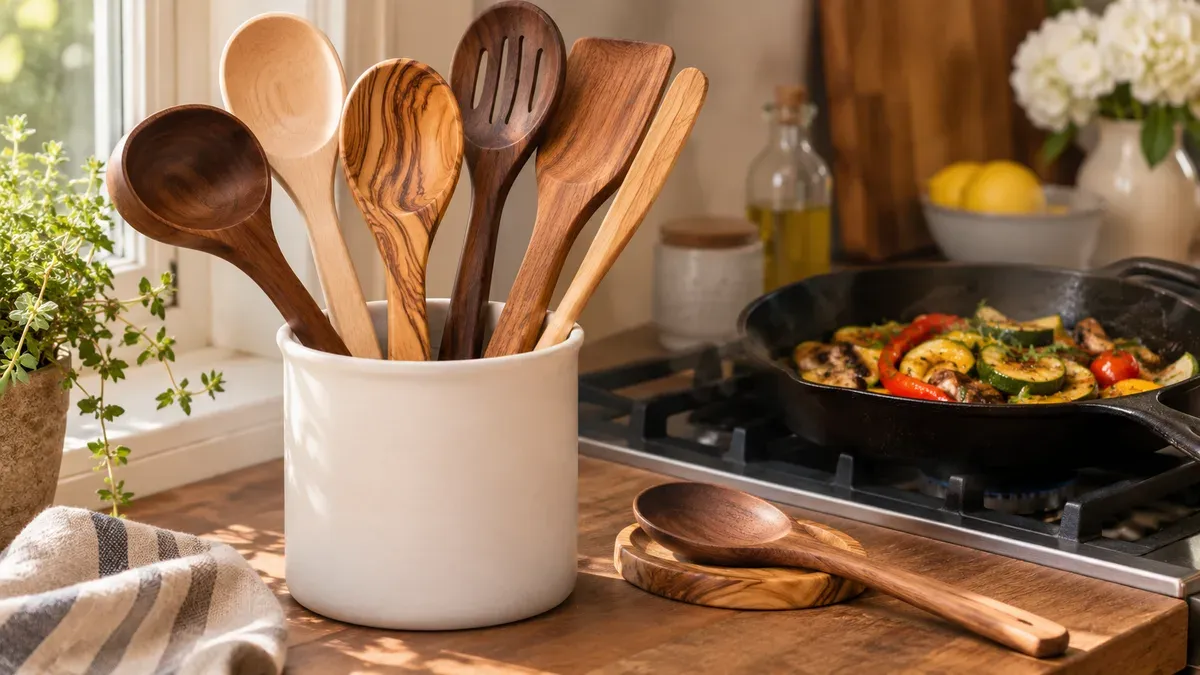
Quick answer: Wooden kitchen utensils are spoons, spatulas, ladles, spurtles, tongs and other cooking tools made from solid wood. They are gentle on nonstick, enameled and ceramic cookware, they do not melt on a hot pan, and they stay comfortable to hold. The best woods are dense, tight-grained hardwoods such as hard maple, cherry, beech, olive, walnut and teak. Wash them by hand, dry them right away, oil them about once a month with food-grade mineral oil, and replace any piece with deep cracks. With that care, a good wooden spoon can last for many years.
Table of contents
The trade-offs are small but real: wooden kitchen utensils need hand washing, they can stain with turmeric or tomato, and they need occasional oiling to avoid drying and cracking.
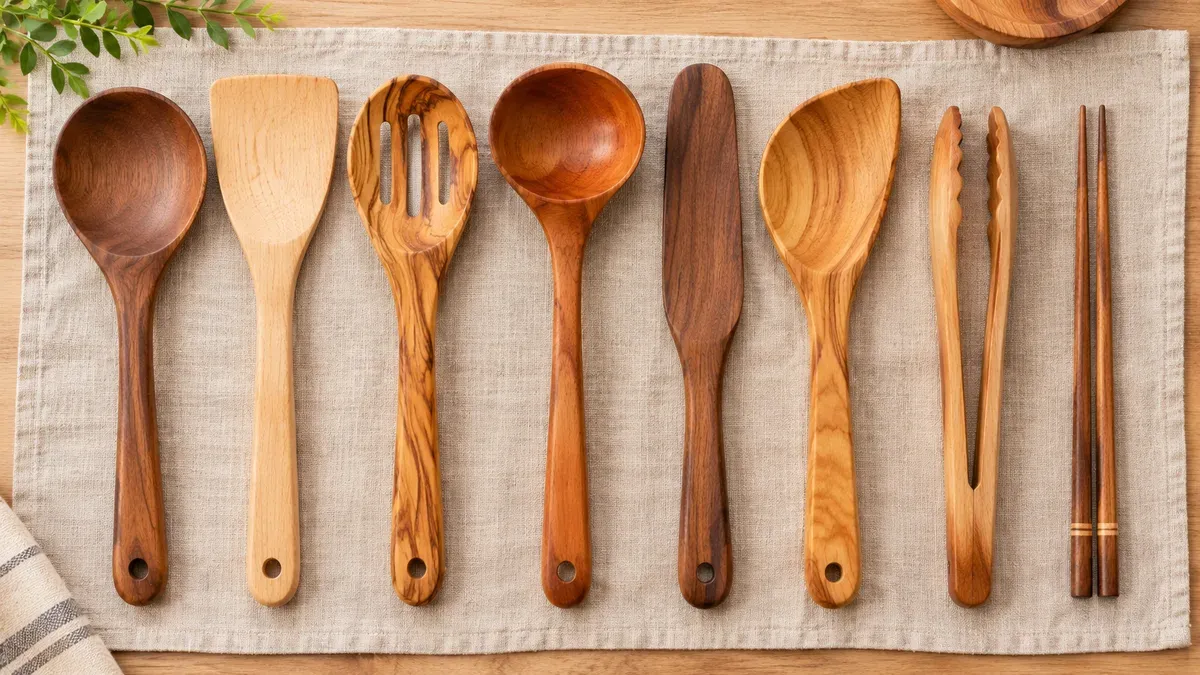
| Utensil | Best for |
|---|---|
| Classic wooden spoon | Stirring sauces, soups, risotto and doughs |
| Flat-edged spatula (turner) | Scraping the pan, flipping, sautéing and deglazing |
| Corner spoon | Reaching into the corners of pots and pans |
| Slotted spoon | Lifting vegetables, dumplings or beans out of liquid |
| Spurtle | Stirring porridge, oats, stews and thick batters |
| Ladle and wooden soup spoons | Serving soups and stews without scratching the pot |
| Wooden tongs | Turning toast, bacon or vegetables, and serving salad |
| Cooking chopsticks | Stirring noodles, beating eggs, frying and plating |
| Spoon rest | Keeping the counter clean while you cook |
You do not need a 12-piece wood utensil set to cook well. Most home kitchens are covered by a short list:
Add a spurtle, tongs, long cooking chopsticks or a second spoon in a different size once you know what you reach for most. A long-handled spoon of about 12 inches or more is handy for deep stockpots and Dutch ovens.
The best woods for wooden kitchen equipment are dense, tight-grained hardwoods. Tight grain means fewer open pores for food and moisture to get into, and density helps the utensil resist wear and cracking. Wood properties such as density and hardness vary widely by species (USDA Forest Products Laboratory, Wood Handbook).
| Wood | Why it works | Good to know |
|---|---|---|
| Hard maple | Tight grain, hard-wearing, neutral taste | Light color shows stains from turmeric or tomato |
| Cherry | Smooth, tight grain, attractive reddish tone | Darkens over time; a little softer than maple |
| Beech | Tight grain, affordable, very common in Europe | Needs regular oiling to prevent drying |
| Olive wood | Very dense with beautiful swirling grain | Usually more expensive; oil it often |
| Walnut | Rich dark color hides stains well | Slightly softer; great for spoons and serving pieces |
| Teak | Naturally oily and very water resistant | Popular for sets; quality varies by maker |
| Acacia | Dense, oily and affordable | Grain and quality vary by species and maker |
| Bamboo (a grass) | Light, cheap and hard | Made from glued strips that can split over time |
Woods to be careful with: soft, resinous woods such as pine wear quickly and can taste of resin, and open-pored woods such as red oak can trap moisture and food. If you are unsure what a utensil is made from, buy from a seller who names the species. Our guides to the best wood for cutting boards and whether acacia is good for cutting boards explain the same wood choices in more detail.
| Cookware | Wood? | Notes |
|---|---|---|
| Nonstick | Excellent | Wood will not scratch the coating; avoid metal tools |
| Enameled cast iron | Excellent | Protects the enamel from chips and scratches |
| Ceramic-coated | Excellent | Wood and silicone are the safest choices |
| Bare cast iron and carbon steel | Good | A flat wooden spatula scrapes fond well; metal is also fine |
| Stainless steel | Good | Any utensil works; wood is quieter and gentle |
Yes, wooden utensils are safe for everyday cooking when you keep them clean and dry. Wood used for kitchen tools is normally finished with food-safe oil or left bare, so it does not add coatings to your food. What matters most is how you treat it:
Wood versus plastic is mostly a matter of preference. Plastic and nylon tools are cheap and dishwasher safe but can melt or deform if left on a hot pan. Wood lasts longer with simple care and feels better in the hand. Many cooks keep a silicone spatula for scraping bowls and use wood for everything on the stove.
You may have seen the viral trick of boiling wooden spoons to pull out old oil and food residue. It does draw out some buildup, but long soaks in very hot water can also dry out or crack the wood, so treat it as an occasional deep clean at most. The same daily routine works for boards; see how to clean a wooden cutting board.
Oiling keeps wood from drying out, which is the main cause of cracking. Oil new utensils before first use, then about once a month, or whenever they look pale and feel dry.
Which oils to use: food-grade mineral oil and mineral oil and beeswax blends are the standard choices. Avoid regular cooking oils such as olive or vegetable oil for routine conditioning, because they can turn rancid and leave a sticky, smelly film.
Wooden spoons do not have a fixed expiry date. Many people use the same spoon for decades, while a cheap, neglected one may crack in a year. Replace a wooden utensil when you notice:
Browse our wooden kitchen utensils collection. A few favorites:
Wooden utensils also pair naturally with a good board; see our walnut cutting board guide. A spoon, a utensil rest and a bottle of board oil make a thoughtful set from our list of wooden gift ideas.
For stovetop cooking, many cooks prefer wood: it does not melt on a hot pan, will not scratch nonstick coatings and lasts for years with simple care. Plastic is cheaper and dishwasher safe. Silicone is a good companion for scraping bowls.
They can last many years, and some last decades. Their lifespan depends on the wood, how well they are made and how you care for them. Hand washing, drying and regular oiling matter most.
About once a month for utensils you use often, and any time they look pale or feel dry. Oil new utensils before their first use.
It is not recommended for routine care. Cooking oils can go rancid and leave a sticky film. Use food-grade mineral oil or a mineral oil and beeswax blend instead.
No. Heat and long exposure to water dry out the wood and cause cracks and rough grain. Wash them by hand and dry them right away.
A clean, dry wooden spoon is fine for everyday cooking. Wash it soon after use, let it dry fully and replace it if it develops deep cracks, which can trap food and moisture.
A flat-edged wooden spatula and a classic wooden spoon cover most nonstick cooking. Both are gentle on the coating.
Bamboo is a grass, not a wood. Bamboo utensils are light, cheap and hard, but they are made from glued strips that may split over time. Solid hardwood utensils usually last longer.
Water raises loose wood fibers. Let it dry, sand lightly with 220 grit sandpaper and oil it. The roughness usually stops after a few washes.