Address
304 North Cardinal
St. Dorchester Center, MA 02124
Work Hours
Monday to Friday: 7AM - 7PM
Weekend: 10AM - 5PM
Wood wall art ideas for every room, plus sizing rules, gallery wall tips, how to mix wood tones, decorating wood paneling and how to hang heavy pieces safely.
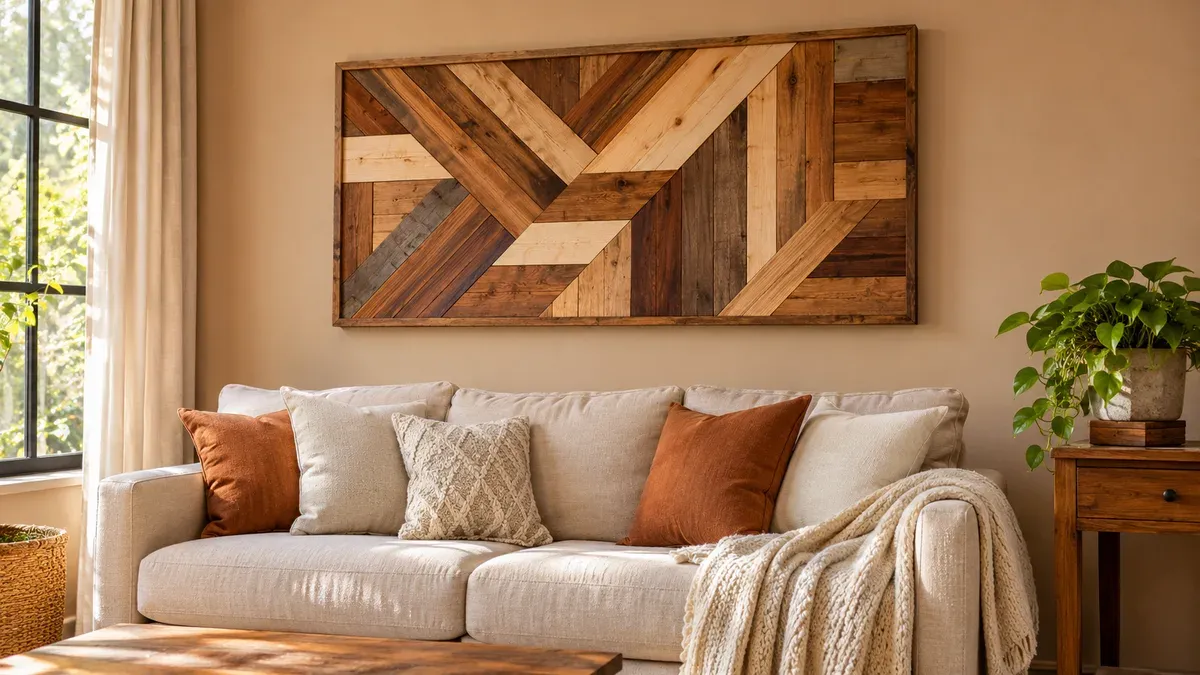
Quick answer: Wood wall art adds warmth and texture that paint and prints alone cannot. Popular options include slat panels, geometric wood mosaics, carved panels, wood slice rounds, wooden maps and functional pieces such as wall shelves and wall planters. Above a sofa, choose a piece about two-thirds the sofa’s width and hang it roughly 8 to 10 inches above the back. On a bare wall, center art at about 57 to 60 inches from the floor. Hang anything heavy into studs or with anchors rated well above its weight, and repeat each wood tone at least twice in the room so it looks intentional.
Table of contents
When a room feels cold, flat or unfinished, the problem is often a lack of texture. Wood brings natural grain, warm color and depth, and it connects the walls to wooden furniture and floors. A single wood piece can make a cool-toned, gray or all-white room feel lived in without painting or adding clutter.
| Type | Look | Best for |
|---|---|---|
| Slat or fluted panels | Vertical wooden strips with shadow lines | Accent walls, behind a TV or bed |
| Geometric wood mosaic | Angled pieces in mixed wood tones | Statement piece above a sofa or bed |
| Carved or relief panels | Hand or machine-carved patterns | Traditional, boho or global styles |
| Wood slice or round art | Cross-section showing growth rings | Rustic, natural and Scandinavian rooms |
| Wooden maps and topography | Layered or engraved map shapes | Offices, hallways, travel lovers |
| Wooden signs and word art | Painted or engraved lettering | Kitchens, entryways, farmhouse style |
| Wood-framed prints and mirrors | Art or mirrors in wooden frames | Any room; easy to mix with other decor |
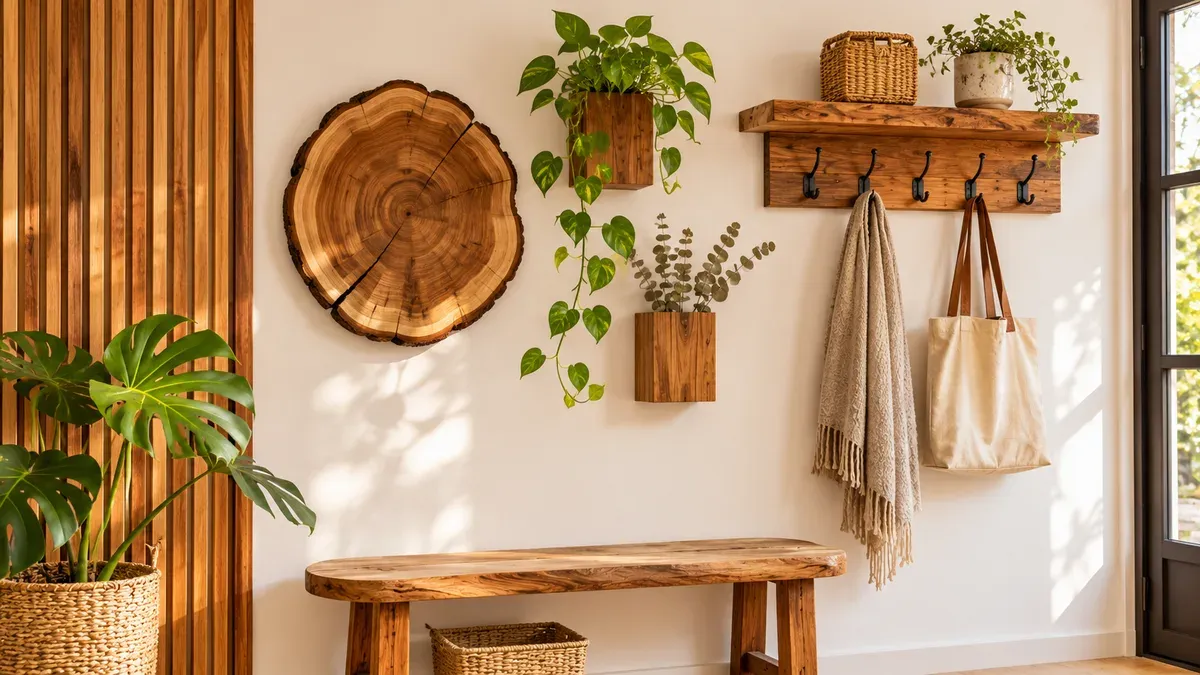
| Functional wall decor | Shelves, hook rails, wall planters | Entryways, kitchens, small spaces |
| Wall-hung boards, bowls and platters | Kitchen pieces displayed as art | Kitchens, dining rooms, open shelving |
| Placement | Guideline |
|---|---|
| Above a sofa, bed or console | About two-thirds of the furniture width |
| Gap above a sofa | About 8–10 inches above the back (closer, 4–8 in, for a tight, cohesive look) |
| Bare wall | Center the piece about 57–60 inches from the floor |
| Gallery spacing | Keep about 2–3 inches between pieces |
| Narrow wall or hallway | Tall, vertical pieces or a vertical stack of two or three |
These are designer rules of thumb (Hunker). Before drilling, outline the piece on the wall with painter’s tape, then sit on the sofa and lean back to make sure you will not bump your head.
A big empty wall needs something with presence. Small pieces spread across a large wall tend to look lost. Try one of these:
A common worry is whether a wood frame or panel is too dark, or too light, for the furniture in the room. Mixed wood tones look great when they are done on purpose:
Not sure what wood a piece is? Our guide on how to identify different wood types explains the main clues.
Yes, you can hang art on wood paneling. Thin paneling is fixed over studs, so for anything heavier than a small frame, drive the screw through the panel into a stud or use an anchor rated for hollow walls. To make art stand out against wood, choose contrast:
If you are thinking about painting paneling instead, see our guide to the best paint colors for wood paneling walls.
Solid wood pieces can be surprisingly heavy, so match the hardware to the weight:
This is standard guidance from home improvement experts (This Old House). Adhesive strips are fine only for light pieces within their stated weight limit.
Leaning art on a console, mantel or picture ledge creates a relaxed, layered look and lets you change things around without new holes. It works best for medium pieces that are stable and partly overlapped by objects in front. Hang large or heavy pieces, anything above seating or beds, and anything in a home with young kids or pets, and secure leaning pieces so they cannot slide or tip.
Browse our shelves and wall decor. For a natural, useful wall display, try the wood wall planter set for plants or dried stems, and the rustic wood wall shelf with 5 hooks for an entryway. The 22 inch floating shelves set, made from MDF and wood, gives you space to display small art, plants and books. For more ways to bring wood into a room, see our solid wood coffee table guide, coffee table tray decor ideas and wooden gift ideas.
Any decorative piece made mostly of wood that hangs on a wall, including slat panels, geometric mosaics, carved panels, wood slices, wooden maps, signs and functional pieces such as shelves and wall planters.
About two-thirds of the sofa width, hung roughly 8 to 10 inches above the back of the sofa.
On a bare wall, center it around 57 to 60 inches from the floor. Above furniture, hang it relative to the furniture, not the ceiling.
Yes. Choose a dominant tone, repeat each wood tone at least twice in the room and keep undertones similar or clearly contrasting.
Yes. Screw into the studs behind the paneling for heavier items, or use anchors rated for hollow walls. Light frames and mirrors stand out best.
Screw into studs or use heavy-duty anchors rated for several times the weight, and use a French cleat for large panels.
One oversized piece, a grid of matching panels, a slat accent wall, a gallery wall or styled floating shelves.
Only if the room is well ventilated and the piece is sealed. Steam and humidity can warp or crack untreated wood.
Add texture: wood wall art, textiles, plants and warm lighting. Even one wooden piece can make a cool-toned room feel warmer.